Very Important Article: China Stopped Buying U.S. Soybeans. [But] The Real Problem Started Decades Ago.
Very Important Article: China Stopped Buying U.S. Soybeans. [But] The Real Problem Started Decades Ago.
I was very excited to discover Farm Action some months back. Their analyses of what the Ag problems were and how to solve them exactly paralleled my own thinking. So pleased to now partner with them

BTW, I will be heading to my younger son’s wedding tomorrow, and not posting much till next week. That is why you are being deluged today.
https://farmaction.us/china-stopped-buying-u-s-soybeans-the-real-problem-started-decades-ago/
October 8, 2025
This harvest season, soybean farmers are facing one of the most unsettling markets in recent memory. China, long the dominant buyer of U.S. soybeans, has stopped purchasing them altogether. The sudden halt has sent shockwaves through farm country, leaving bins full, prices down, and livelihoods on the line.
But beneath the headlines about trade wars and bailouts lies a deeper truth: America’s agricultural system is structurally flawed.
Recurring bailouts for commodity crops aren’t the result of bad luck or temporary trade disputes. They’re symptoms of a farm economy built for overproduction, dependency, and instability.
The Scale of Dependence
The numbers reveal how concentrated our agricultural system has become. In 2024:
-
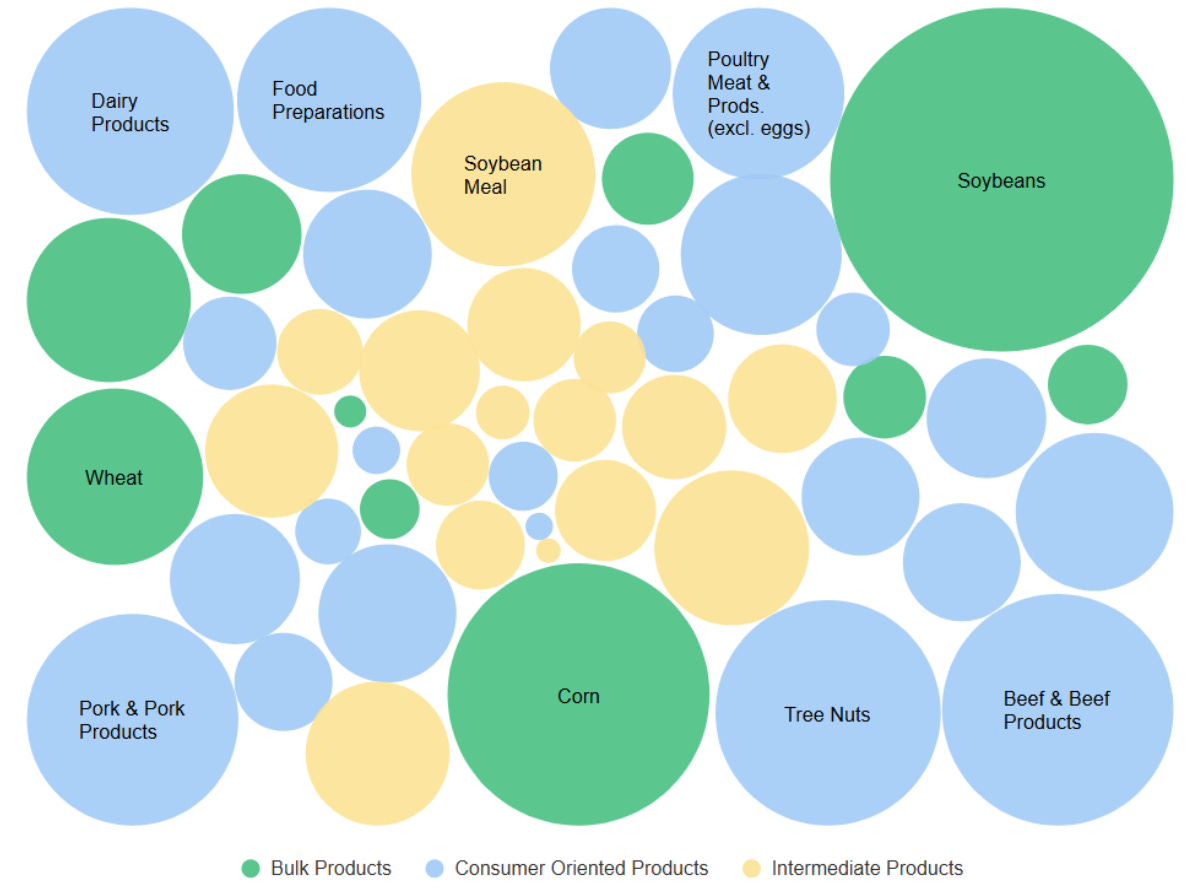
Soybeans were the number one U.S. agricultural export, valued at about $24.5 billion.
-
More than half of all U.S. soybeans were exported, and China historically bought more than half of that total (roughly $12.6 billion worth).
-
Soybeans contributed $46.9 billion to total U.S. farm income.
This means that one buyer—China—effectively underpinned much of the farm economy. When that buyer walks away, the entire system shakes.
The Trade War Fallout
China’s pivot to South America exposed just how fragile this arrangement is: after halting U.S. soybean purchases in May 2025, China quickly replaced American supplies with shipments from Brazil and now Argentina.
Meanwhile, with a strategic reserve of 40 million tons, China now wields outsized influence over global soybean prices—leaving U.S. farmers holding crops they can’t sell and facing prices below the cost of production.
This isn’t a temporary trade hiccup. It’s a structural vulnerability created by decades of policy choices that prioritize export growth over domestic food security.
The Argentina Bailout Controversy
As U.S. farmers struggle, frustration has deepened over Washington’s decision to direct $20 billion in U.S. Treasury funds to Argentina, a direct soybean competitor. The stated goal was to stabilize global markets, but the optics are grim—and the message to U.S. farmers is worse.
American taxpayers are funding foreign competitors while U.S. farmers face collapsing sales. Almost immediately after receiving U.S. support, Argentina dropped its 26% export tax, and China bought over a million tons of soybeans.
This move underscores a broader inconsistency in U.S. agricultural strategy—one that props up global competitors while neglecting the farmers who feed our own nation.
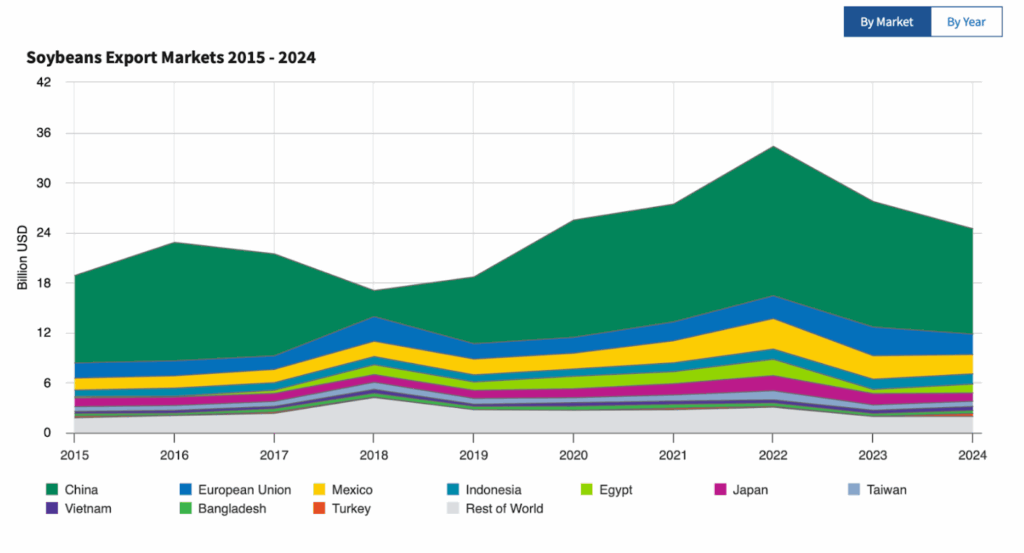
More than half of U.S. soybeans are exported, with China (represented in dark green) historically purchasing more than half of that total. Source: USDA.
The Bailout Cycle
Washington is now debating a third round of farm aid in less than a year, with USDA and congressional leaders weighing whether to use Commodity Credit Corporation funds (a federal account USDA uses to finance farm programs) or new appropriations.
The playbook is familiar: when markets fail, bailouts follow. During the last trade war, farmers received $28 billion in relief payments—nearly all of which went to producers of commodity crops such as soybeans, corn, and cotton.
Meanwhile, specialty crop growers—fruits, vegetables, and other foods that nourish American families—were largely excluded from these programs.
But these payments don’t fix the underlying problems—they reinforce them. As FarmDoc Daily has noted, repeated payments actually inflate land and input costs, deepening farmers’ dependence on future aid. Since 2014, safety-net and ad hoc payments have exceeded market losses by an estimated $88 billion, helping drive up farm asset values by 52% and debt by 73% over the past decade.
In short, the more bailouts we issue—and the narrower their reach—the more distorted and dependent the system becomes.
The Structural Problem
At the root of this crisis is a policy framework that rewards overproduction and export dependence.
-
The 1996 “Freedom to Farm” Act dismantled supply management tools, encouraging farmers to “plant fence-row to fence-row” regardless of market demand. [Similar policies imposed in the 1970s encouraged farmers to borrow and grow—helping lead to the farm crisis of the 1980s when about 25% of farmers, unable to service their debt, went out of business—Nass]
-
Corporate consolidation in processing, input supply, and distribution has stripped farmers of alternatives and bargaining power.
-
Subsidy structures favor a narrow set of commodity crops—primarily soybeans and corn—crowding out fruit, vegetable, and grain diversity.
This combination has left farmers trapped in a treadmill of debt, volatility, and consolidation—and taxpayers footing the bill for the fallout.
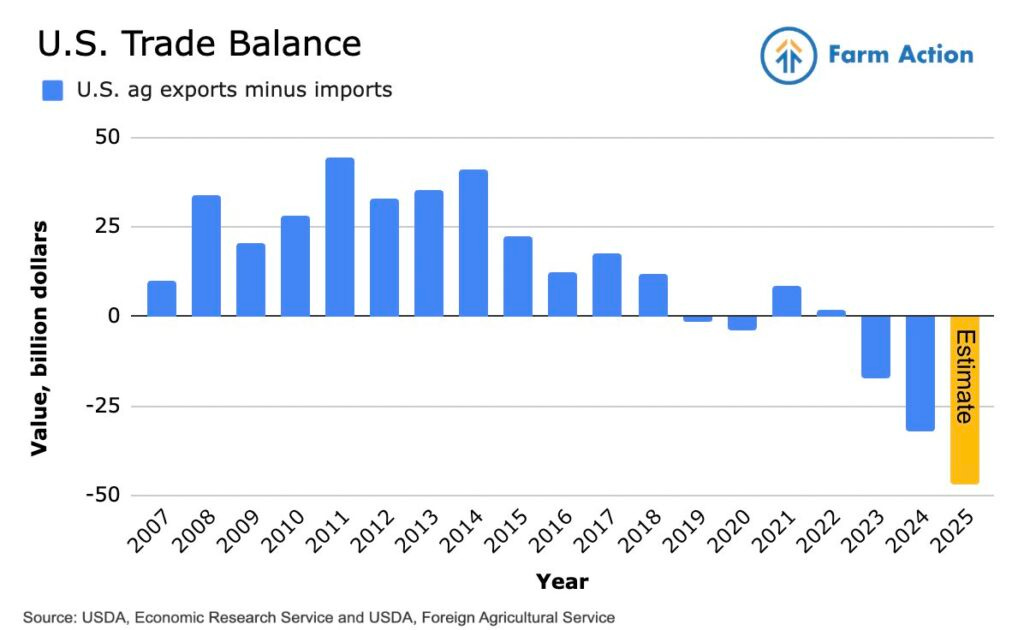
The U.S. is projected to run a $47 billion agricultural trade deficit in 2025 due to imports of essential foods.
The Consequences of Soy and Corn Dependency
The U.S. now faces a paradoxical reality:
We subsidize livestock feed crops like soybeans and corn for export while importing more food than ever. Over time, this imbalance has left both farmers and consumers increasingly vulnerable to market and policy shocks.
The pattern keeps repeating. In December 2024, Congress passed a bailout package for commodity crop growers. Soon after, another major aid program was folded into the ‘One Big Beautiful Bill.’ Now, Washington is already debating yet another round of payments. Each bailout is framed as an emergency measure, yet together they reveal a system that cannot sustain itself without constant federal intervention.
We are projected to run a $47 billion agricultural trade deficit in 2025, largely due to growing imports of fruits, vegetables, beef, and other essential foods we could be growing here. Meanwhile, record federal support flows almost exclusively to commodity producers, leaving food growers without comparable safety nets.
Despite these repeated infusions of federal aid, farm income remains fragile, and rural communities continue to hollow out.
Ultimately, both farmers and consumers lose — farmers to market dependence, consumers to food insecurity and inflation.
A Different Path Forward
Decades of policy have built this treadmill—but it’s not too late to step off. A resilient food system is possible, but it requires breaking the cycle of overproduction and bailout dependency.
Farm Action recommends a path focused on food security, diversification, and fairness:
-
Grow food, not just livestock feed crops: Incentivize production of fruits, vegetables, and nutrient-dense crops for local markets.
-
Reform subsidies: Redirect federal spending away from endless bailouts and toward programs that reward resilience and healthy food production.
-
Rebuild local infrastructure: Invest in regional processing, storage, and distribution to give farmers alternatives to export markets.
-
Break up corporate monopolies: Enforce antitrust laws to restore competition in input and processing markets.
Building a Resilient Food Future
The soybean crisis is more than a trade dispute—it’s a warning.
A farm system that depends on foreign buyers and government bailouts isn’t sustainable for farmers, taxpayers, or the nation’s food security.
It’s time for a new direction—one that puts resilience over dependence, food over feed, and people over policy inertia.
Farm Action believes that structural reform—not another round of checks—is the only way forward.