Achieving Clarity on the Farm Crisis–and How the Trump Administration Can Help Farmers Right Now
Achieving Clarity on the Farm Crisis–and How the Trump Administration Can Help Farmers Right Now
My memo, from Save Our Food And Farms (SOFAF.org). Feel free to share with your elected officials. Or call them and ask them to support the ideas you like. Let me know the response in the comments.

There are lots more ideas requiring long-term solutions but this is something that could show the farmers the federal government means business now!
____________________________
There has been an ongoing, extremely severe crisis in US farming that preceded tariff issues and reduced commodity sales to China. The loss of $12.6 Billion in Chinese soybean imports, the promised $40 Billion for Argentina and a plan to import Argentinian beef to reduce US beef prices were the last straw for many farmers. This short report explains and quantifies the farming crisis, using USDA data, and offers solutions that can be initiated immediately.
1. Polled, 85% of US farmers said they were voting for Trump in 2024.
https://www.wsj.com/politics/policy/farmers-election-trump-biden-trade-war-11602693377
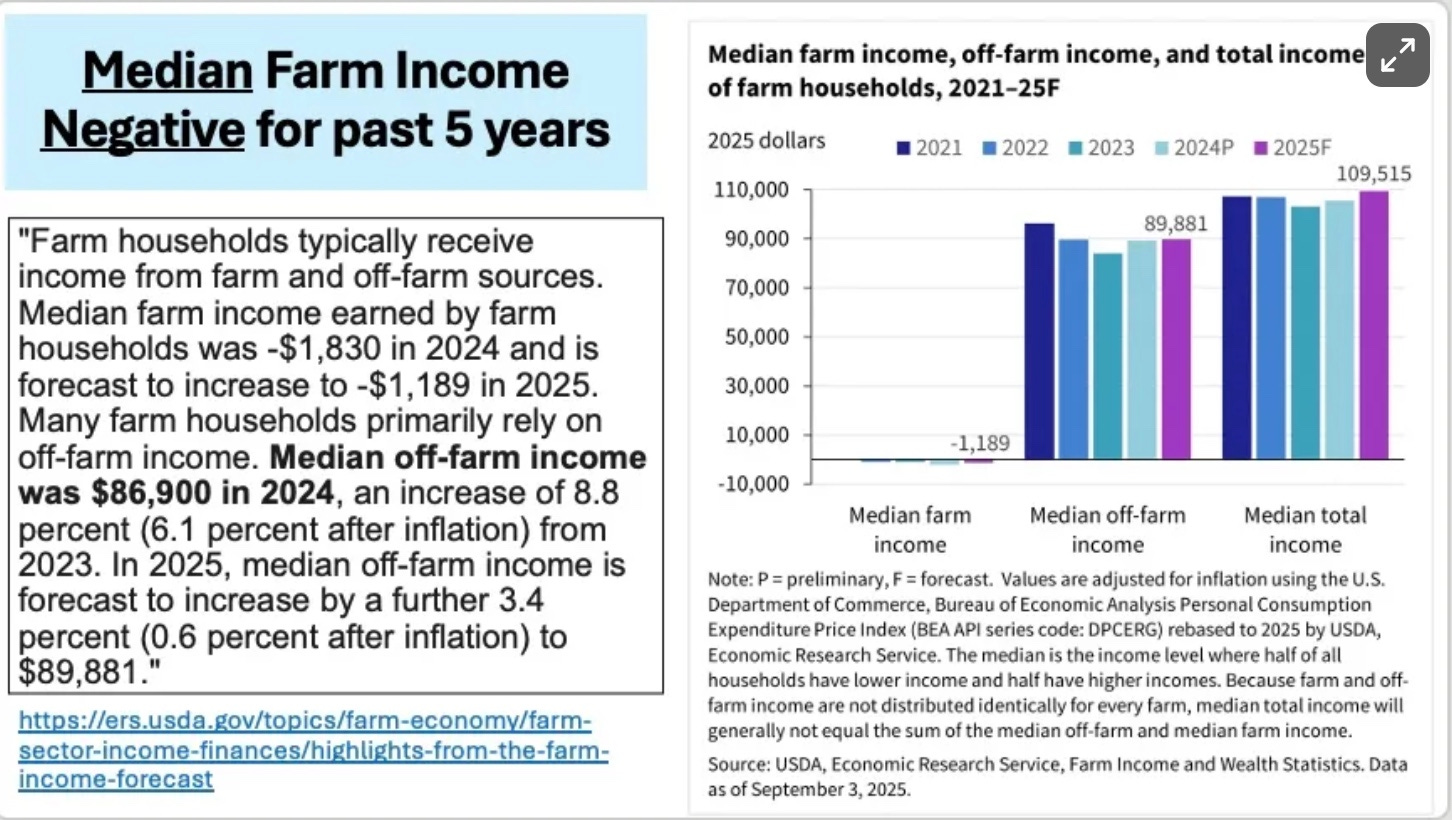
2. MEDIAN on-farm income has been negative $1000-2,000 for each year since 2021, according to USDA.
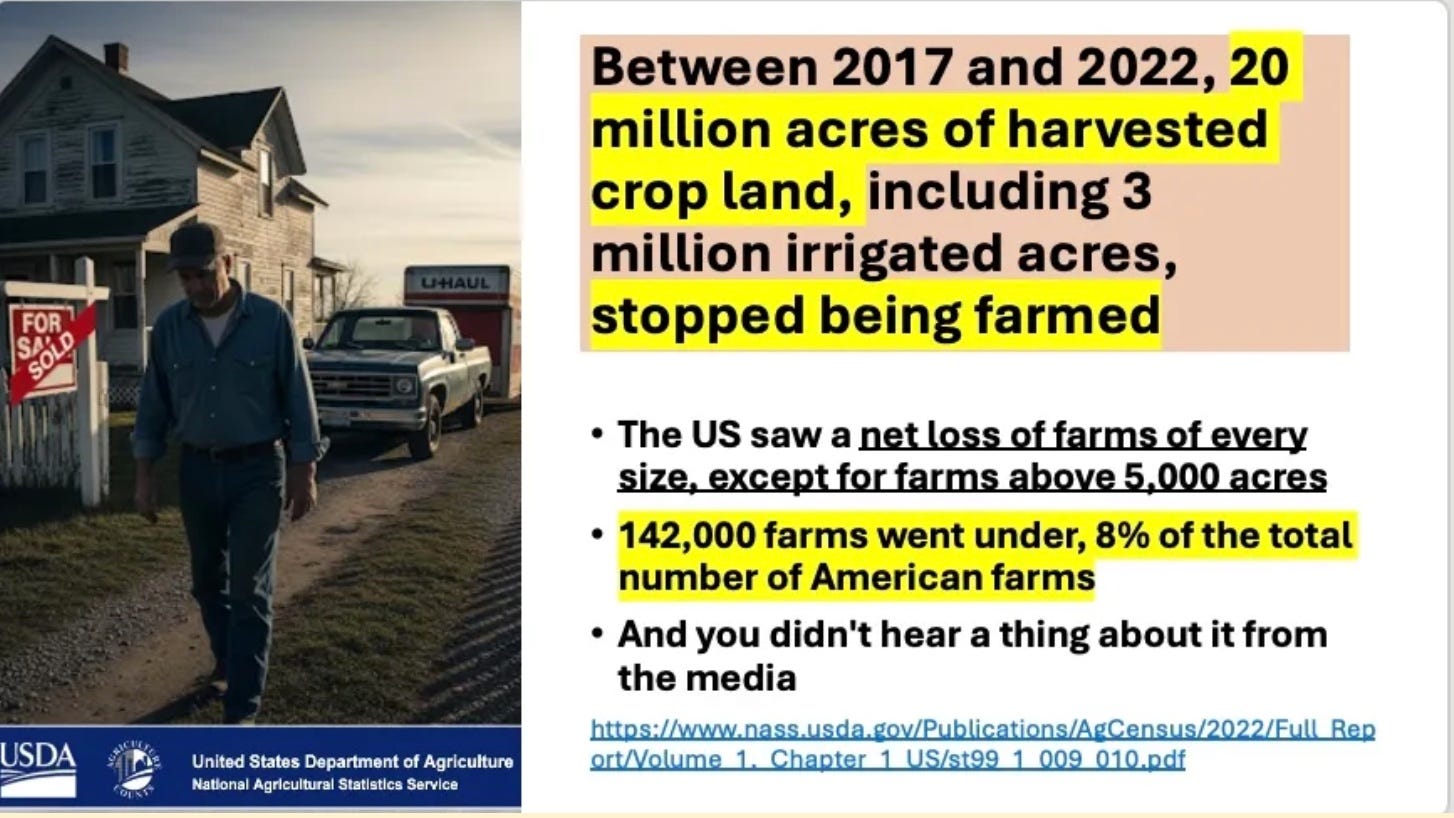
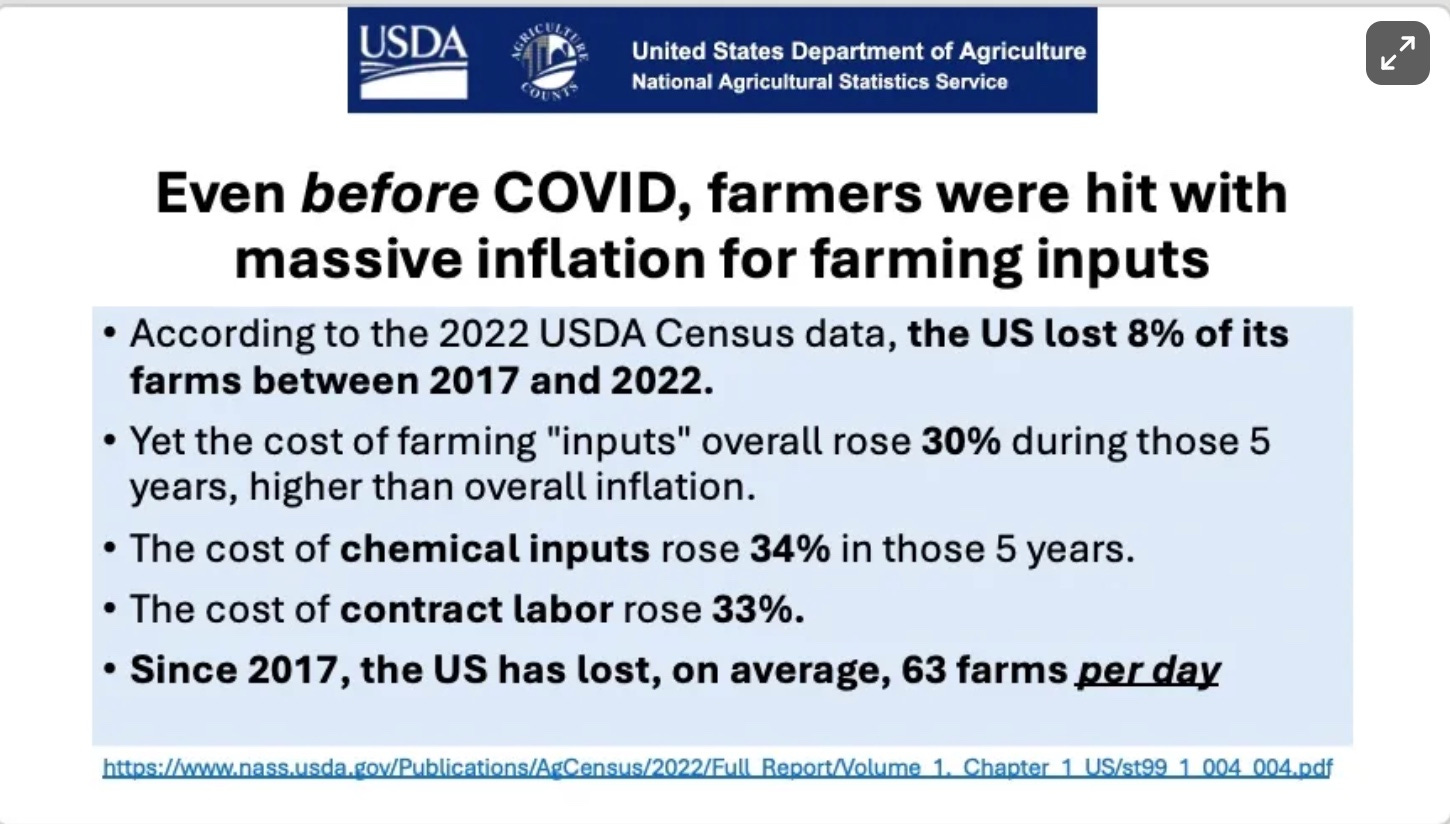
3. According to the USDA, between 2017 and 2022, 142,000 farmers lost their farms, and 20 million acres of cropland stopped being farmed.
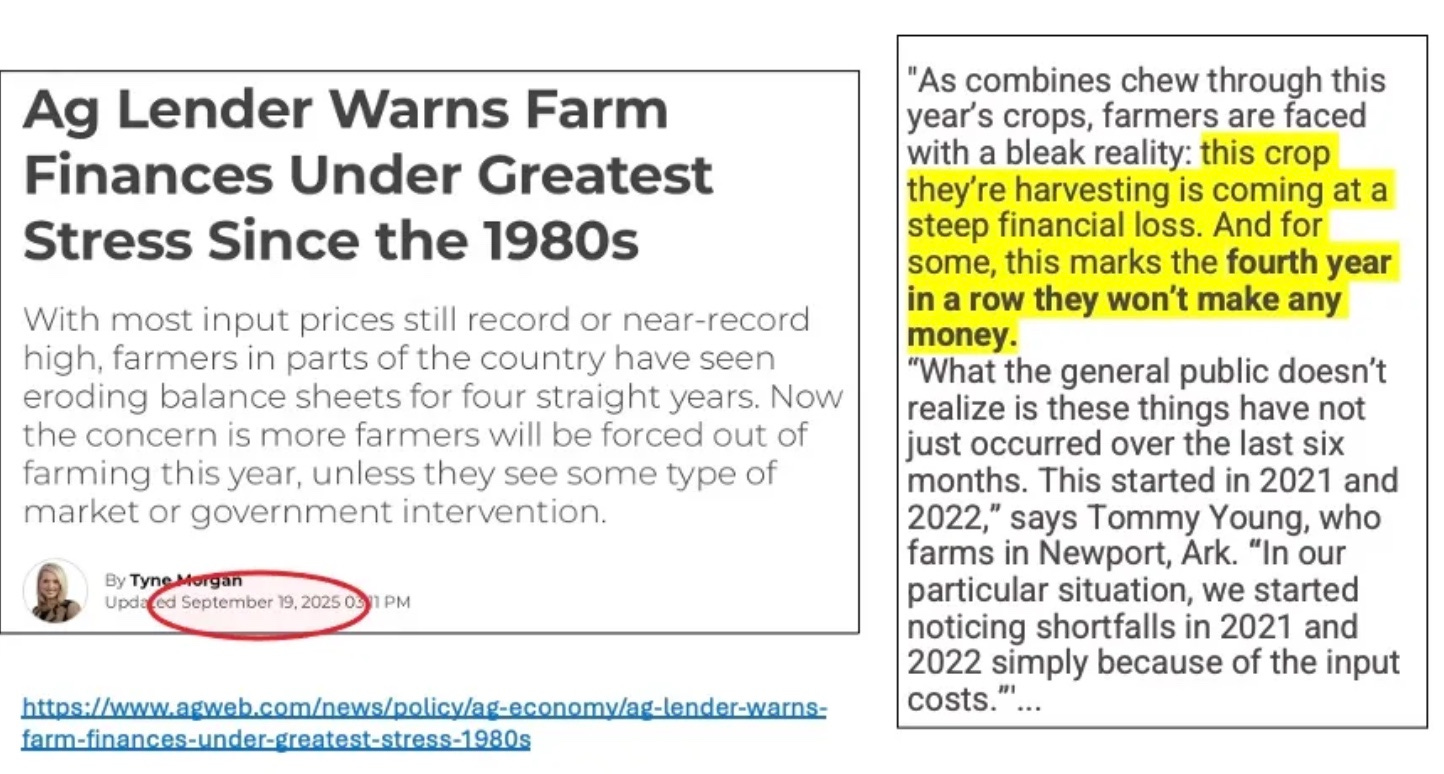
4. In the past 12 months there have already been two big bailouts/subsidies provided to US farmers by the federal government due to their dire situation. https://farmaction.us/china-stopped-buying-u-s-soybeans-the-real-problem-started-decades-ago/
5. Farmers do not want another financial bailout, which just kicks their can down the road.
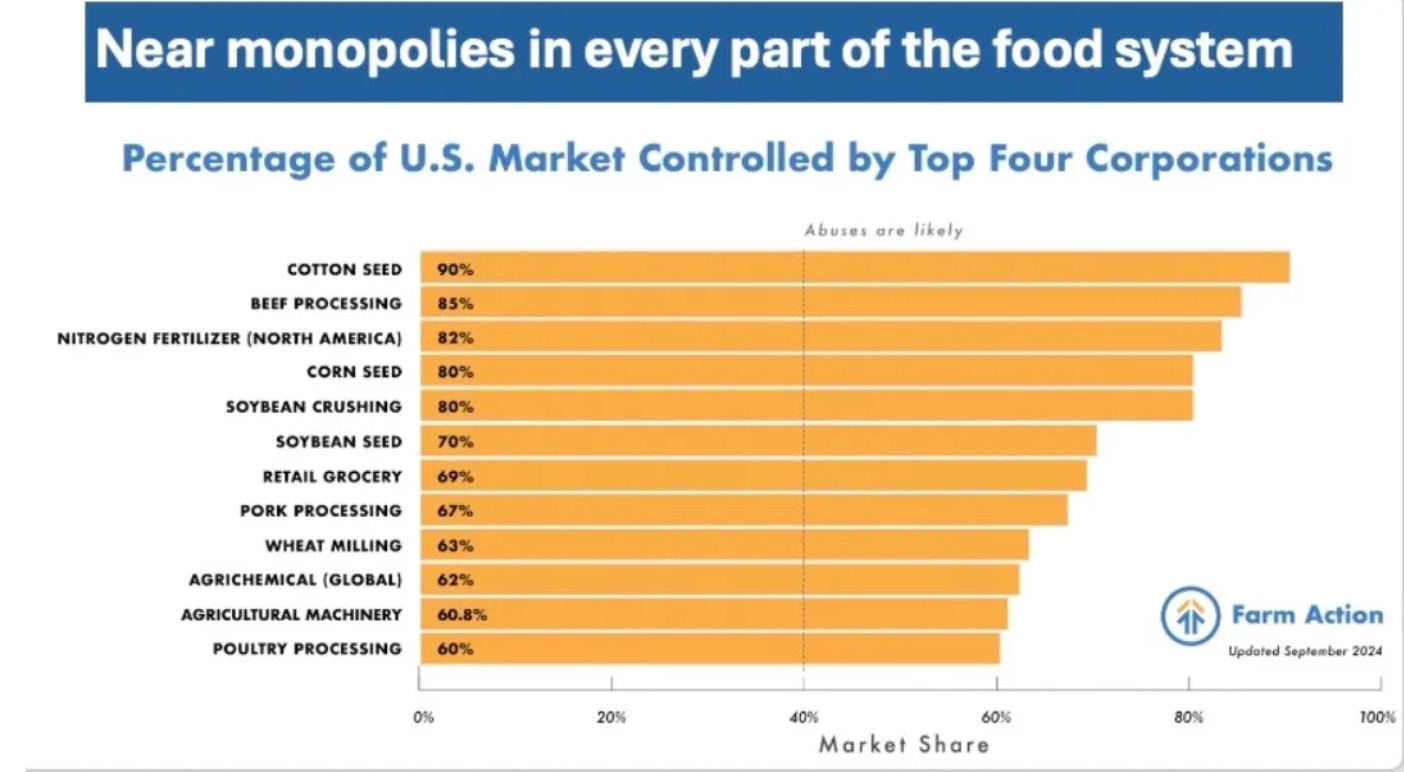
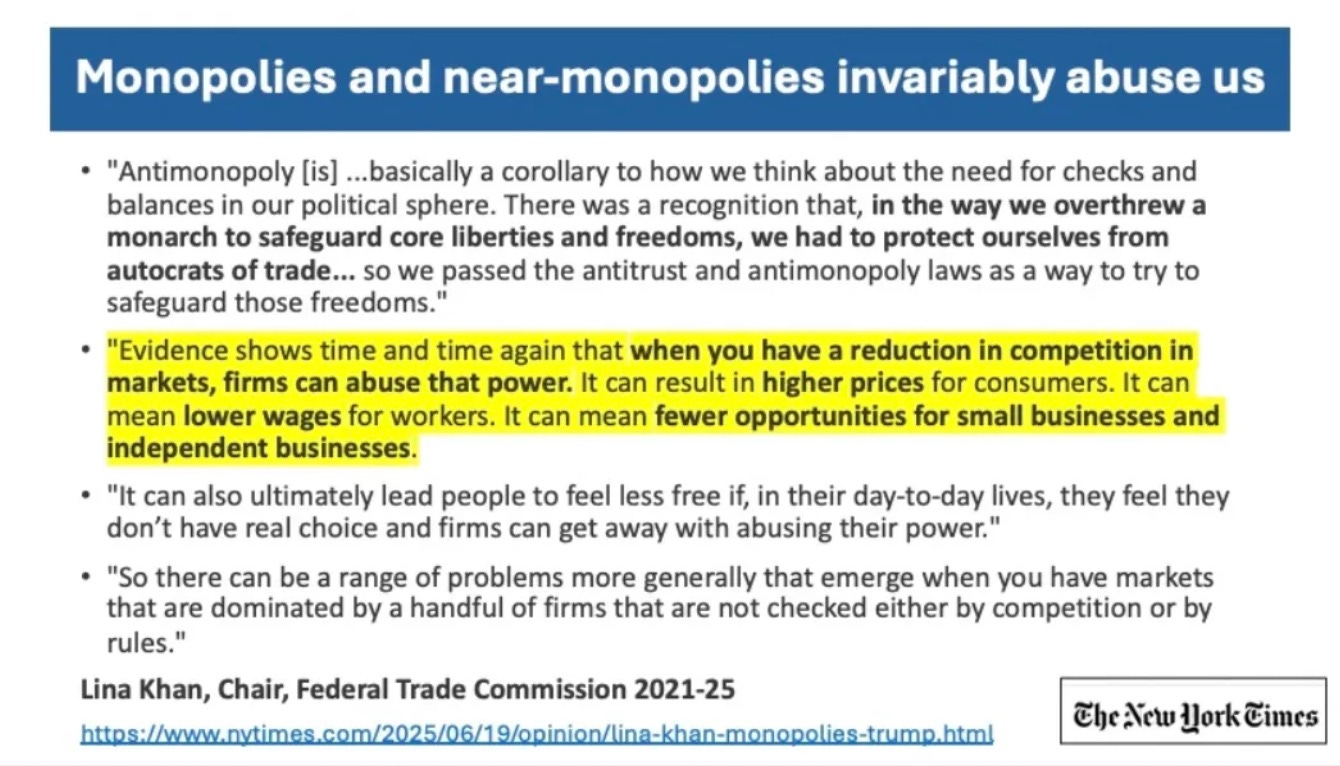
Farmers face a huge number of impediments to their financial success. Our website “Save Our Food and Farms” (sofaf.org) lists 50 ways farmers are facing attacks from nature, from agricultural oligopolies and from the current regulatory system.
6. The biggest problem facing farmers right now is lack of access to affordable finance–having had to borrow for several years and having put up their farms as collateral. Banks have been told farmers are now high-risk borrowers, although traditionally they have had a less than 1% rate of default. Interest rates are high, if they are able to borrow at all. They are often forced to put up 125% of the value they are borrowing as collateral. Many are close to losing their farms. Some economists have estimated 25% of farms will soon fail.
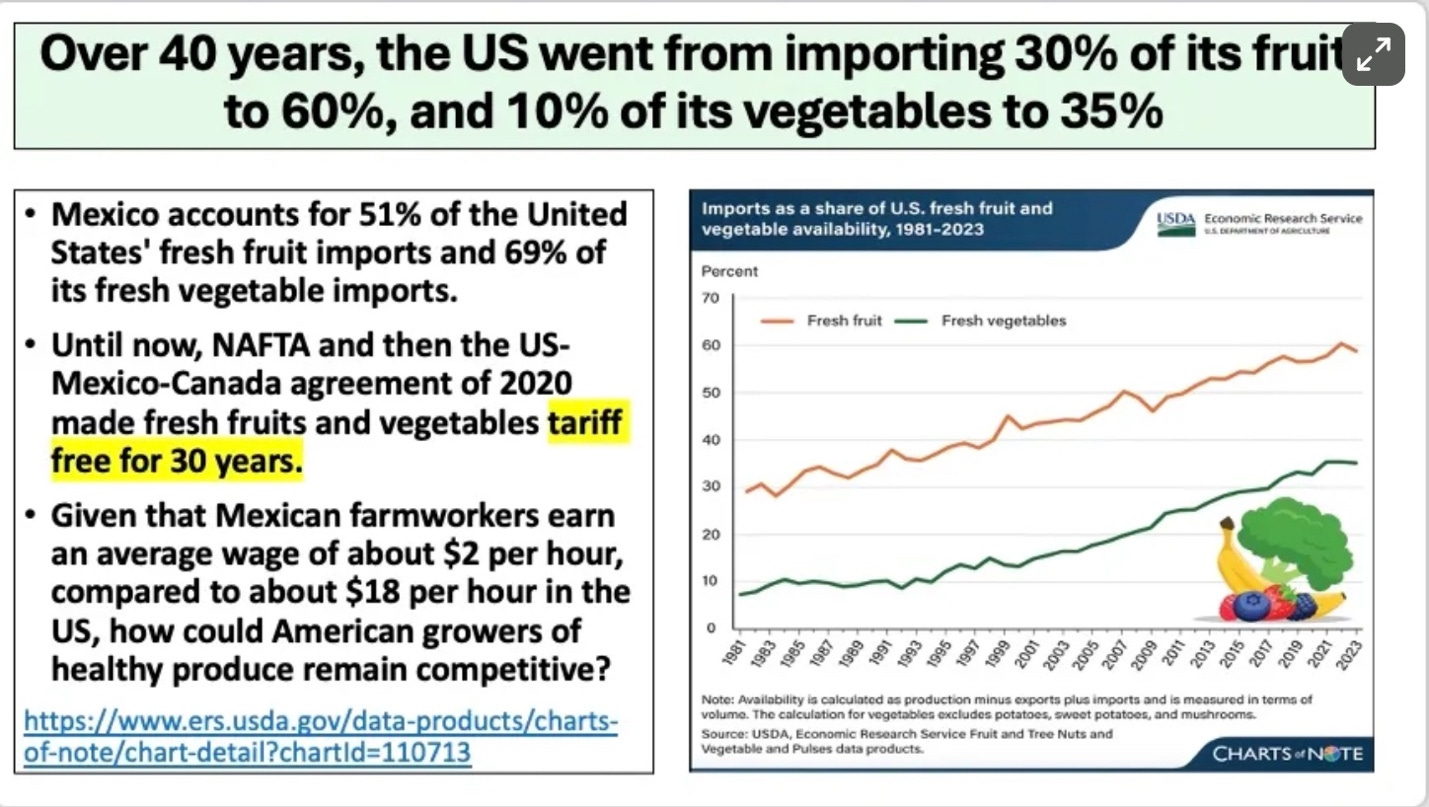
7. Over the past 40 years, US fruit imports have doubled to 60% of all fruit consumed in the US, and vegetable imports have more than tripled to 35% of all vegetables consumed in the US. This was the result of zero tariffs (beginning with NAFTA in 1993) and US government subsidies to commodity farmers but not to specialty crop (fruit, vegetable and nut) farmers.
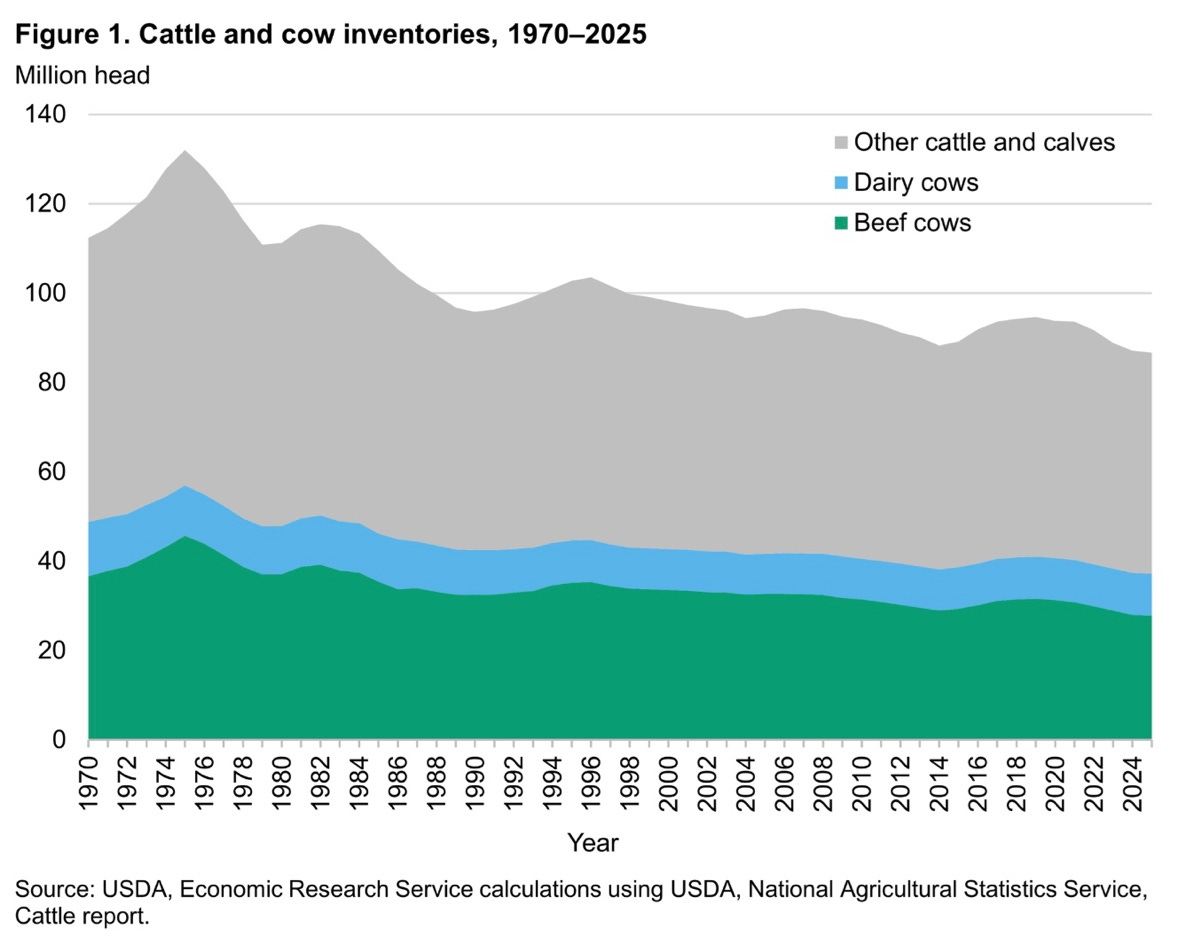
8. Beef imports to the US doubled between 2013 and 2023. The US cattle herd is at its lowest level since 1951.
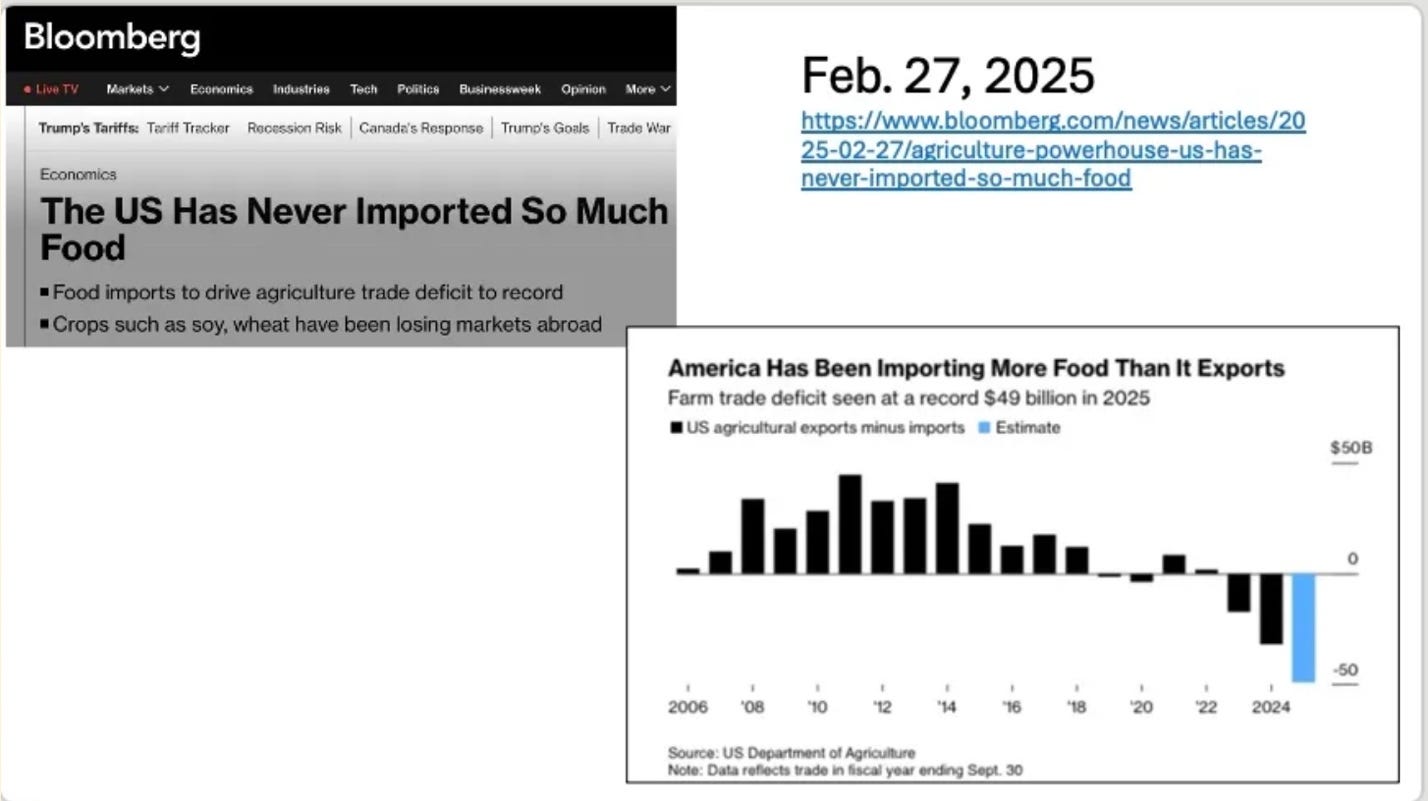
9. The US is estimated to have become a net importer of $50 billion worth of food in 2025, although for many decades the US has been the world’s largest food exporter.
· Clearly, farming and US food production are in crisis.
· Yet there are many positive approaches that can be adopted immediately
· Farm policy has favored the largest commodity farmers and the agricultural oligopolies for decades; can it now pivot to helping all farmers and gaining back their trust?
Here is a list of ways to remediate the farming crisis while supporting a MAHA agenda:
1. Provide funds to make much more financing available for farmers with low interest rates, coupled with suggested financial incentives for using regenerative or organic farming practices.
USDA can increase funding for existing Farm Ownership and Farm Operating loans for purchasing or expanding a farm, as well as covering day-to-day expenses. Other programs that could be expanded include specialized loans for beginning and young farmers, Emergency Loans for natural disaster recovery, and a program that offers Guaranteed Loans to help farmers get credit from commercial lenders.
The Small Business Administration (SBA) should prioritize loans to small businesses, including farmers, for equipment, regional vegetable and fruit processing, cold storage, and food hubs.
Use SBA’s authority to direct over 20% of government procurement to small businesses, so all agencies will procure foods that are healthy, ideally regenerative or organically raised, and are local/regional.
2. Require that a significant percentage of food for hospitals and nursing homes (via Medicare and Medicaid incentives) be raised on farms within their state.
3. Enforce anti-trust laws and end the agricultural cartels’ illegal, non-competitive practices. Provide federal funding for the partnership between USDA and State AGs to enforce antitrust laws in food and agriculture.
4. Provide immediate USDA exemptions for states to allow selected, high quality custom slaughterhouses to sell meat within their states. (This is essentially what the PRIME Act, HR-4700 does, and what was done in Maine during the first year of the pandemic.)
https://www.mainebiz.biz/article/maine-custom-meat-processors-are-easing-bottleneck
5. USDA could provide an exemption so that state-inspected meat, whose inspections must be at least as rigorous as USDA’s, could be sold interstate (essentially what Senator Mike Rounds’ bill S-1496would do).
6. Consider whether a Presidential emergency declaration on the farming crisis would provide additional tools to solve the problems listed here.
7. Announce a completely new, comprehensive farm policy that will revamp the current agricultural subsidy structure over the next ten years away from commodity crops and the production of ingredients for ultra-processed, non-nutritive foods to healthier specialty crops and healthier farming practices. For example, expand USDA’s Specialty Crop Block Grant Program, helping farmers build markets and scale up production.
8. Consider instituting special bulk USPS shipping rates for farmers shipping food they have grown.
9. Exempt small farmers from certain Food Safety Modernization Act rules that increase compliance costs but have not been shown to improve food safety. See attached pdf prepared by the Farm and Ranch Freedom Alliance.
10. US-grown and raised food should not have to compete with imported foods that are not required to meet US standards. There should be rigorous inspection of “organic” imports, as well as meat and fish.
11. Impose mandatory, not just voluntary country of origin labeling (COOL) on food. This may require leaving the World Trade Organization. Restrict “Born and Raised in the USA” labels to only animals born and at least 50% raised in the USA. (Many US-born cattle move to Canada to graze for some time.) The Administration should take advantage of the scheduled review of the United States-Mexico-Canada Agreement (USMCA) in July of 2026 to reinstate mandatory COOL for all beef, pork, and meat products between the countries.
12. USDA could provide funding for the Local Food Purchase Assistance (LFPA) program and the Local Food for Schools (LFS) program, which were created to alleviate supply chain issues during the pandemic. Similar programs would support small and mid-scale, diverse, and specialty crop farms as well as schools, food banks and local institutions.
13. Expand risk management options for diversified and regenerative farms, ensuring these growers have access to crop insurance and safety net programs that reflect their production systems. Reform crop insurance programs like Whole Farm Revenue Protection (WFRP) and NAP to make them more accessible and effective for specialty crop, regenerative, and small-scale farmers. Cap crop insurance subsidies to ensure fiscal responsibility and broader access. (See: Save Our Small Farms Act, Assisting Family Farmers through Insurance Reform Measures Act)
14. Audit and reform the (captured) commodity checkoff programs.