Photos from Italica
Photos from Italica

Italica is the first Roman city on the Iberian peninsula. You might recall that Hannibal of the Carthaginians crossed the Strait of Gibraltar with 80 elephants and an army and after crossing the Alps attacked Rome, about 220 BC. In those days you could sail up to Seville and Italica, now just outside the town of Santiponce, which is 6 miles away from Seville.
Hannibal won, and ruled Rome, for awhile.
Eventually Rome decided to fight back by stopping the Carthaginians at a choke point: as his troops and elephants crossed over to Spain. This strategy cut off his supplies and resulted in the Roman defeat of Hannibal.
Meanwhile, the Roman army decided it liked the region and chose to use it for R and R. Soon it became a Roman outpost. Soldiers and others were given land grants. Founded in 206 BC, a significant city rose up by 100 BC, including an ampitheatre that seated 25-35,000 people! The Roman emperor Trajan was born there, and his nephew, the next Emperor, Hadrian, visited the town, and both invested considerable resources in it.
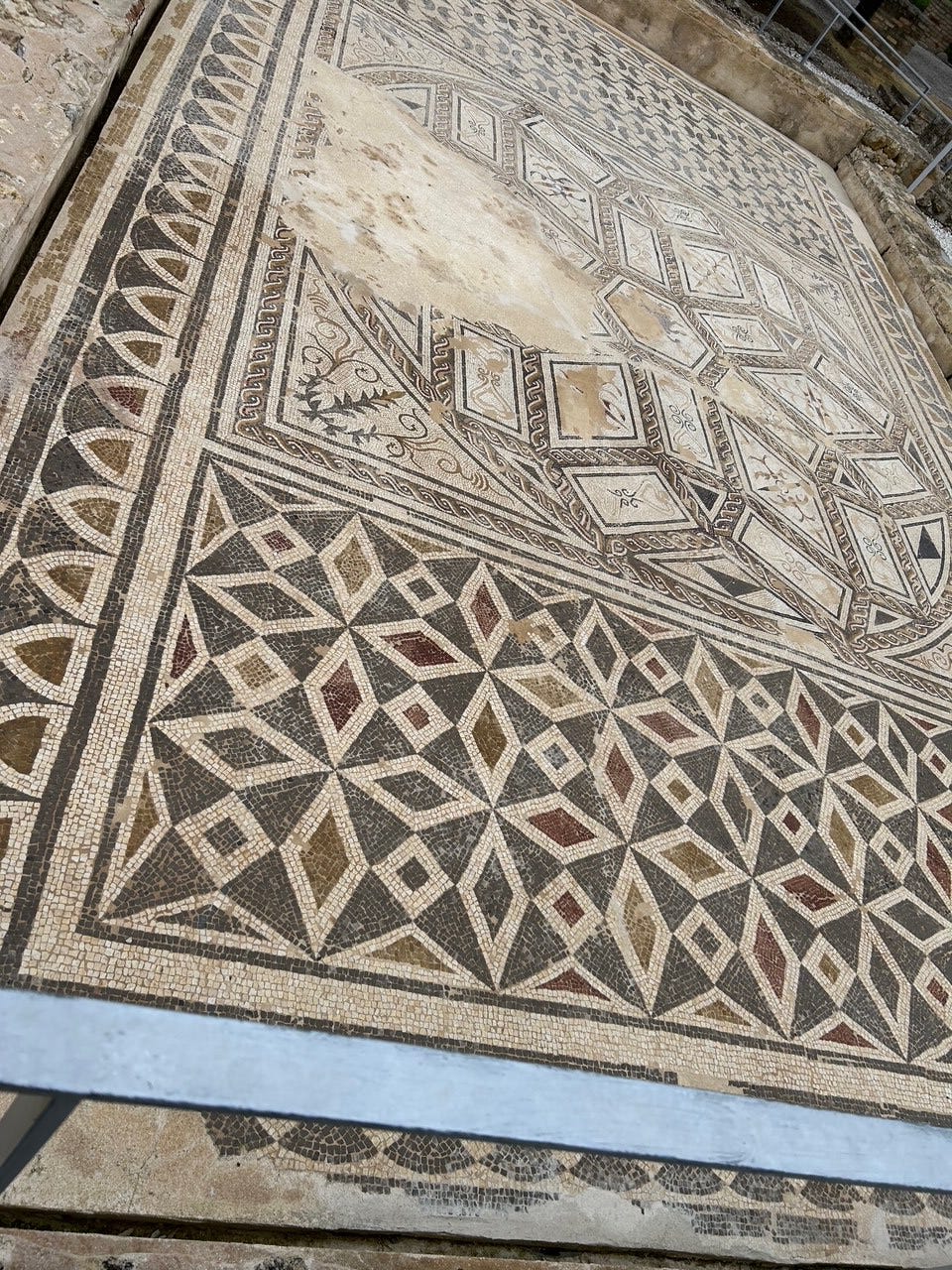
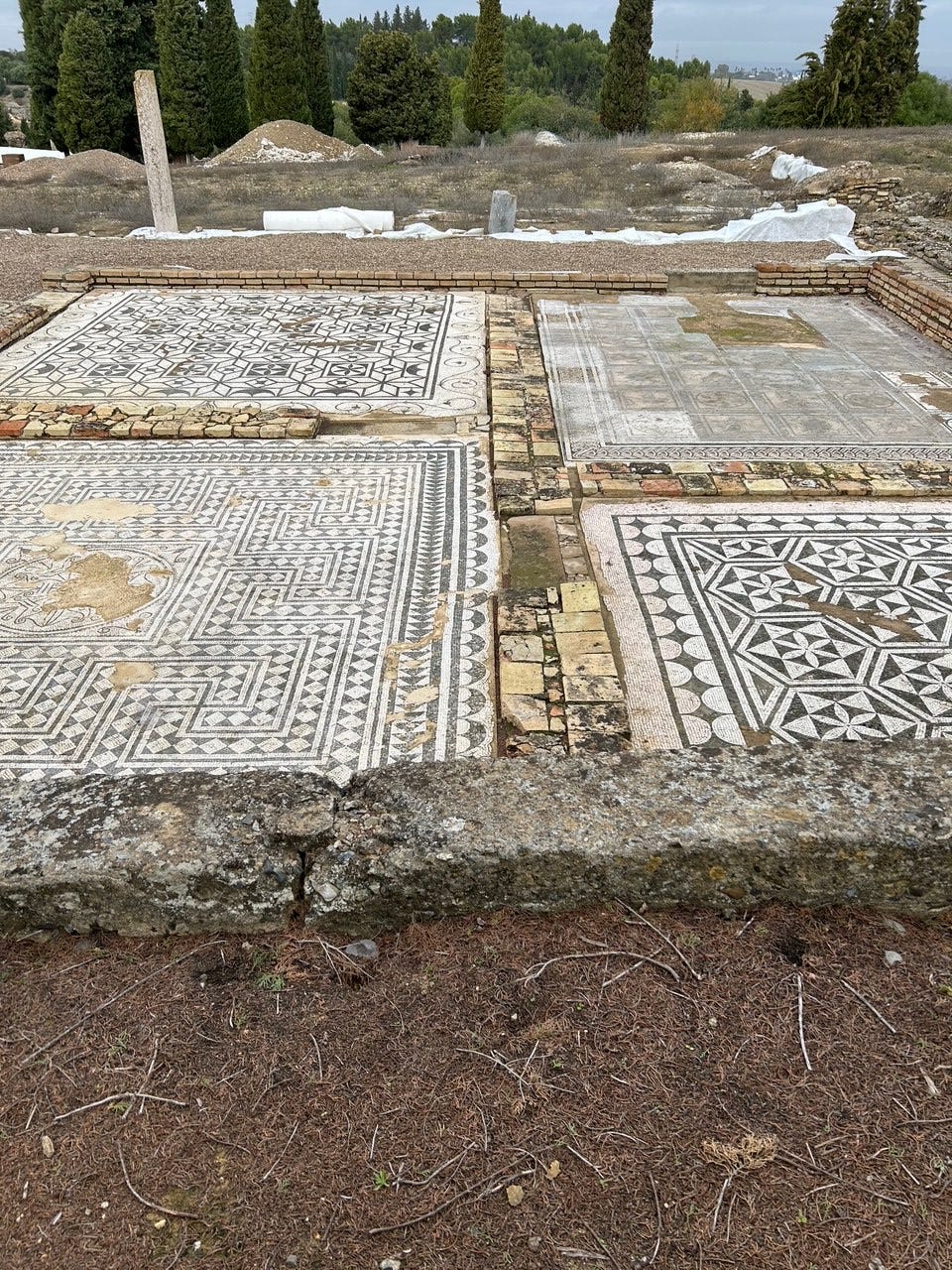
Only relatively recently (a few decades ago) were the ruins taken seriously, with archeological efforts to dig up the remains and reconstruct them. Much of it had been removed over the decades to decorate the homes of the rich, or provide building materials. But surprisingly, much remained. The mosaics I will show you are all original. Missing areas of the mosaics are left empty. They were used to decorate the floors of the rich homeowners.
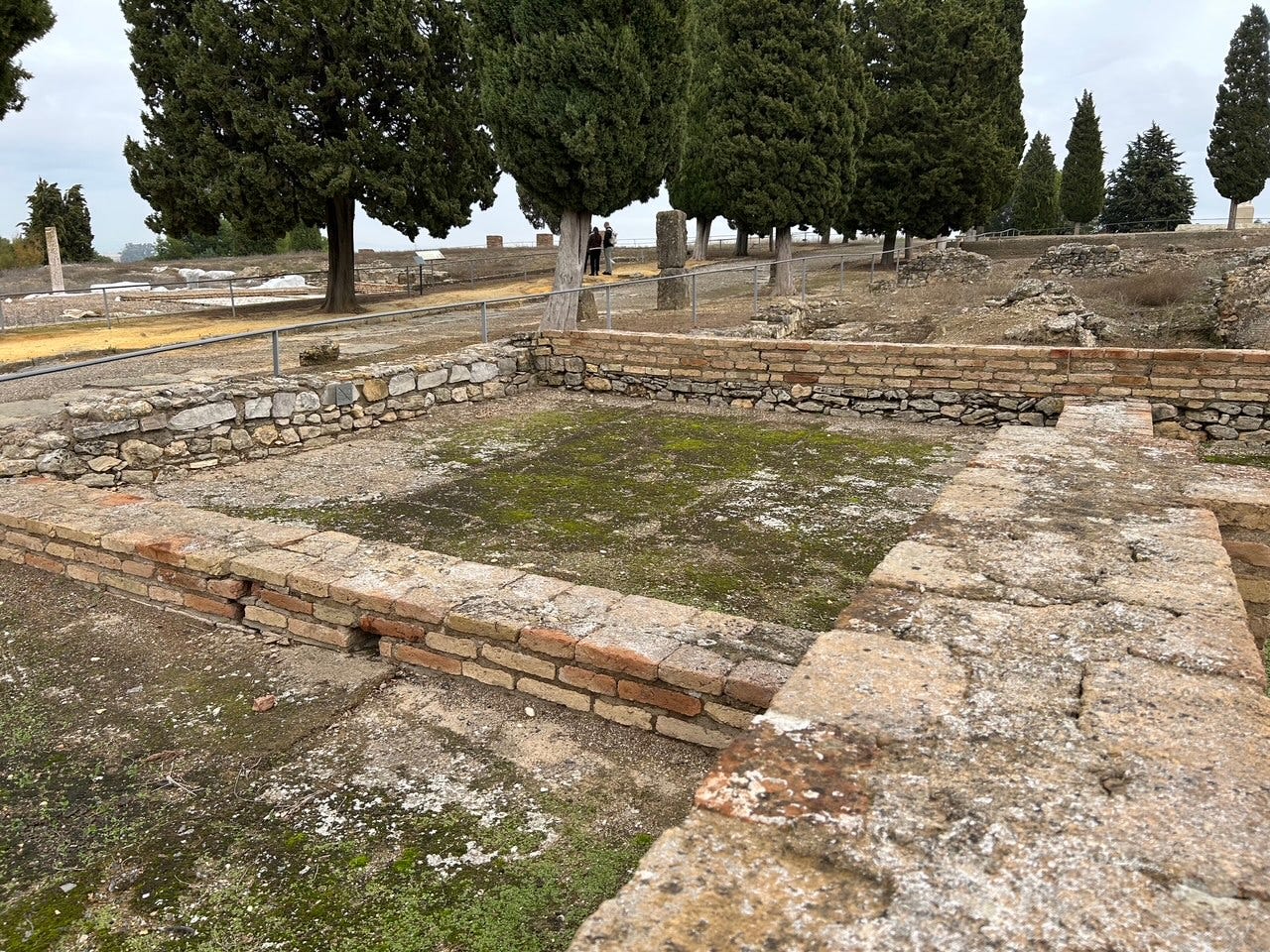
The rough parts of the foundation walls are original, while the smooth parts are restored. The Romans are said to have perfected a very powerful mortar that allowed these structures to survive. Each of these faces represented a day of the week. The architects did a great job putting this back together, didn’t they?
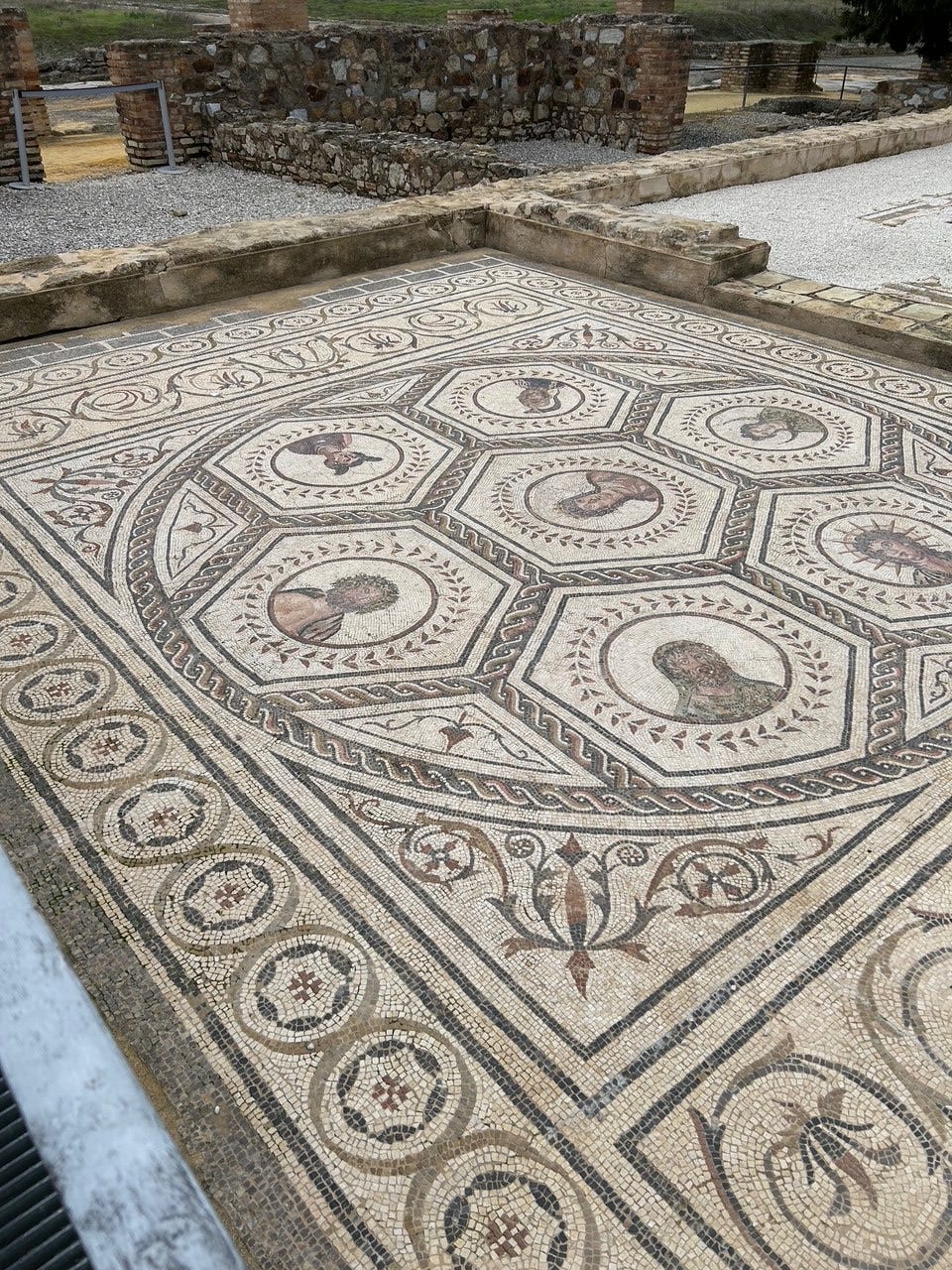
Pretty amazing, huh?
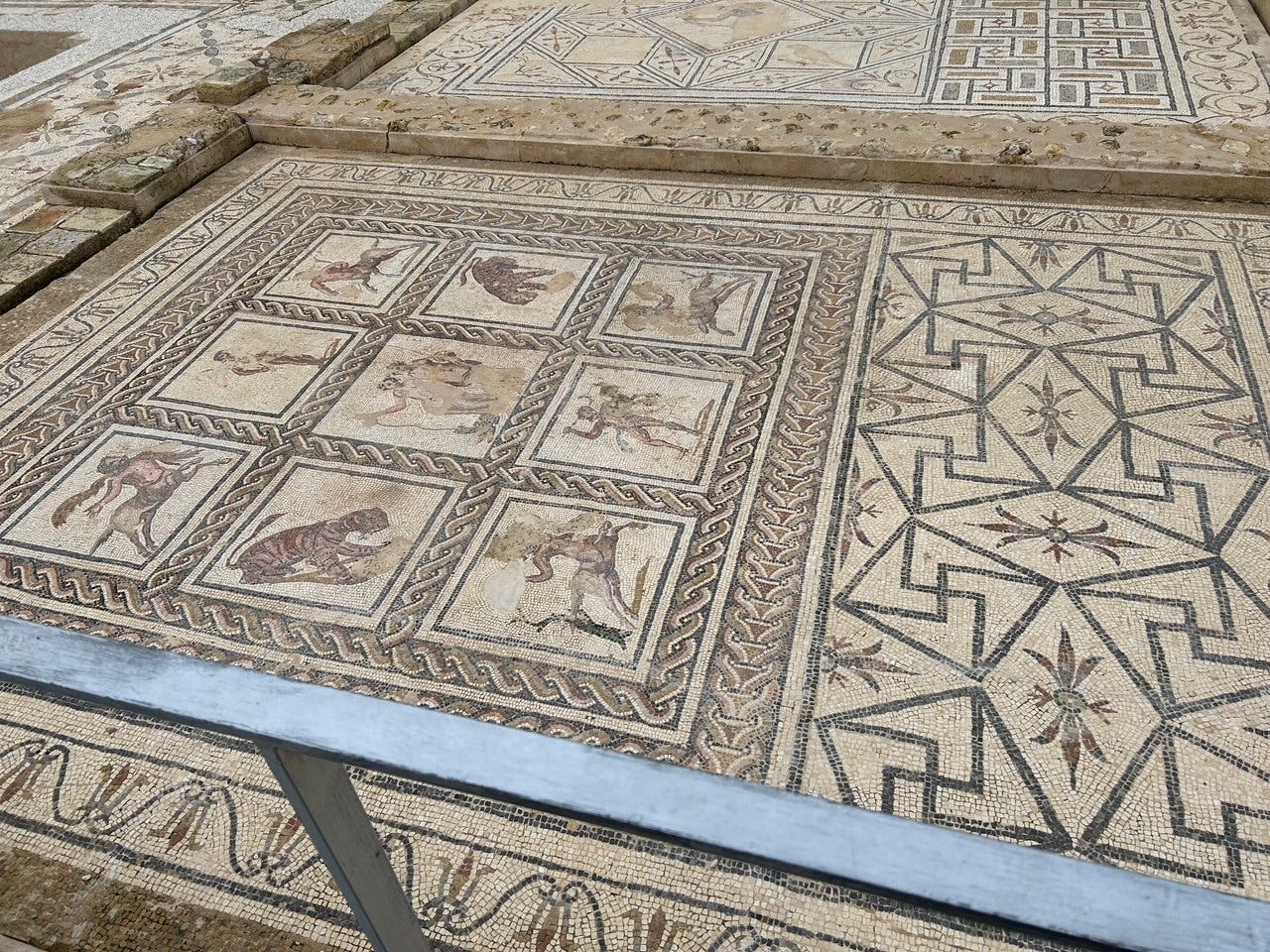
The missing areas are thought to be often the most important, stolen long ago. One wonders whether some of the unique Moorish designs (the Moors took over southern Spain in 717) actually derived from Roman abstract designs.
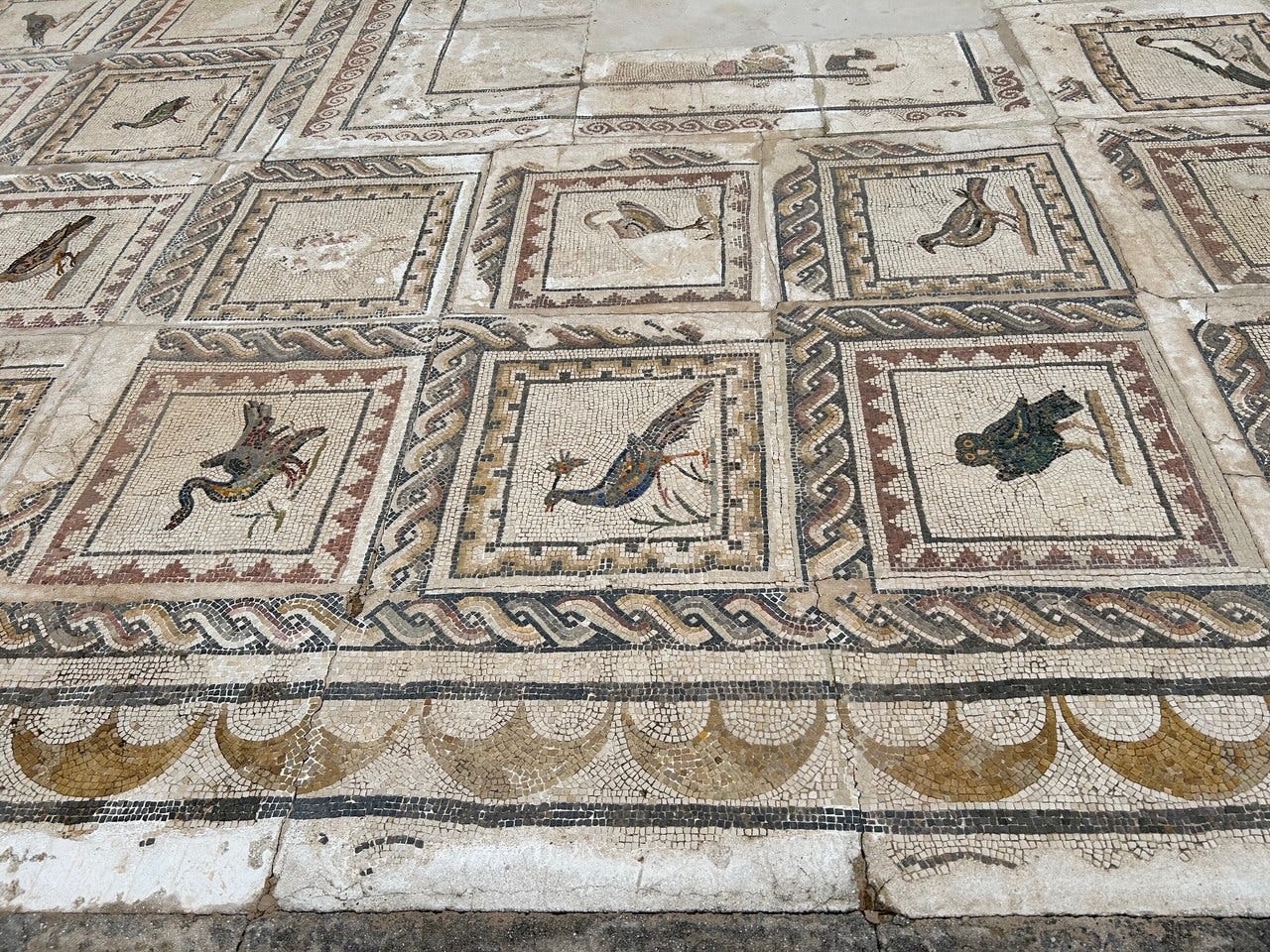
I included the photo below so you could see which parts of the wall are original (the rocks) and which are new (the bricks). But there are old areas made of bricks too, elsewhere.
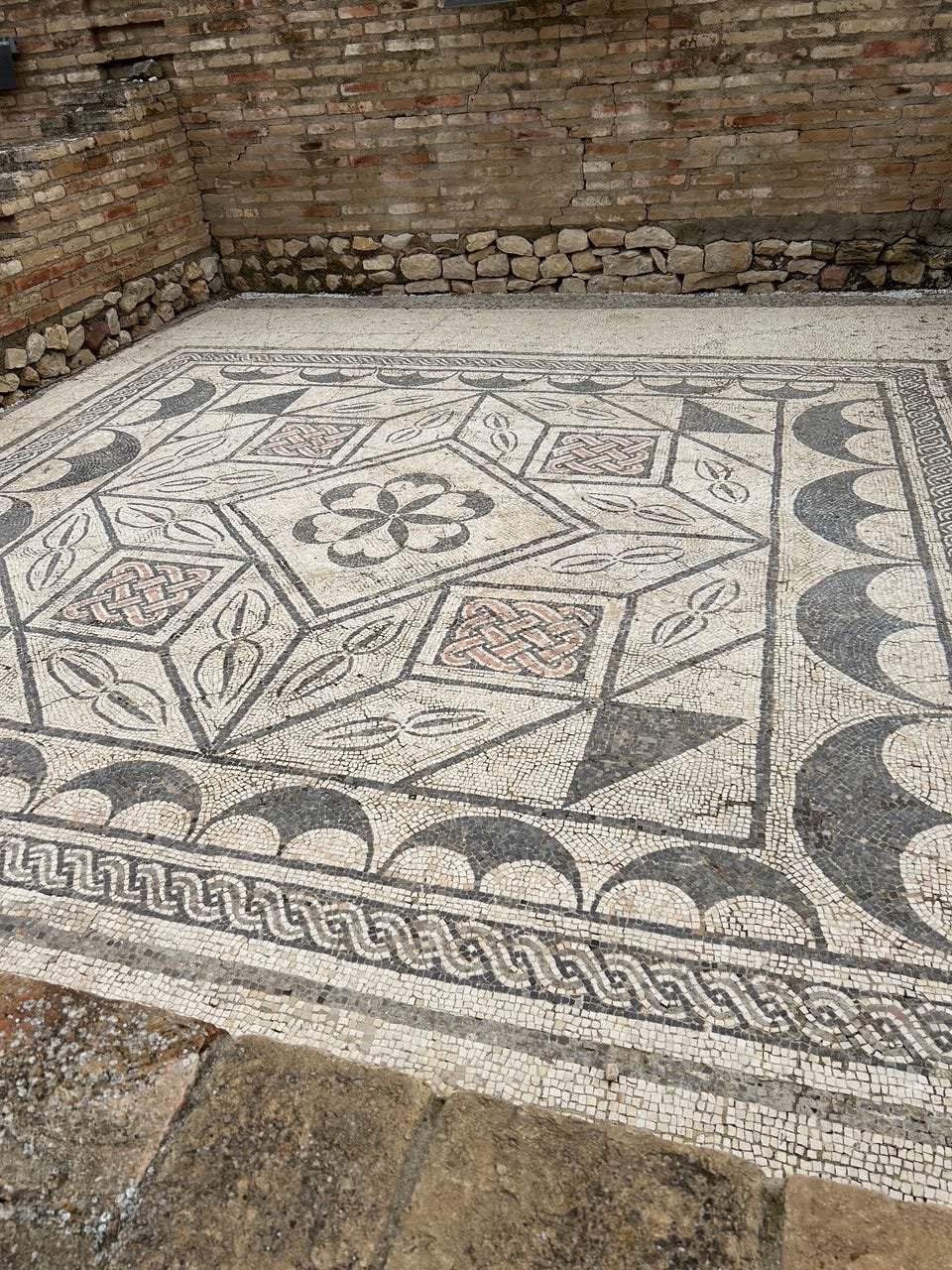
Below, this is all thought to be from one house of a prominent citizen.
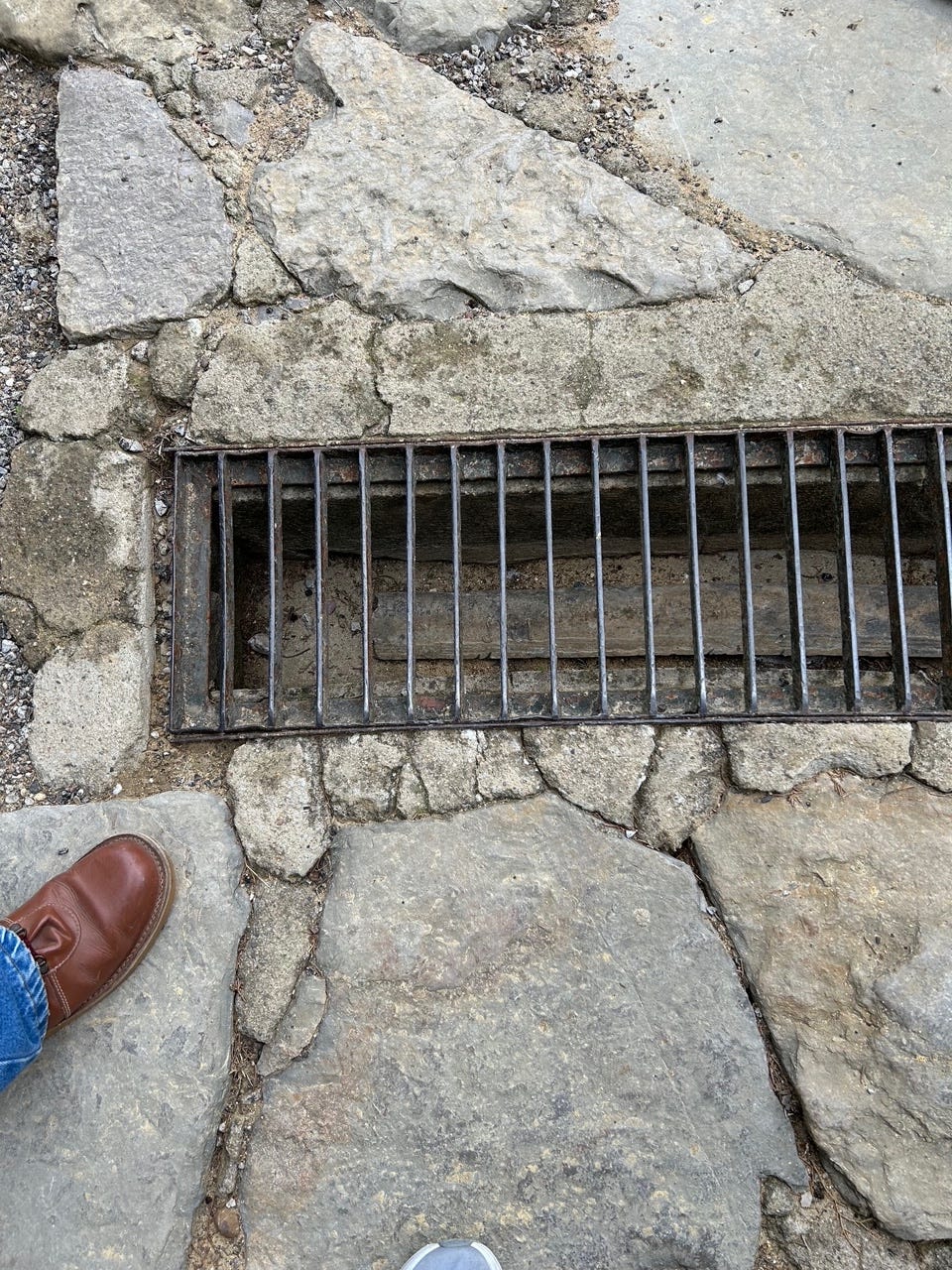
Below is a real lead pipe they found—and the town had a real sewer system, as well as fresh water piped to fountains for all to collect, and to a few wealthy homes.
This is part of what remains of the ampitheater. It is believed to have been 3 sections high, but the top section is missing, probably pilfered for building materials. They had gladiator fights, animal fights, actual circus acts, and that pit was usually coverd, but the cover could be removed to have ships battle each other.
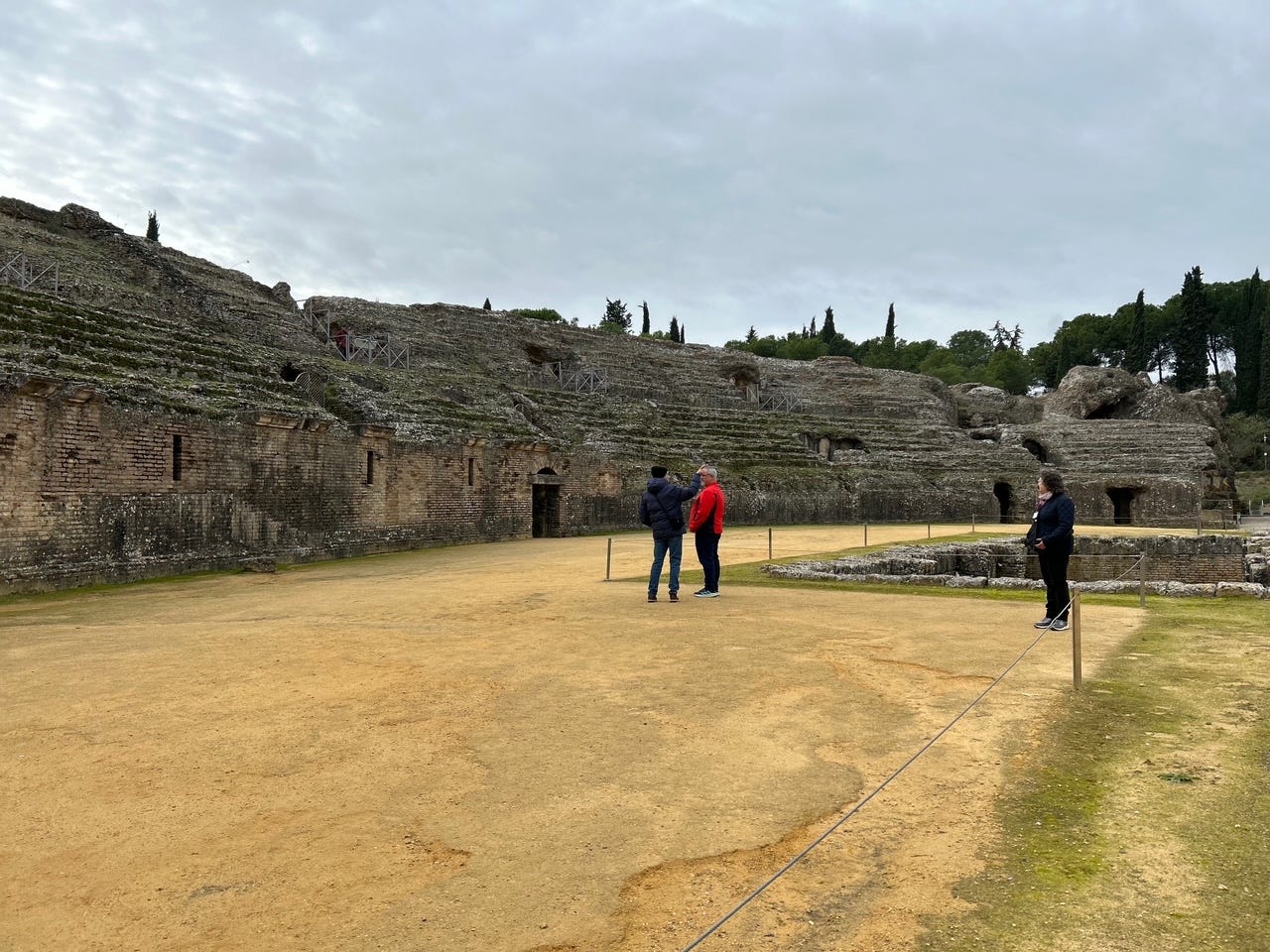
Here is a better picture of the pit, where fake sea battles could be created.
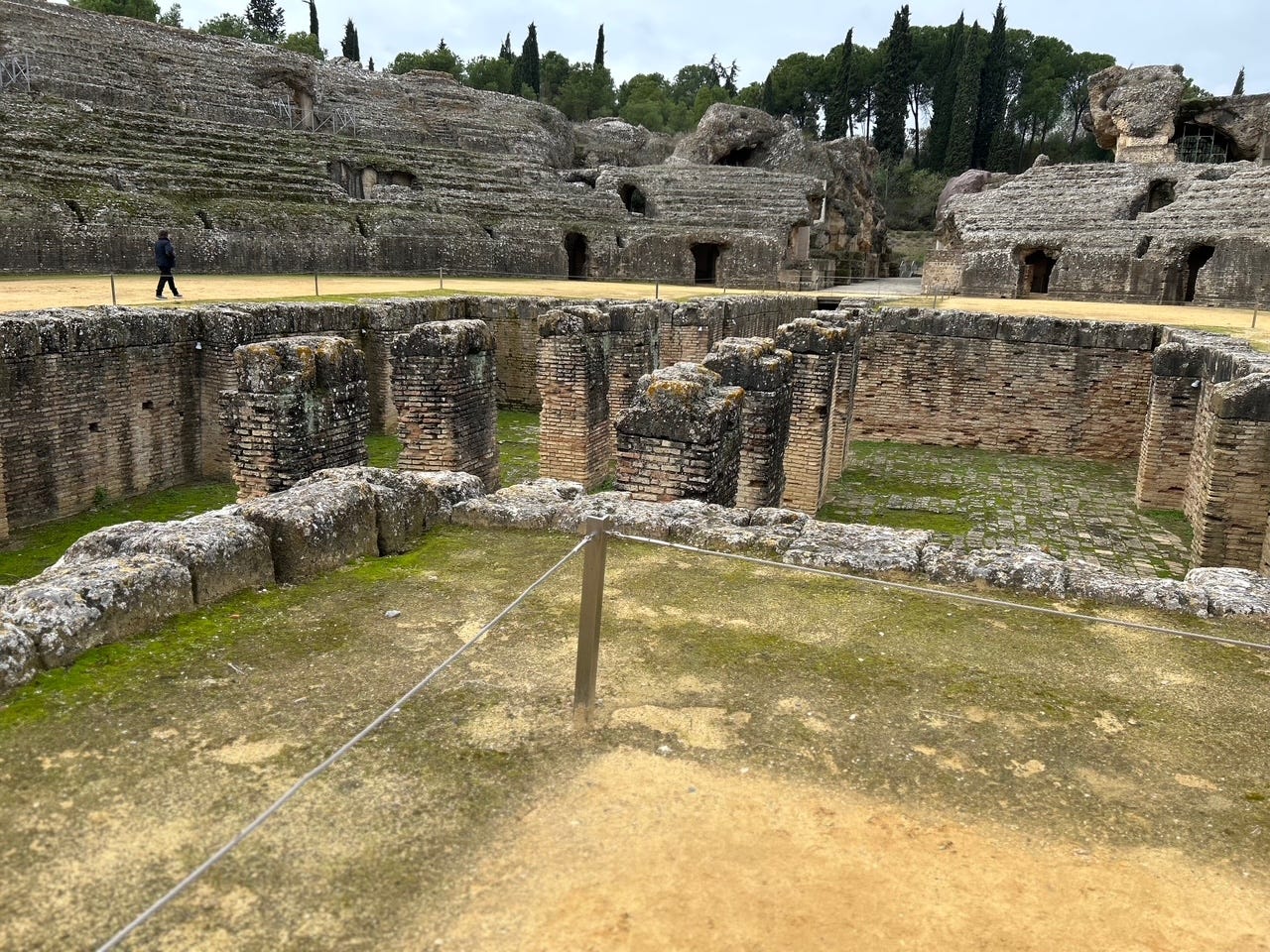
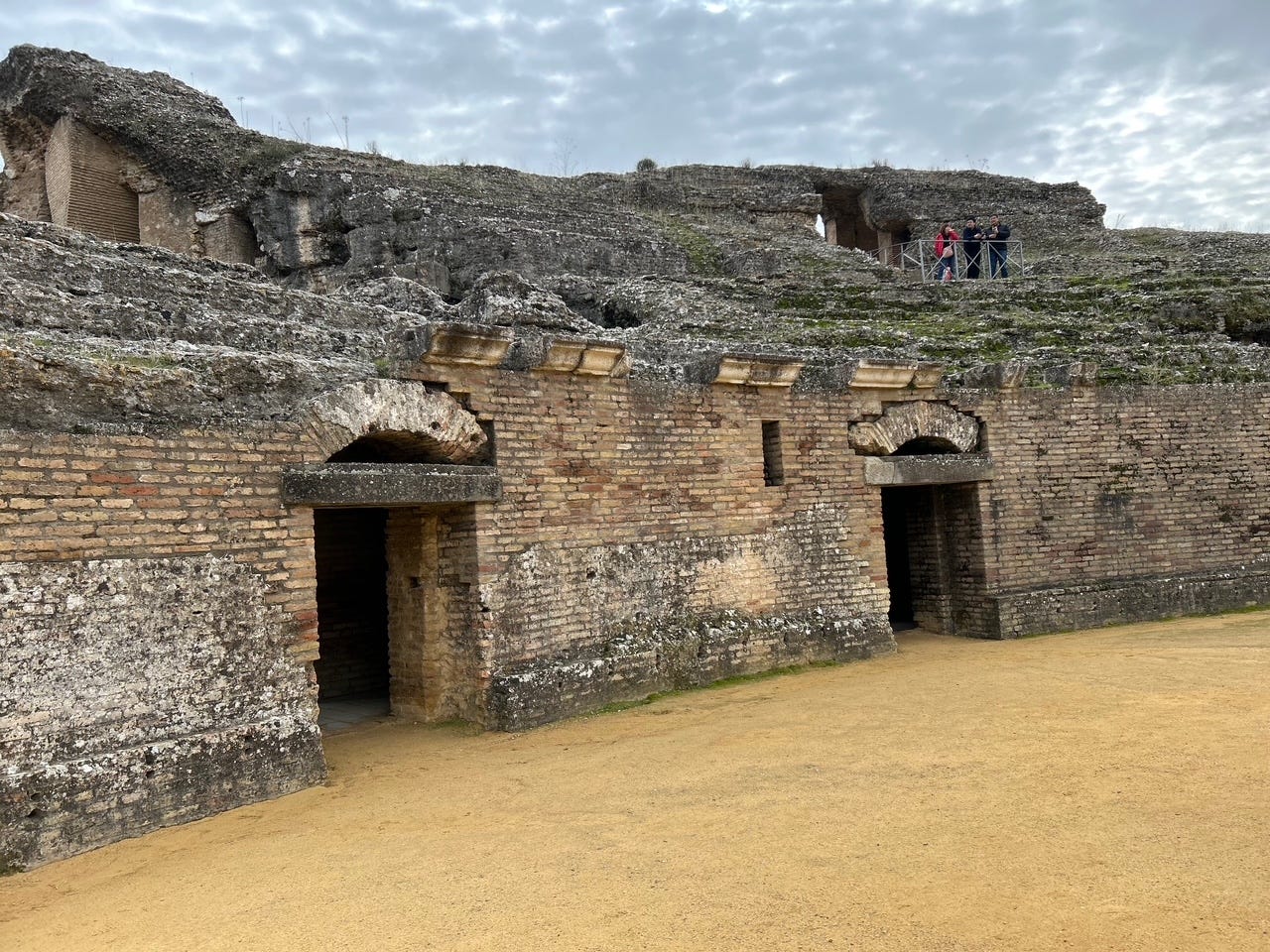
The white-gray areas are said to be original. I imagine the architects must have dug a huge hole and supported the stones above while filling in the missing areas with bricks. Just a guess.
Goodnight!