I asked Google Gemini 3 to give me the citations for the studies that claim flu shots prevent severe illness (and maybe deaths), and that account for the “healthy vaccinee effect”
I asked Google Gemini 3 to give me the citations for the studies that claim flu shots prevent severe illness (and maybe deaths), and that account for the “healthy vaccinee effect”
Because it is well known that healthier people are vaccinated at a much higher rate than frail people, I wanted to be sure the studies were rigorously done

Here are the 3 citations it came up with. Check out the conflicts of interest.
Study 1: Author 3 was booted from the ACIP earlier this year. Almost all these authors have contracts with vaccine manufacturers and/or CDC, and CDC paid for this study and controlled it.
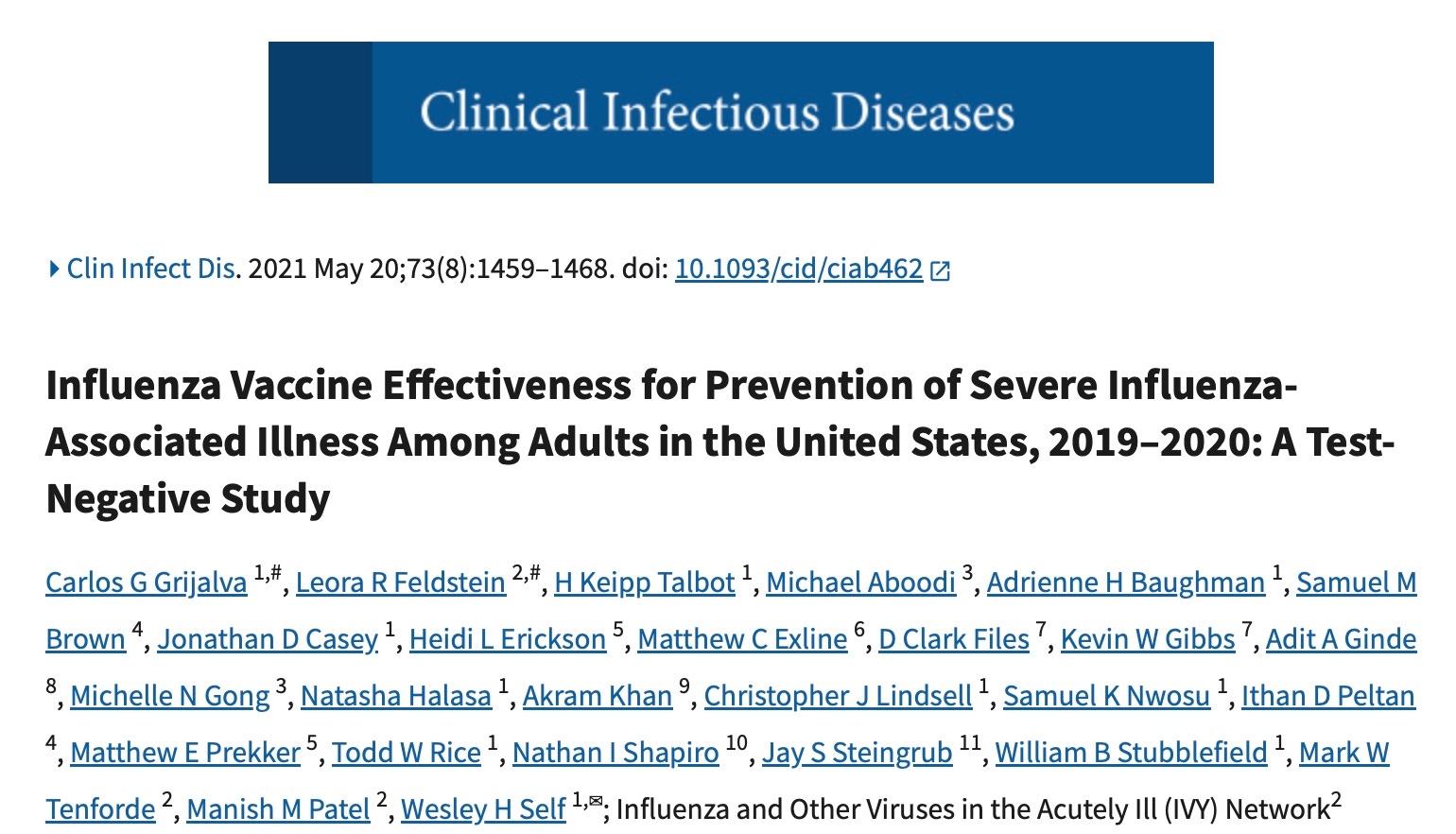
https://pmc.ncbi.nlm.nih.gov/articles/PMC8682606/#n1
Financial support. This work was supported by the US Centers for Disease Control and Prevention (CDC) through contract 75D30119C05670 to W. H. S. Investigators from the CDC participated in the study design, analysis, and interpretation.
Potential conflicts of interest. C. G. G. reports consultation fees from Pfizer, Merck, and Sanofi-Pasteur and grants from Sanofi, Campbell Alliance, the Centers for Disease Control and Prevention (CDC), the National Institutes of Health (NIH), the Food and Drug Administration, and the Agency for Healthcare Research and Quality, outside the submitted work. S. M. B. reports grants from CDC for the submitted work; grants from the NIH, Department of Defense, Janssen, Faron, and Sedana; personal fees to chair a Data and Safety Monitoring Board (DSMB) for Hamilton; and book royalties from Oxford University and Brigham Young University, outside the submitted work. J. D. C. reports grants from the National Heart, Lung, and Blood Institute (NHLBI) and the National Center for Advancing Translational Sciences (NCATS), outside the submitted work. M. C. E. reports grants from NIH, outside submitted work. D. C. F. reports grants from CDC during the conduct of this study and personal fees from Cytovale and Medpace, outside this work. A. A. G. reports grants from CDC during the conduct of the study, and grants from NHLBI, NCATS, National Institute of Neurological Disorders and Stroke (NINDS), Department of Defense (DoD), CDC, and AbbVie Inc, outside the submitted work. M. N. G. reports receiving research funding from NHLBI, AHRQ, and Regeneron to conduct research; funding from CDC for this work; fees for serving on DSMBs for trials sponsored by Regeneron. N. H. reports grant support from Sanofi, Quidel, CDC, the NIH, and an educational grant supported by Genetech for speaker fees, and hemagglutination inhibition/microneutralization (HAI/MN) testing and vaccine donation by Sanofi. A. K. reports grants from United Therapeutics, Reata Pharmaceuticals, and Jansen Pharmaceuticals, outside the submitted work. C. J. L. reports support from CDC for the submitted work; grants from the NIH, CDC, and the DoD; and other support from Marcus Foundation, Endpoint Health, Entegrion, bioMerieux, and Bioscape Digital, outside the submitted work. S. K. N. reports support from CDC for the submitted work, and grants from the NIH and the Marcus Foundation, outside the submitted work. I. D. P. reports grants from National Institute of General Medical Sciences (NIGMS), CDC, NHLBI, and Immuneexpress Inc, outside this work, and support to his institution from Regeneron and Janssen Pharmaceutical, outside this work. T. W. R. reports grants from NHLBI, NCATS, and AbbVie Inc, outside the submitted work, and consulting for Cytovale Inc and Cumberland Pharmaceuticals Inc, outside the submitted work. W. H. S. reports receiving research funding from the CDC for the submitted work; consulting fees from Merck & Co Inc, Pfizer, Aerpio Pharmaceuticals, and Baxter, outside the submitted work; and research funding from Merck & Co Inc, Pfizer, and Gilead Sciences, outside the submitted work. All other authors report no potential conflicts. All authors have submitted the ICMJE Form for Disclosure of Potential Conflicts of Interest. Conflicts that the editors consider relevant to the content of the manuscript have been disclosed.
Study 2: This study was conducted by the CDC using its existing flu surveillance networks, and completed before the Trump team took over at HHS.
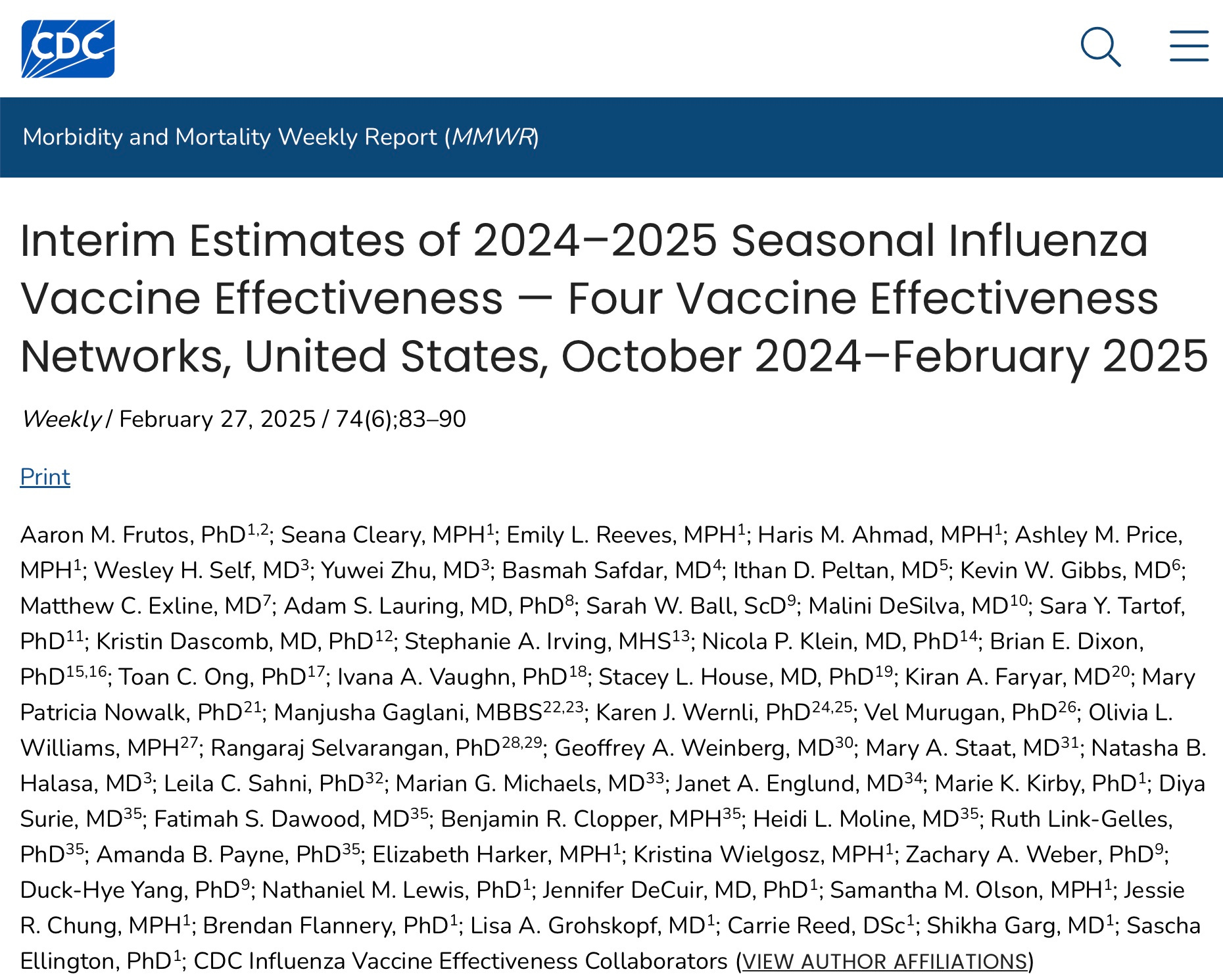
https://www.cdc.gov/mmwr/volumes/74/wr/mm7406a2.htm
Summary
What is already known about this topic?
CDC routinely monitors influenza vaccine effectiveness (VE). Annual influenza vaccination is recommended for all eligible persons aged ≥6 months.
What is added by this report?
Interim 2024–2025 seasonal influenza VE estimates were derived from four U.S. VE networks. Among children and adolescents, VE was 32%, 59%, and 60% in outpatient settings (three networks) and 63% and 78% against influenza-associated hospitalization (two networks). Among adults, VE was 36% and 54% in outpatient settings (two networks) and 41% and 55% against influenza-associated hospitalization (two networks).
What are the implications for public health practice?
Vaccination with the 2024–2025 influenza vaccine reduced the risk for influenza-associated outpatient visits and hospitalization. These findings support recommendations that all eligible persons aged ≥6 months should receive an annual influenza vaccination. Vaccination should be offered as long as influenza viruses are circulating.
Here are the conflicts of interest that the authors acknowledged. Note that the Gates Foundation has supported multiple participants:
All authors have completed and submitted the International Committee of Medical Journal Editors form for disclosure of potential conflicts of interest. Basmah Safdar reports travel support from Novo Nordisk and Danish Heart Foundation, and membership in Society of Academic Emergency Medicine. Ithan D. Peltan reports institutional support from National Heart, Lung, and Blood Institute, Intermountain Research and Medical Foundation, Bluejay Diagnostics, and Novartis; travel support from Novartis. Kevin W. Gibbs reports grants or contracts from the Department of Defense, Patient-Centered Outcomes Research Institute (PCORI), and the National Institutes of Health; travel support to Critical Care Reviews 24; and participation on the Vanderbilt University Medical Center Data Safety Monitoring Board. Adam S. Lauring reports institutional support from Roche, National Institute of Allergy and Infectious Diseases, Flulab; and consulting fees from Roche. Sarah W. Ball reports institutional support from the University of Utah and Novavax. Sara Y. Tartof reports institutional support from Pfizer including receipt of vaccines for a study. Nicola P. Klein reports institutional support from Sanofi Pasteur, Merck, Pfizer, Seqirus, and GSK; membership on an expert panel for a planned hepatitis E Phase II vaccine clinical trial among pregnant women in Pakistan; membership in Western States COVID-19 Scientific Safety Review Workgroup, Board on Population Health and Public Health Practice, National Academies of Science, Engineering and Medicine, and National Vaccine Advisory Committee Safety Subcommittee. Toan C. Ong reports receipt of travel support to attend the PCORI Annual Meeting in 2023 in Washington D.C. and the OHIE 23 meeting in Malawi. Stacey L. House reports institutional support from Seegene, Inc., Abbot, Healgen, Roche, CorDx, Hologic, Cepheid, Janssen, and Wondfo Biotech. Kiran A. Faryar reports institutional support from Gilead Sciences. Mary Patricia Nowalk reports institutional support from Sanofi Pasteur and Icosavax/AstraZeneca; consulting fees from GSK, Merck, Sharpe, and Dohme; Stock from Eli Lilly and Abbot Labs; and receipt of equipment from Sequiris and Sanofi. Manjusha Gaglani reports receipt of honorarium for educational webinar presentation on respiratory viruses from the Texas Pediatric Society, Texas Chapter of the American Academy of Pediatrics, and serving as co-chair of the Infectious Diseases and Immunization Committee and Chair of the Texas Respiratory Syncytial Virus Taskforce, Texas Pediatric Society. Rangaraj Selvarangan reports honoraria from BioMérieux and GSK. Geoffrey A. Weinberg reports institutional support from the New York State Department of Health; consulting fees from Inhalon Biopharma, New York State Department of Health, and ReViral; participation on a Scientific Advisory Board for Emory University; and honoraria from Merck. Mary A. Staat reports institutional support from the National Institutes of Health, Pfizer, and Cepheic; royalties from Up-to-Date; and consulting fees from Merck. Natasha B. Halasa reports institutional support from Merck; consulting fees from CSL Seqirus; and participation on an advisory Board for Emory University. Leila C. Sahni reports travel support from the Bill and Melinda Gates Foundation. Marian G. Michaels reports institutional support from the National Institutes of Health; Merck and complimentary meeting attendance for presentation at the American Transplant Congress on respiratory viruses; and participation on a Data Safety Monitoring Board for National Institute on Allergy and Infectious Diseases. Janet A. Englund reports institutional support from AstraZeneca, GSK, Pfizer, and Moderna; consulting fees from Abbvie, AstraZeneca, GSK, Merck, Meissa Vaccines, Moderna, Pfizer, Shionogi, and Cidarra; and honoraria from Pfizer. Zachary A. Weber reports institutional support from Novavax. Samantha M. Olson reports travel support from the Gates Foundation. No other potential conflicts of interest were disclosed.
Let’s look at Study 3, which is confined to children. It was funded by NIAID (NIH) and conducted primarily by researchers at Emory University’s Vaccine and Treatment Evaluation Unit in Atlanta, which is joined at the hip to CDC. It found the vaccine efficacy rates over a series of years to be higher than CDC found. Do you think researchers who find vaccines and treatments to be ineffective would last there very long?
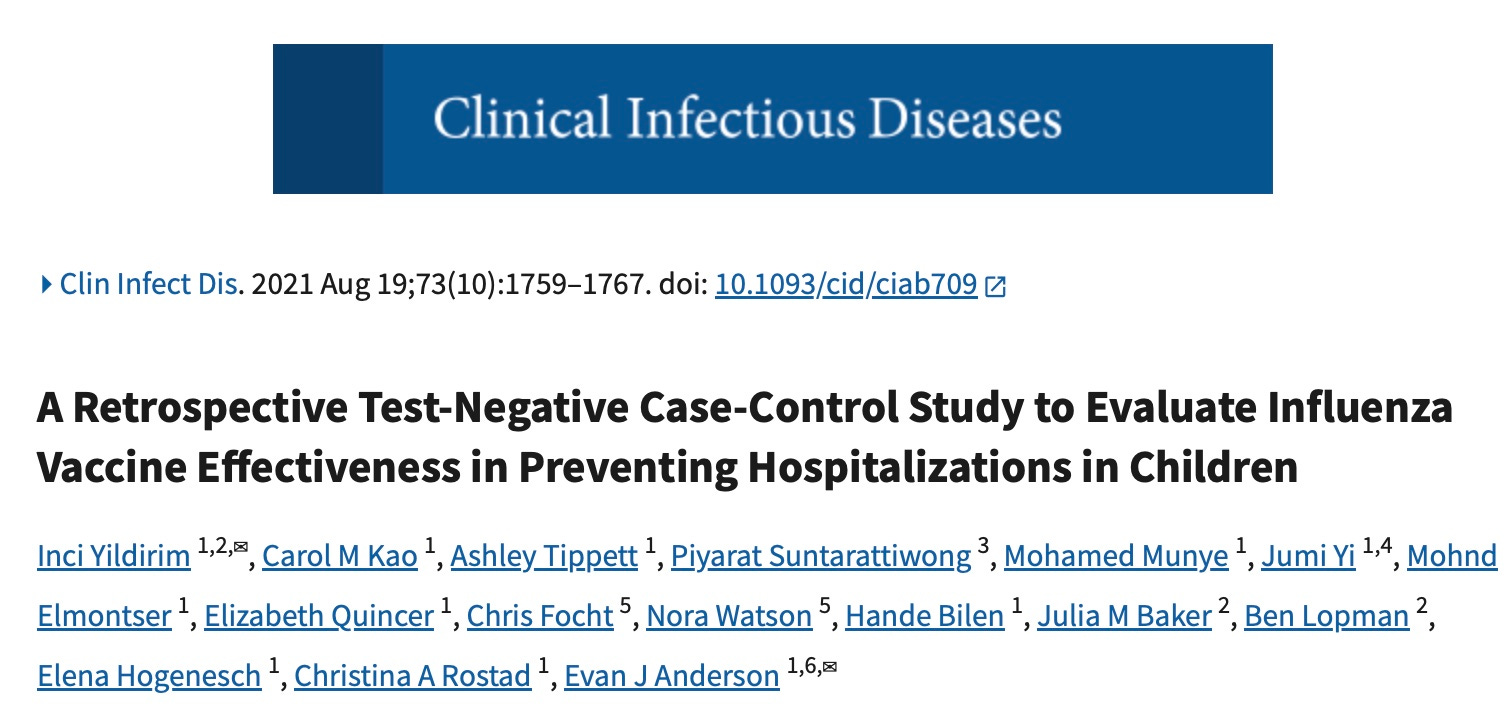
https://pmc.ncbi.nlm.nih.gov/articles/PMC8599178/#n1
Financial support. This work was supported by awards from the Division of Microbiology and Infectious Diseases, NIAID, at the National Institutes of Health to the Emory Vaccine and Treatment Evaluation Unit (contract HHSN272201300018I). We also acknowledge the REDCap support for this project provided by UL1 TR000424.
Potential conflicts of interest. E. J. A. has received personal fees from AbbVie, Pfizer, and Sanofi Pasteur for consulting; serves on a safety monitoring board for Sanofi and Kentucky BioProcessing, Inc; and his institution receives funds to conduct clinical research unrelated to the research presented here from MedImmune, Regeneron, PaxVax, Pfizer, GSK, Merck, Novavax, Sanofi-Pasteur, Janssen, and Micron. C. A. R. has received royalties to Emory University from Meissa Vaccines, Inc; reports clinical trials research funding from BioFire, MedImmune, PaxVax, Micron, Janssen, and Pfizer outside the submitted work; and is co-inventor of a pending patent (US20180333477A1) for respiratory syncytial virus vaccine technology that incorporates stabilized prefusion F protein, licensed to Meissa Vaccines, Inc, with royalties paid to Emory University. B. L. reports grants and advisory board service from Takeda Pharmaceuticals and personal fees from the World Health Organization outside the submitted work. All remaining authors: No reported conflicts of interest.
All authors have submitted the ICMJE Form for Disclosure of Potential Conflicts of Interest. Conflicts that the editors consider relevant to the content of the manuscript have been disclosed.
[All other conflicts have been hidden. This should give you great faith in the journal, in Emory university’s conflict of interest policy, and in the study itself—Nass]