Some things we may see in the Farm Bill when it appears
Some things we may see in the Farm Bill when it appears
Funny how they don’t mention preemption or pesticide liability shields in this piece

My comments on each are bolded
https://civileats.com/2026/01/05/10-farm-bill-proposals-to-watch-in-2026/
Fair Credit for Farmers Act: Makes changes to the U.S. Department of Agriculture (USDA) Farm Service Agency (FSA) to make it easier for farmers to get loans. Introduced by Representative Alma Adams (D-North Carolina) in the House and Senator Peter Welch (D-Vermont) in the Senate. Key supporters: National Family Farm Coalition, RAFI. NEEDED—Nass
FARM Home Loans Act: Increases rural homebuyers’ access to Farm Credit loans by expanding the definition of “rural area” to include areas with larger populations. Introduced by Representatives Kristen McDonald Rivet (D-Michigan) and Bill Huizeng (R-Michigan). Key supporters: Farm Credit Council. OK
USDA Loan Modernization Act: Updates USDA loan requirements to allow farmers with at least a 50 percent operational interest to qualify. Introduced by Representatives Mike Bost (R-Illinois) and Nikki Budzinski (D-Illinois). Key supporters: Illinois Corn Growers Association, Illinois Pork Producers Association. ?
Relief for Farmers Hit With PFAS Act: Sets up a USDA grant program for states to help farmers affected by forever-chemical contamination in their fields, test soil, monitor farmer health impacts, and conduct research on farms. Introduced by Senators Susan Collins (R-Maine) and Jeanne Shaheen (D-New Hampshire) in the Senate and Representatives Chellie Pingree (D-Maine) and Mike Lawler (R-New York) in the House. Key supporters: Maine Organic Farmers and Gardeners Association. GREAT
EFFECTIVE Food Procurement Act: Requires the USDA to weigh factors including environmental sustainability, social and racial equity, worker well-being, and animal welfare in federal food purchasing, and helps smaller farms and food companies meet requirements to become USDA vendors. Introduced by Senator Ed Markey (D-Massachusetts) and several co-sponsors in the Senate, and Representative Alma Adams (D-North Carolina) and several co-sponsors in the House. Key supporters: National Sustainable Agriculture Coalition. A good idea but the way similar programs were rolled out turned them into pork. (A common problem with legislation.)
AGRITOURISM Act: Designates an Agritourism Advisor at the USDA to support the economic viability of family farms. Introduced by Senator Kirsten Gillibrand (D-New York) and several co-sponsors in the Senate, and Representatives Suhas Subramanyam (D-Virginia) and Dan Newhouse (R-Washington) in the House. Key supporters: Brewers Association, WineAmerica. Scraping the bottom to help farmers make a bit of extra money.
Domestic Organic Investment Act: Creates a USDA grant program to fund expansion of the domestic certified-organic food supply chain, including expanding storage, processing, and distribution. Introduced by Senators Tammy Baldwin (D-Wisconsin) and Susan Collins (R-Maine) in the Senate, and Representatives Andrea Salinas (D-Oregon) and Derrick Van Orden (R-Wisconsin) in the House. Key supporters: Organic Trade Association. Good.
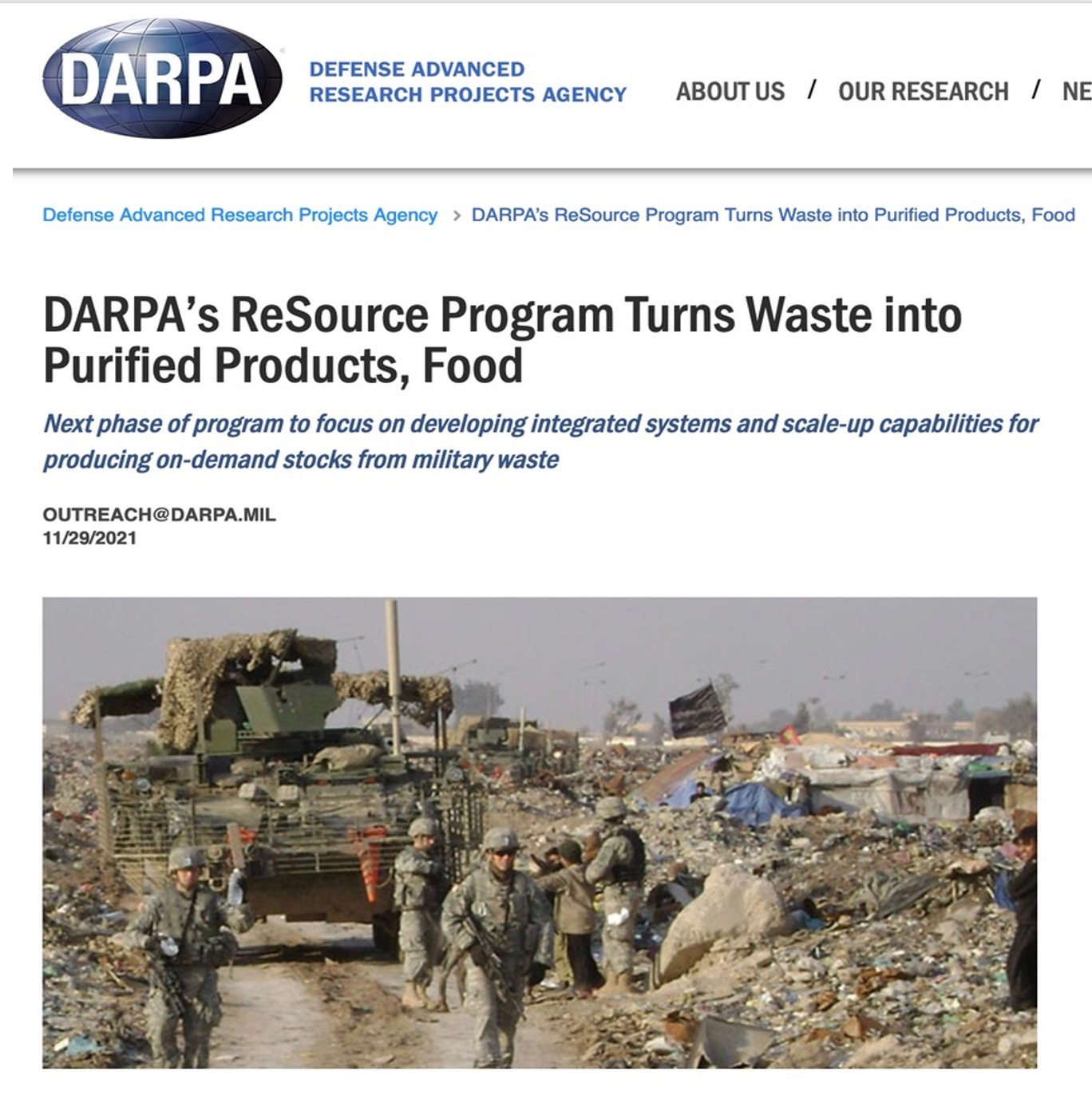
Zero Food Waste Act: Creates a new Environmental Protection Agency (EPA) grant program to fund projects that prevent, divert, or recycle food waste. Introduced by Representatives Chellie Pingree (D-Maine) and Julia Brownley (D-California) in the House, and Senator Cory Booker (D-New Jersey) in the Senate. Key supporters: Natural Resources Defense Council, ReFed. Theoretically good, depends on rollout. We don’t want this DARPA project:
LOCAL Foods Act: Allows farmers to process animals on their farms without meeting certain regulations if the meat will not be sold. Introduced by Senator Peter Welch (D-Vermont) and several co-sponsors in the Senate, and Representative Eugene Vindman (D-Virginia) and several co-sponsors in the House. Key supporters: Rural Vermont, National Family Farm Coalition. Too little, too late. Needs a more comprehensive approach to on-farm slaughter.
PROTEIN Act: Directs more than $500 million in federal support over the next five years toward research and development for “alternative proteins.” Introduced by Senator Adam Schiff (D-California) in the Senate, and Representative Julia Brownley (D-California) in the House. Key supporters: Good Food Institute, Plant-Based Foods Institute. This is about fake meat and cricket/mealy worm products. Forget it.