The Farm Bill is scheduled for mark-up on Feb. 24, and it determines farm policy for 5 years (or more). Door to Freedom is organizing a symposium for Congressmembers and staffs on the farm bill
The Farm Bill is scheduled for mark-up on Feb. 24, and it determines farm policy for 5 years (or more). Door to Freedom is organizing a symposium for Congressmembers and staffs on the farm bill
Farm Action and MAHA Action will be among the speakers and co-hosts, and we have asked members of Congress to cosponsor as well.

This is an important bill. It comes up every 5 years, except it is more than 2 years overdue now. It determines who sinks or swims in agriculture.
The bulk of the funding in the bill was already allocated as part of the reconciliation, One Big Beautiful Bill last year. But as Angela Huffman notes below, there are still important issues to cover in this thinned-down bill.
Last year, the Environmental Appropriations committee debated the expenditure of funds to update the labels of pesticides at EPA, as one method of providing a de facto liability shield for pesticides. Eventually, that rider was removed from the Appropriations bill at the last minute, before a House vote. But we knew it was going to come up again in the Farm Bill. And now the issue is in the Supreme Court too. The (public) mark-up for the House Farm Bill in the Ag Committee is scheduled for Feb 24.
Mark-up is when amendments and riders are voted on by the committee, to decide what will be in the bill when it goes to the full House. However, the pesticide rider was removed AFTER the markup, which can be done by party/committee leadership (in a non-public manner). Rep. Pingree of Maine helped make that happen.
In addition to having some type of language for a pesticide liability shield (no one has seen this year’s bill yet, which gets presented by the chair of the committee 1-2 days before mark-up, so we don’t know how the liability shield will be presented) there is expected to be a federal-state preemption clause included, which is intended to stop the states from legislating on stricter animal welfare than the feds (and the bill might use broad language to preempt other state initiatives).
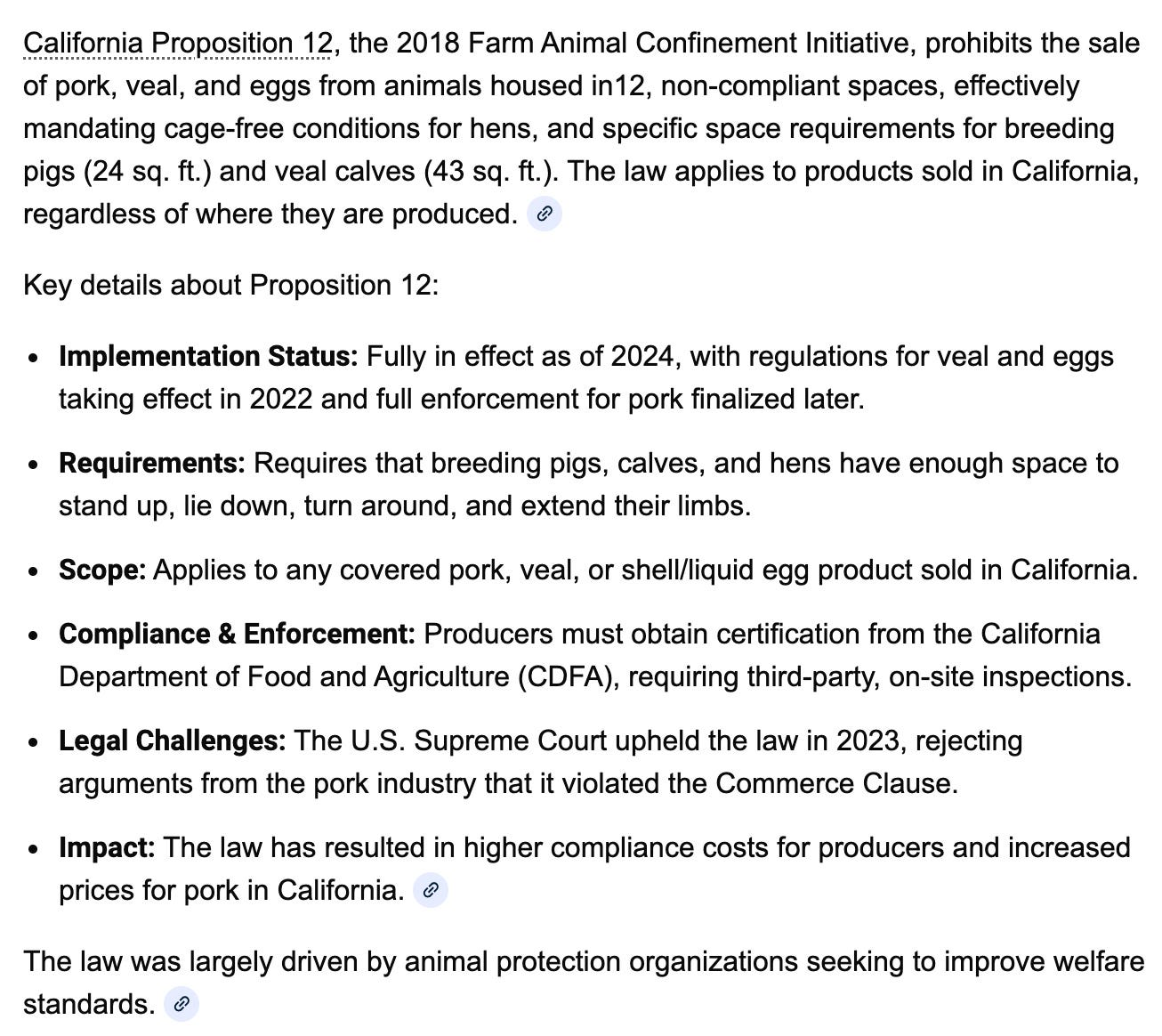
California has a law restricting hogs (and other animals) from being held in tight cradles. In addition to being good for the hogs, it has opened up an income stream for small farmers to compete with the big hog farmers. The big guys can’t or won’t make as much profit when they have to give the pigs more space, allowing smaller guys into the market. The (anticipated) preemption section of the Farm Bill would prohibit states from making rules that are more restrictive than federal law, and cause the California law to be tossed aside. California’s law took effect 4 years ago, it squeaked by a Supreme Court challenge, but the big guys really want it gone.
Once I see the bill language I will provide more info so you can comment to your representatives about it.
A Smaller Farm Bill Is Coming, With Big Consequences
The big spending decisions already happened. What’s left are the rules, and who they’re written for.
Feb 04, 2026
First published at Farm Action (farmaction.us), with analysis by the Farm Action policy team.
For decades, the farm bill has been the big package where Congress handles farm programs and food assistance in the same bill. It’s never pretty, but it’s where the main decisions usually get made.
This time, Congress made a lot of those decisions outside the farm bill.
Last summer, lawmakers used a fast-track budget process called “reconciliation” to make major changes to farm and food policy in a separate bill. Translation: they handled a bunch of the big-ticket items early. So the next farm bill will be narrower than past ones. Policymakers are calling it a “skinny farm bill” or “Farm Bill 2.0.”
The biggest money fights were mostly settled already. What’s left are the rules: who they’re written for, and whether they serve farmers and the public or protect special interests. That’s why Farm Action is launching our farm bill platform now, as Congress starts putting pen to paper.
What Changed, and Who Benefited
The changes Congress made through reconciliation in last year’s One Big Beautiful Bill Act followed a familiar pattern.
Commodity programs and crop insurance got bigger, but they’re still built around a narrow set of commodity crops and still favor the largest producers. Nutrition assistance was cut, weakening one of the main pillars that has long helped families afford food and helped hold farm bills together politically. Conservation funding was reshuffled to pull support away from farmers transitioning to healthier soil and lower-chemical systems.
Taken together, these changes only reinforced the status quo. The biggest benefits flowed to the largest operations and the most consolidated parts of the food system. Farmers growing fruits, vegetables, and other food crops were largely left where they’ve always been: with fewer safety nets and higher risk. Families relying on nutrition assistance were left with less help at a time when food prices remain high.
That context shapes what the next farm bill is really about.
What’s Left for the Farm Bill to Decide
With the biggest spending programs already changed through reconciliation, the next farm bill is less likely to be about expanding the farm safety net or rebuilding the Supplemental Nutrition Assistance Program (SNAP). It’s more likely to be about the rules that shape how the food system works day to day.
Those rules will decide things like:
-
Who can access stable markets and who can’t
-
Whether local and regional food systems have a fair shot
-
How transparent food supply chains are
-
Whether states and farmers keep their rights, or Big Ag gets preemption and immunity
-
Whether consolidation keeps accelerating or finally hits some guardrails
If these rules are written to protect Big Ag’s business model, independent farmers won’t get a level playing field. We’ll get fewer options and less leverage.
Where the Real Risks Are
Two of the biggest risks to watch closely are federal preemption and pesticide immunity. House Agriculture Committee Chairman Glenn “GT” Thompson has said he wants both in this farm bill.
Preemption proposals would block states from setting their own food, farming, or animal welfare standards, even when voters approved them. California’s Proposition 12 is the clearest example: it created a real market for independent hog farmers, and now Big Ag wants Congress to wipe it out.
Pesticide immunity provisions would make it harder, or impossible, for farmers, workers, and communities to hold chemical companies accountable when they’re harmed.
Both are federal overreach, and both would move power away from farmers and communities and toward the largest corporations.
What We’re Fighting For
Farm Action’s farm bill platform focuses on the parts of the bill that are still in play, where policy changes could meaningfully shift power, strengthen food systems, and better serve farmers and the public.
That includes using federal food procurement to support local and regional producers, instead of funneling taxpayer dollars to the same handful of corporations. It also means improving access to risk management tools for diversified and specialty crop farmers, who are growing the real food people are told to eat more of, but still face higher financial risk. And it means supporting farmers who want to build healthier soil and cut chemical dependence, with conservation and technical help that makes those transitions possible.
We’re also pushing to rebuild regional processing and distribution, so farmers aren’t dependent on a handful of bottleneck facilities. And we want stronger transparency tools like country-of-origin labeling, so farmers can compete and consumers can make informed choices.
Finally, we’re fighting back against policies that strip states of authority or shield powerful companies from accountability.
Each of these issues comes down to the same question: who are the rules written for?
The Bottom Line
The next farm bill won’t look like the ones that came before it. Many of the biggest spending decisions have already been made elsewhere.
But that doesn’t make this bill a sideshow. It makes it a fight over the rules that shape our farms and our food.
This farm bill will help determine whether markets stay stacked for the biggest players, or whether independent farmers and rural communities get a fair shot. It will shape whether we rebuild the capacity to feed ourselves as a nation, or keep drifting toward a system that depends more on imports and a handful of corporations.
And it will help decide what kind of food our policies reward: the same commodity crops and processed products, or healthier food grown by farmers who can stay in business.
That’s why Farm Action is laying out our priorities now, while Congress is writing the bill. We believe government should serve the public, not special interests, and we’re fighting for a food and farm economy that works for farmers, workers, and all of us who eat.