Where does your meat come from? What is the meat supply line like? Why is it so expensive, and how can prices come down?
Where does your meat come from? What is the meat supply line like? Why is it so expensive, and how can prices come down?
The graphics come from the identified sources or google’s AI when not specified, while the regular text is written by me.

Cows need to eat grass (or hay) for (at least) the majority of their lives, though most cows meant for slaughter in the US are given grain in the last few months to fatten them up. That is why you may hear of “grass fed, grain finished” meat. The healthier meat is considered to be “grass fed, grass finished.”
Because cows need grass, raising cows means you need land. Grassland. This is why most cows are raised by independent ranchers who own or lease land. Pigs don’t require much land, so most pigs (and chickens too) are now owned by the major meat processing companies. The farmers who grow most of them are contracted to do so and have become basically serfs on their own land. Everything they do is specified by (and often provided by) the real owners of the animals.
But regarding cows, the major processors (listed below) must buy the cows from the independent ranchers, because they can’t afford or don’t choose to buy up the many millions of acres that would be needed to raise cows. Instead they spent their money buying up the competition.
Companies that slaughter and process meat are called meatpackers or simply “packers.”
JBS is the US’s and the world’s largest beef processor. Despite its history of criminal behavior, it recently was allowed on the NY stock exchange. Cargill is the US’ largest privately owned corporation. The 4 largest packing companies control beef availability and price. They could care less about quality. They fool you by creating scores of different brands. JBS, for example, sells meat labeled with over 100 different brand names.
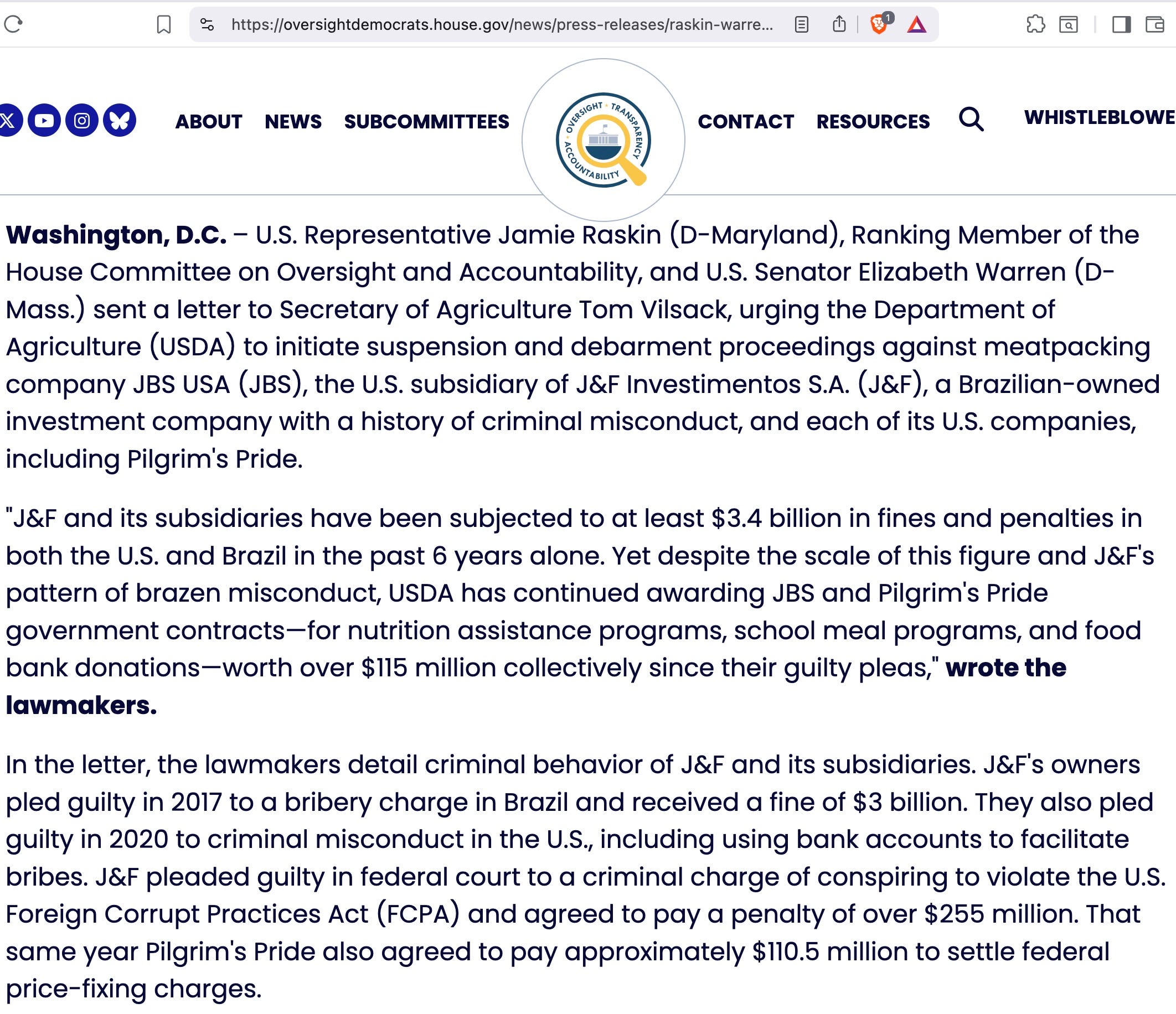
The 2 owners of JBS were convicted of bribing 1,800 Brazilian politicians and both spent time in jail. But crime apparently pays, and the upshot is that you have probably consumed their meat in the past few days or weeks.
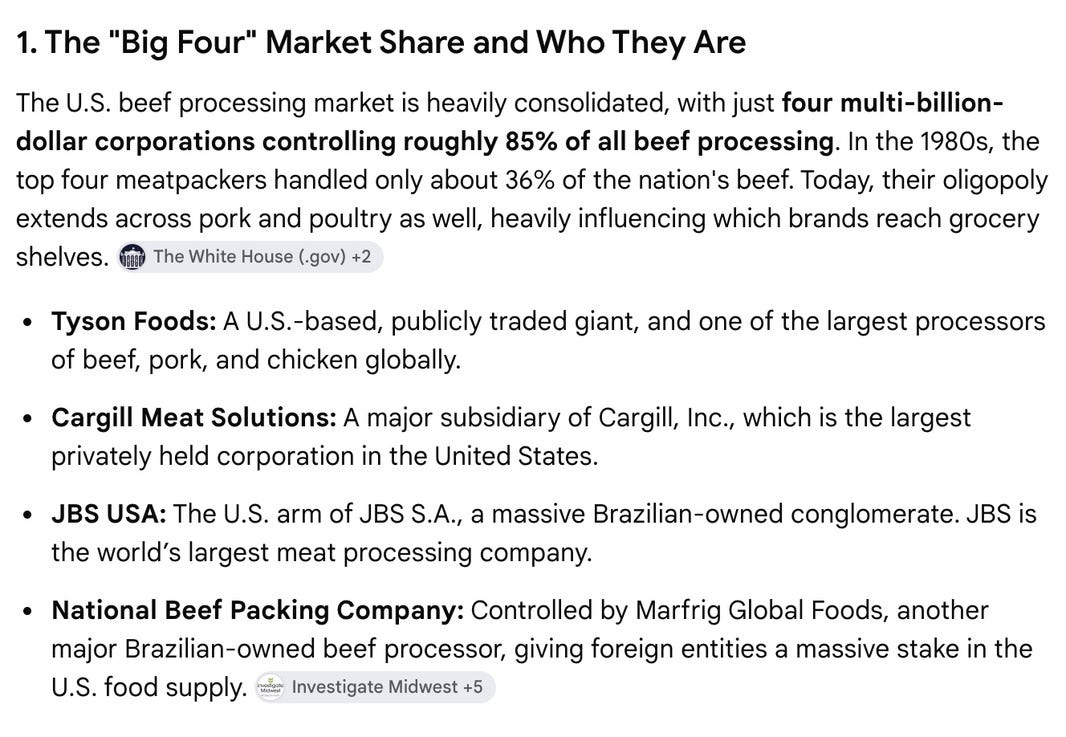
Up to 50% of the big meatpackers’ employees have been illegal aliens. When ICE started visiting meat processing plants, the employees stopped coming to work. Trump was forced to instruct ICE to leave the meat processors alone, and it has.
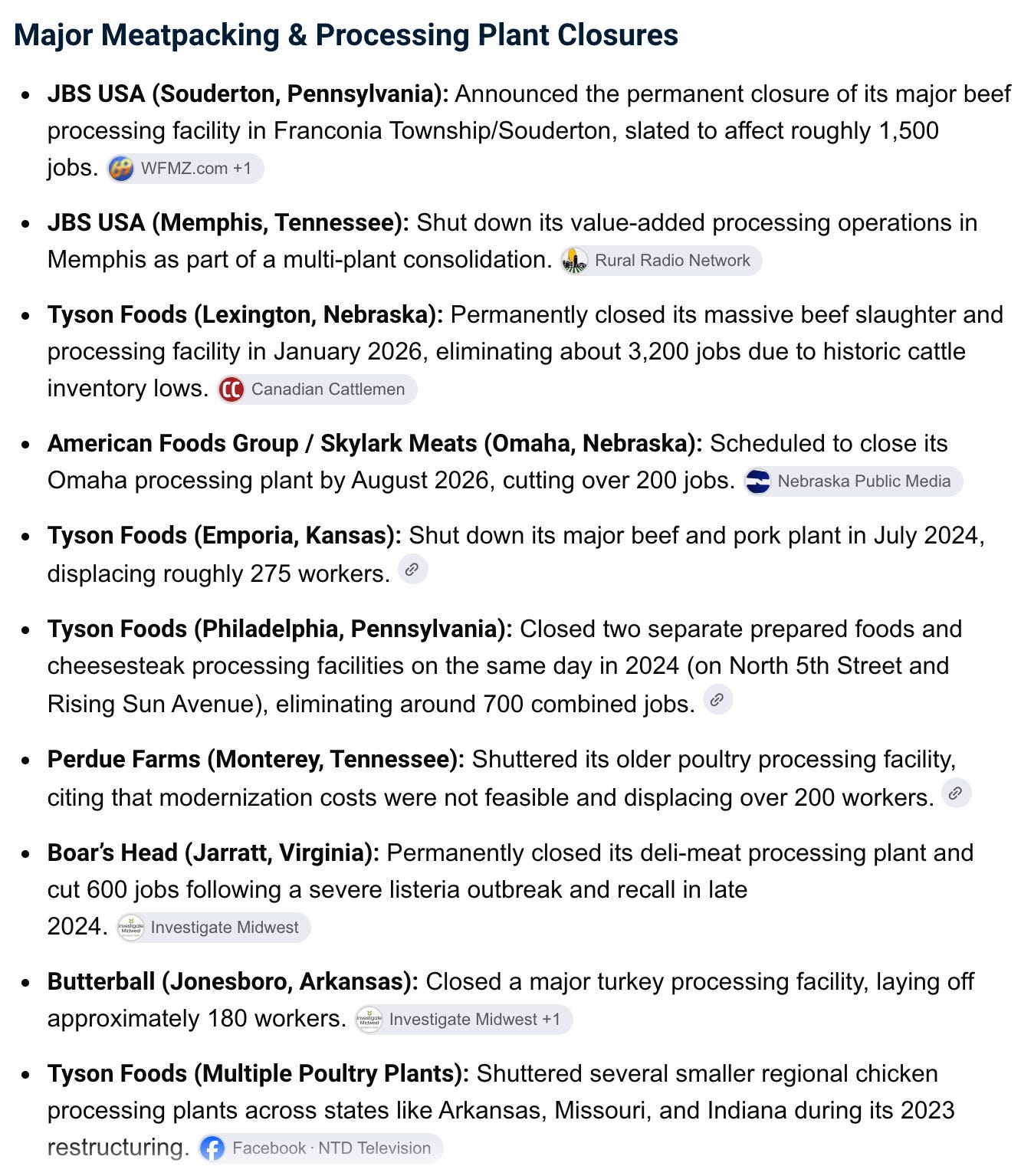
The packers have been shutting some of their processing plants. Tyson closed 8 in 2023. Brooke Rollins allowed the plants to speed up some of their lines to compensate for the loss of production facilities. Why keep paying employees when you can make the same profit by producing less? Some examples:
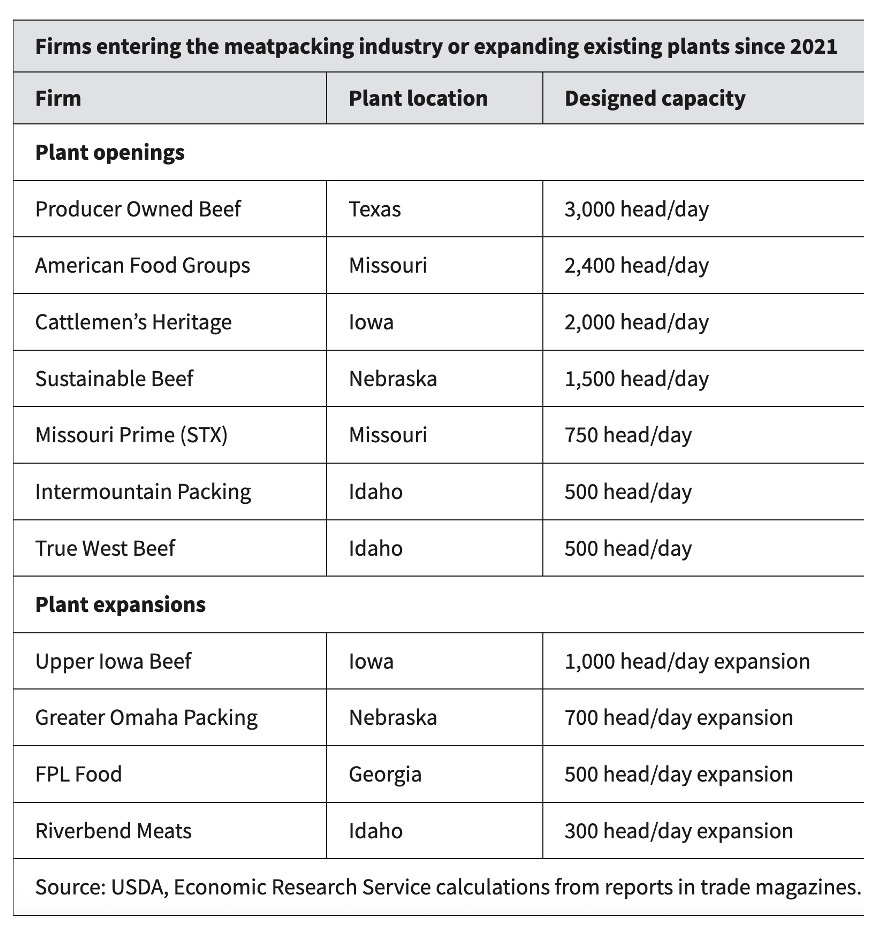
Meanwhile, USDA gives packers money to expand their plants or build new ones. (Next paragraph from AI:)
Between 2020 and 2025, the USDA invested over $1 billion through the American Rescue Plan and related initiatives to expand independent meat and poultry processing capacity. Major funding avenues included the Meat and Poultry Processing Expansion Program (MPPEP), the Local Meat Capacity Grant, and inspection readiness programs. [1, 2, 3]
However, all the anticipated growth in meatpacking, except for one plant, is located west of the Mississippi. Yet there is a massive shortage of processing facilities in the east, where most people live. The USDA states:
“The novelty of the USDA program lies in the fact that it does not rely on traditional antitrust interventions to promote competition but instead aims to directly address the capacity constraints that have recently hindered competition in the industry by providing additional capital to new and smaller producers.”
Give me a break. USDA gives money to its pals in meatpacking instead of asking DOJ to prosecute them. What is so novel about that?
Only this summer, $60 million in USDA grants became available for smaller meatpackers to expand. Too little, too late?
Due to tremendous consolidation in the meatpacking industries in the past 40 years, the top 4 companies have gone from controlling 36% of US beef processing to 85%. Think about it: some of their factories process 5,000 cows a day. This has given the companies tremendous clout to control the amount of beef arriving in the marketplace, to control how much is imported, and (acting as an illegal cartel) to control both the prices paid to ranchers for their cows, as well as the price demanded from grocery chains for packaged meat or carcasses.
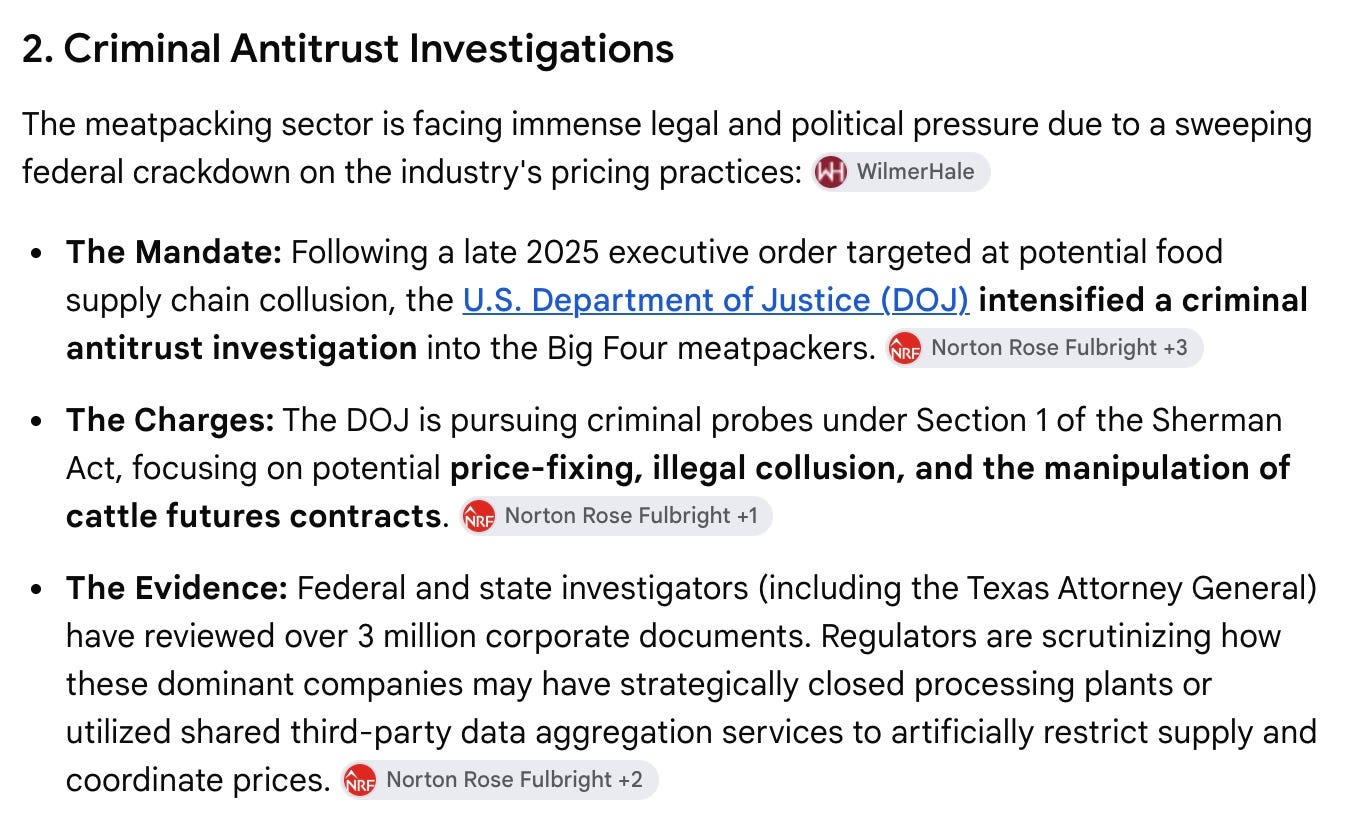
However, the DOJ investigations have usually gone nowhere, with the companies paying some fines and continuing their illegal conduct. A meaningful judicial approach would require breaking up these conglomerates and restoring competition to the marketplace.
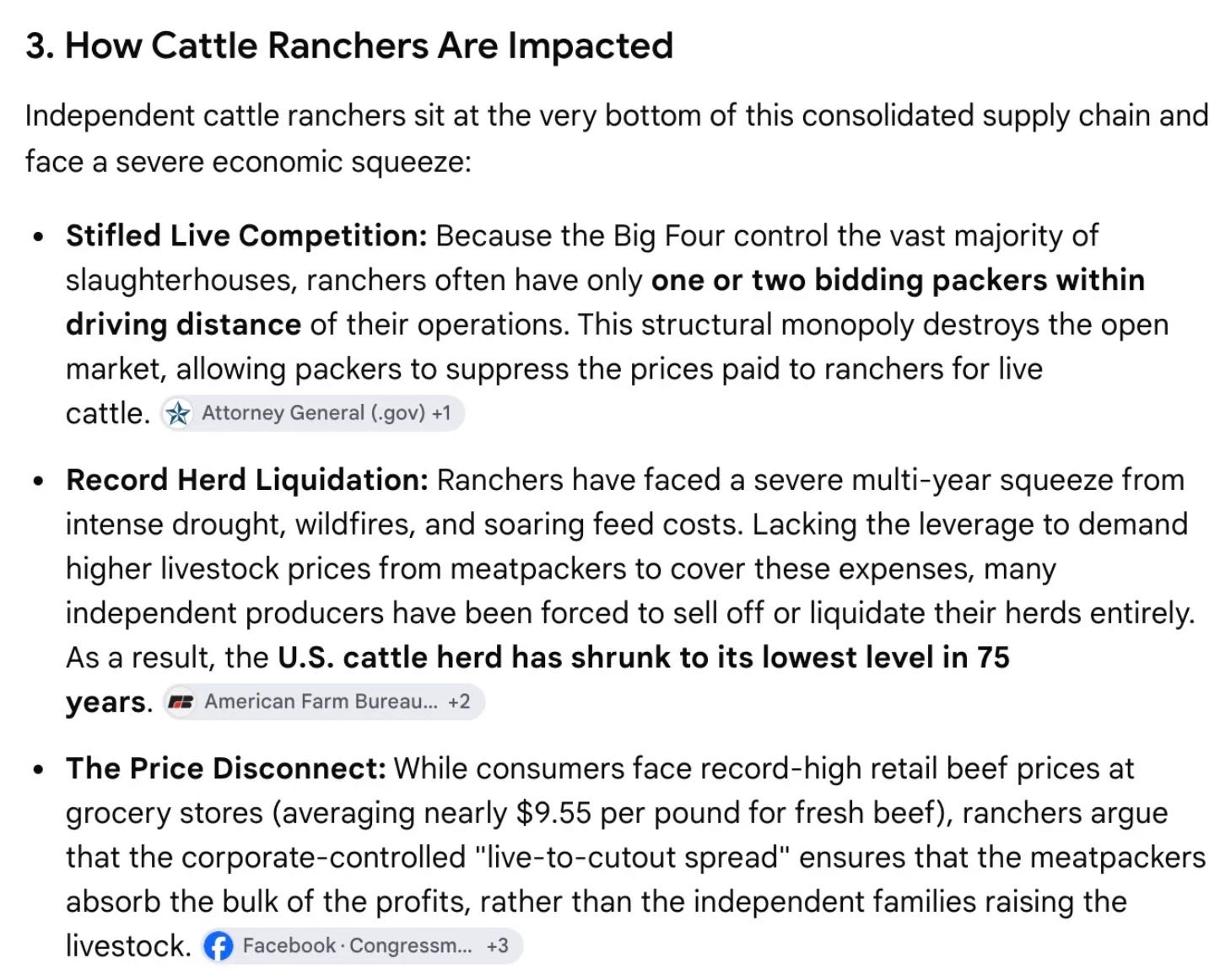
It seems to me that the federal government has been happy to allow the meatpackers to starve the ranchers, force many thousands to sell out, and encourage the consolidation of ranchlands. The fact that this has decimated US cattle herds and helped skyrocket the cost of meat has up to now apparently been of little concern to the DOJ, which has failed to enforce antitrust law in all the agriculture monopolies and near-monopolies for decades. Instead, the amount of imported meat has doubled in recent years.
Even USDA admitted in 2024 that while meatpackers cry that their margins are slim, the spread between what they pay for meat and what they sell it for in fact widened considerably.
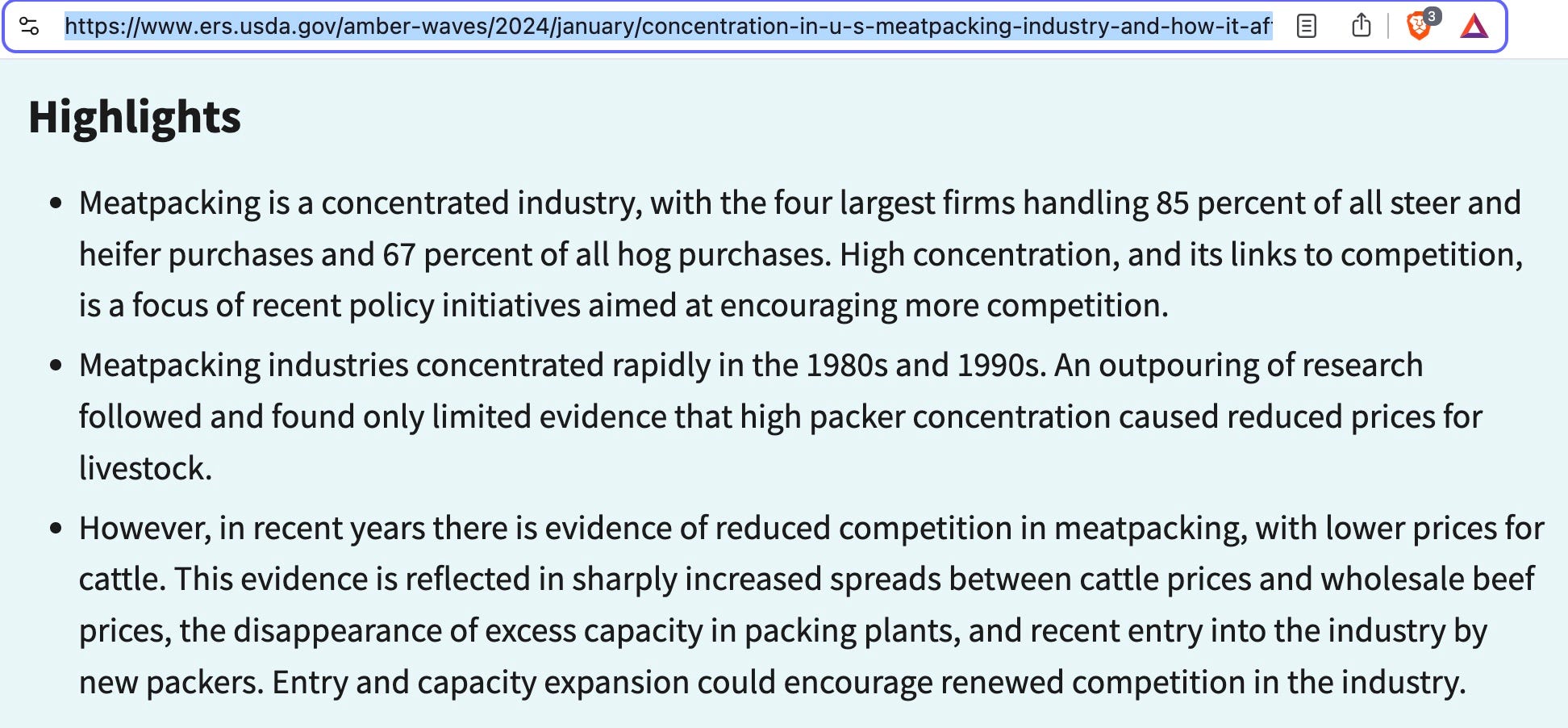
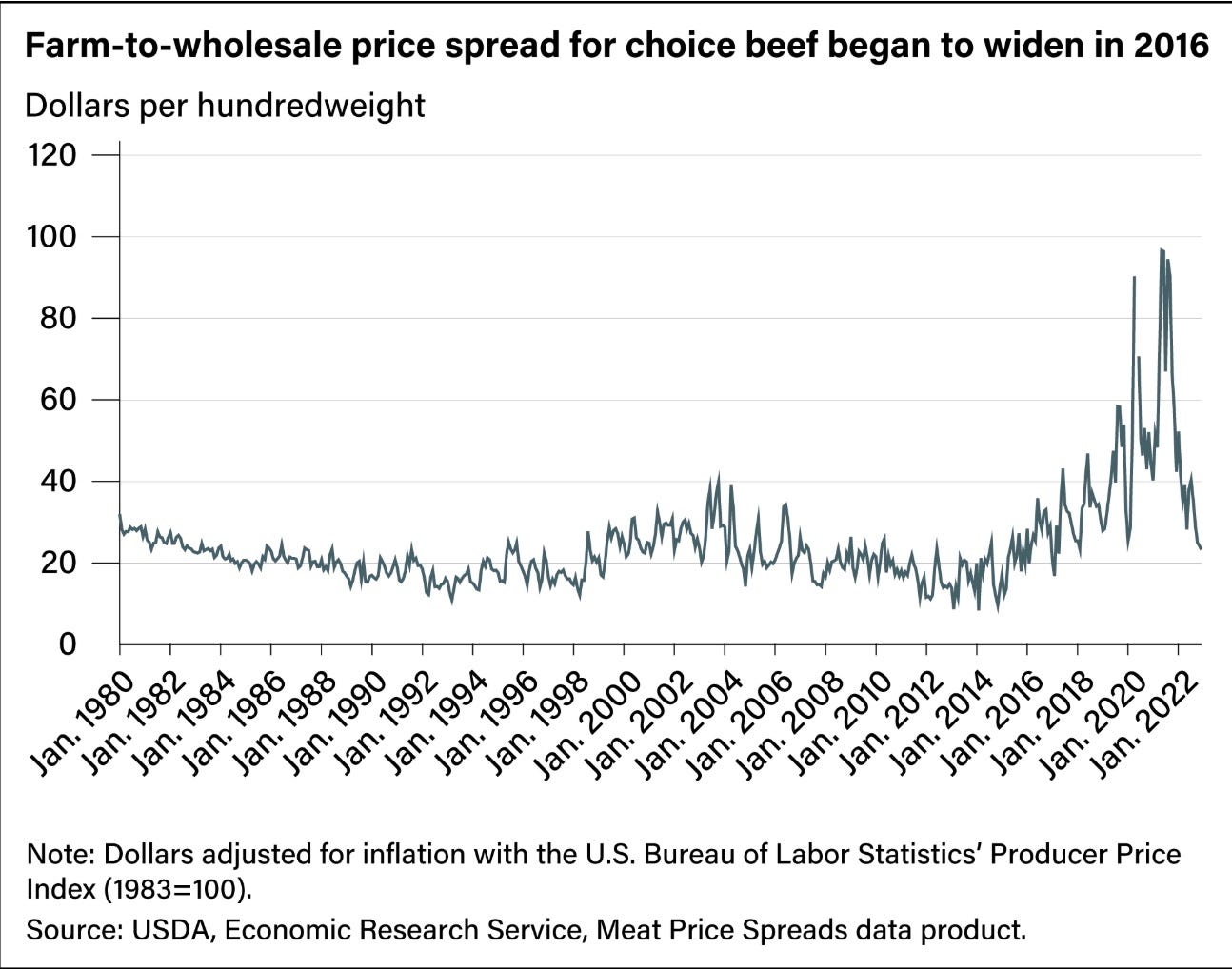
Perhaps taking a leaf from the meatpackers, the grocery industry has followed suit, expanding their margins for meat considerably.
Over the past several years, the margins the supermarkets are getting have widened to nearly $4.00 per pound for beef. Consolidation in the supermarket industry has ushered in sky-high prices. I was shocked that Market Basket is considerably cheaper for the same brands of groceries compared to the others—a good indicator of the increased profitability of grocery stores, which happen to pay their staff very little.
Look at the meat margins (from google AI):
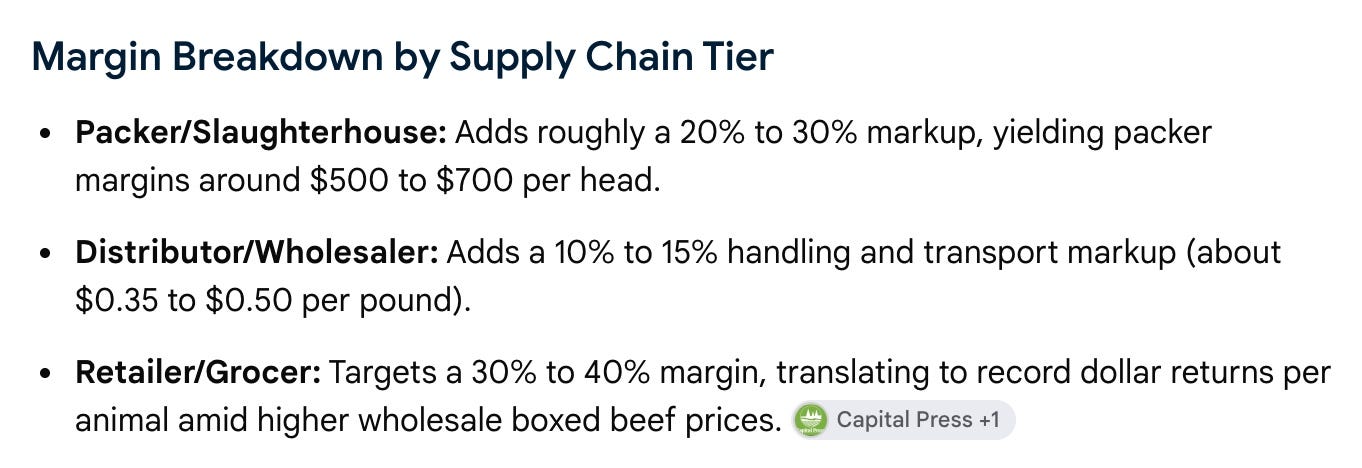
Notice that last sentence? Record dollar returns per animal for the grocery store. However, the numbers above imply that the rancher gets half the retail price, but we know he only gets about 30% today.
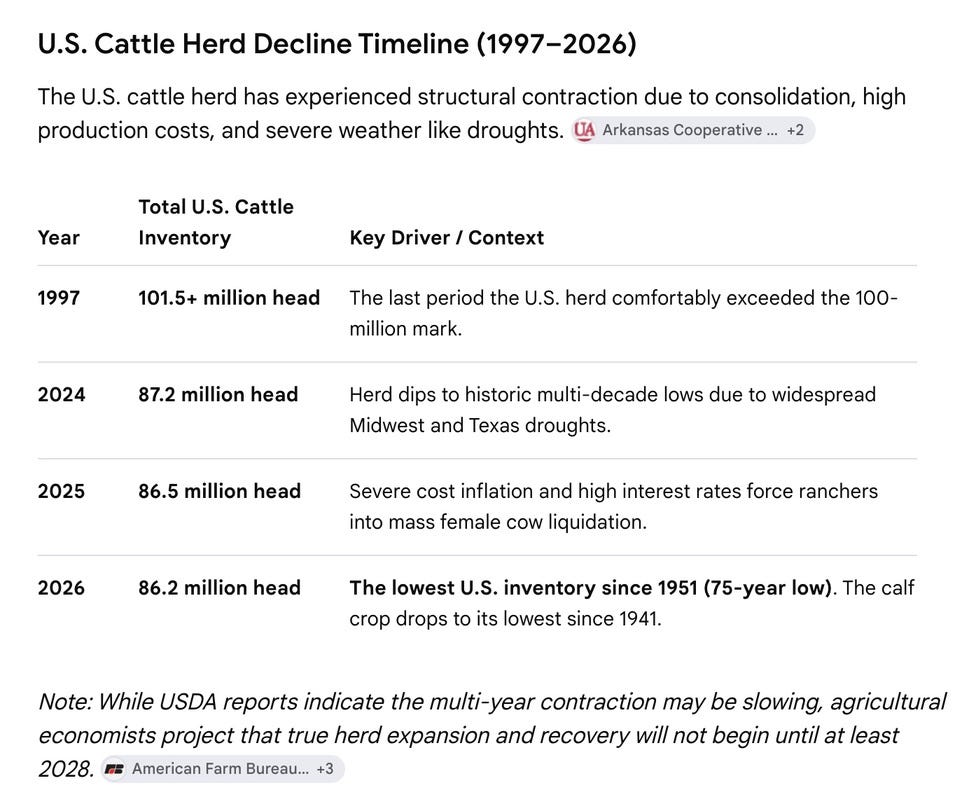
Foreign meat in general is cheaper for the meatpackers than US-raised meat. But what does that mean when the price of diesel goes up, or supply chains fail? When we are unable to provide enough meat for Americans? It takes a number of years to rebuild the US herd, for many reasons. Importing 16-18% of beef consumed in the US, as is currently estimated, does not portend well for the future, nor for food security.
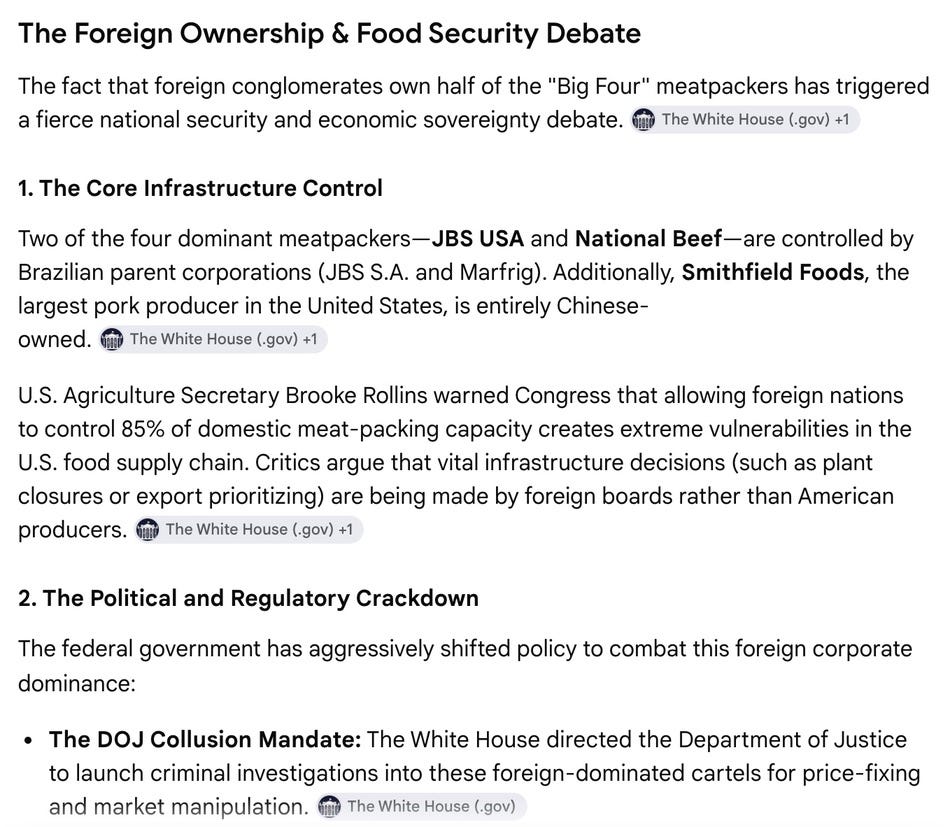
Another AI hallucination: Foreign nations don’t control 85% of meat processing, while foreign nationals do control about 40% of US meat processing. But the issue is being wrongly framed as a threat by foreign entities. In fact, the threat is due to failing to enforce anti-trust laws and allowing near-monopolies and cartels to develop and control the meat processing industry. The threat is enhanced by the “pay to play” attitude of our government:
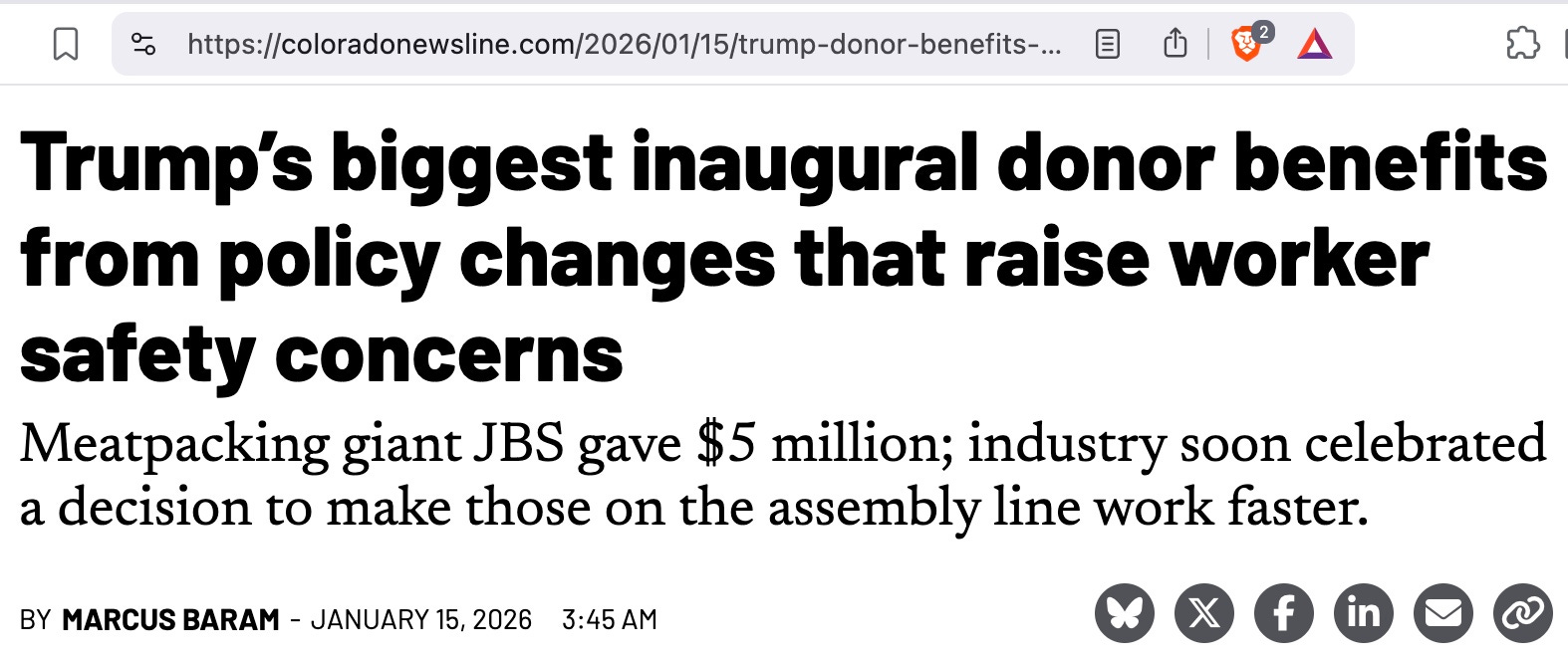
JBS did not confine its bribing of politicians to Brazil, as you can see.
The losers of the system I have described above are American meat eaters and American farmers and ranchers. It is time to put them (us) first.
Overturning the Governor’s veto of HB396 in New Hampshire is the start of asserting our food independence. Other states are looking to repeat New Hampshire’s reassertion of the right of states to regulate their own small meat producers.
Yes, you do need some type of oversight when 5,000 cows per day are being processed in one factory. But do you need it when neighbors are looking over their shoulders at their neighbors processing 3 cows per month, when their neighbors’ sales rest on their reputation?
It is happening in New Hampshire first, but control of meat processing and meat pricing is a national issue that needs to be solved. Please support this effort as best you can, as the public tries to regain control of the food it eats.