With a bumper corn crop this year, maybe a record, prices are under $4/bushel and corn farmers are LOSING $100 for each acre of corn they planted.
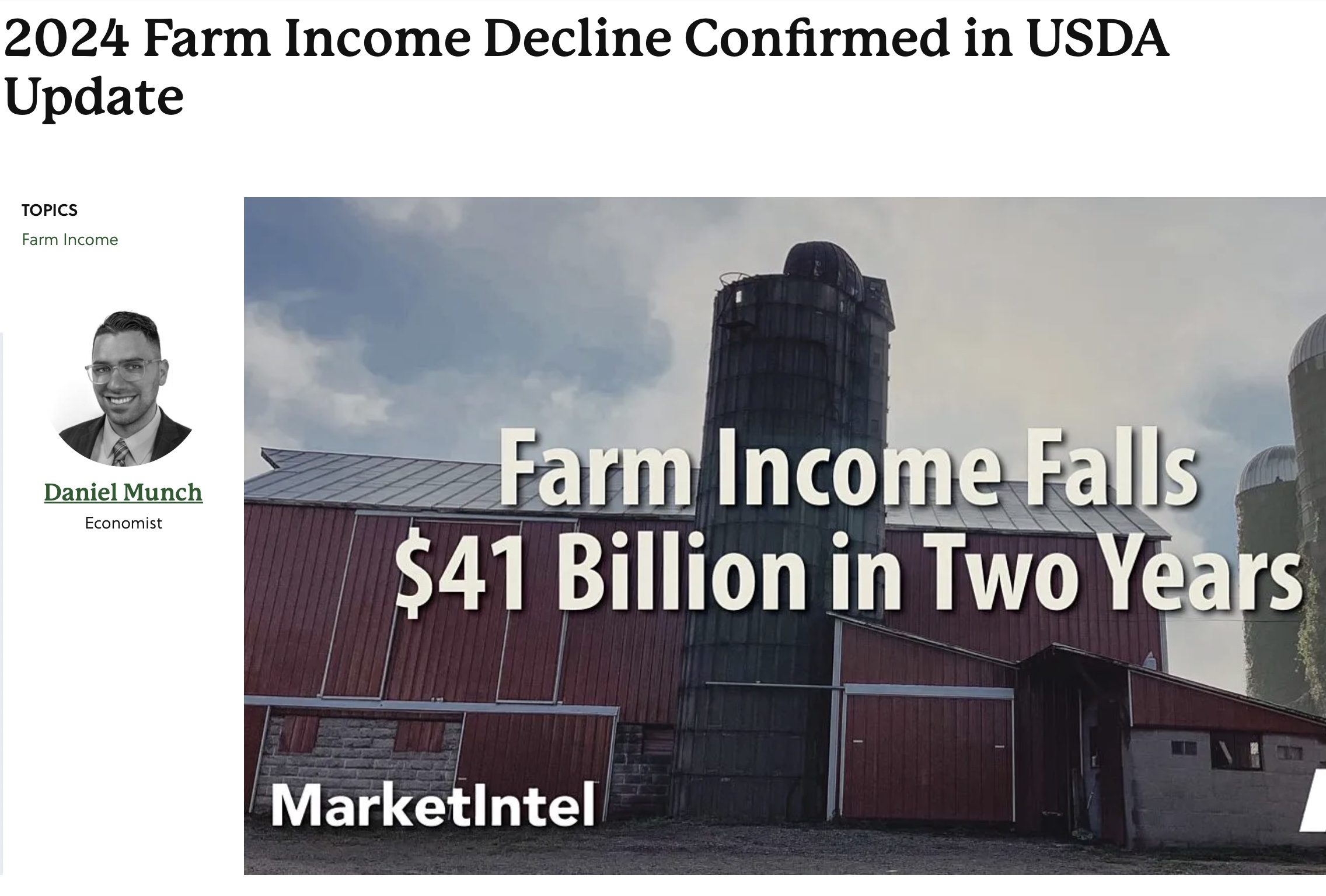
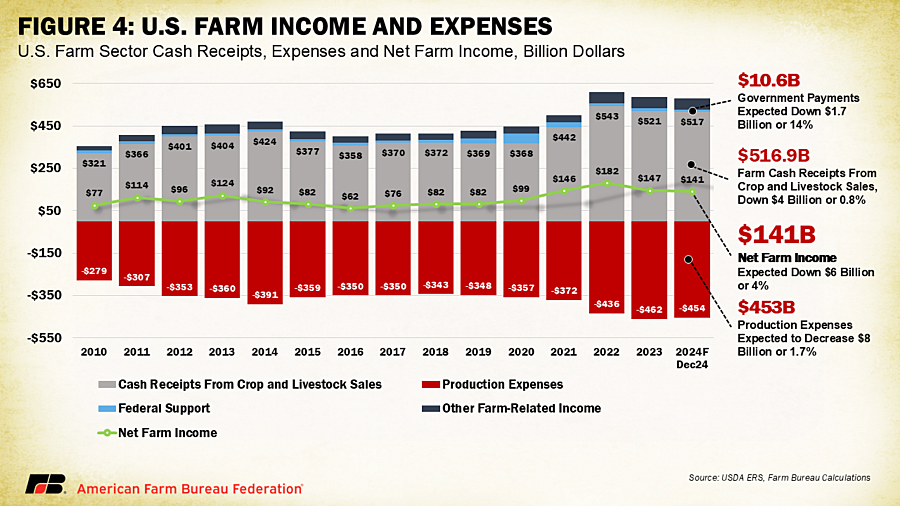
USDA’s December 2024 farm income forecast confirms just how tough a year it’s been for American agriculture, with slightly revised projections offering little relief to farmers, who are losing nearly a quarter of their income in two years. Net farm income is now projected at $140.7 billion for 2024, down $6 billion (4.1%) from 2023 and $41.2 billion (22.6%) from the $181.9 billion peak in 2022. While these updated figures show a marginal improvement over September’s forecast, which projected a 4.4% decline for 2024 to $140 billion, the December revision does little to alleviate concerns about the financial pressures farmers face heading into 2025, and the overall figure masks the dramatic decline in returns for crop farmers.
Crop Receipts: Declines Deepen
With government payments shrinking and the income safety net failing to keep pace with the realities of modern agriculture, farmers are left to navigate an increasingly precarious financial landscape. As policymakers continue overdue farm bill discussions, these figures serve as a reminder that the targeted reforms that could address our farmers’ unique challenges remain stuck in the legislative process.
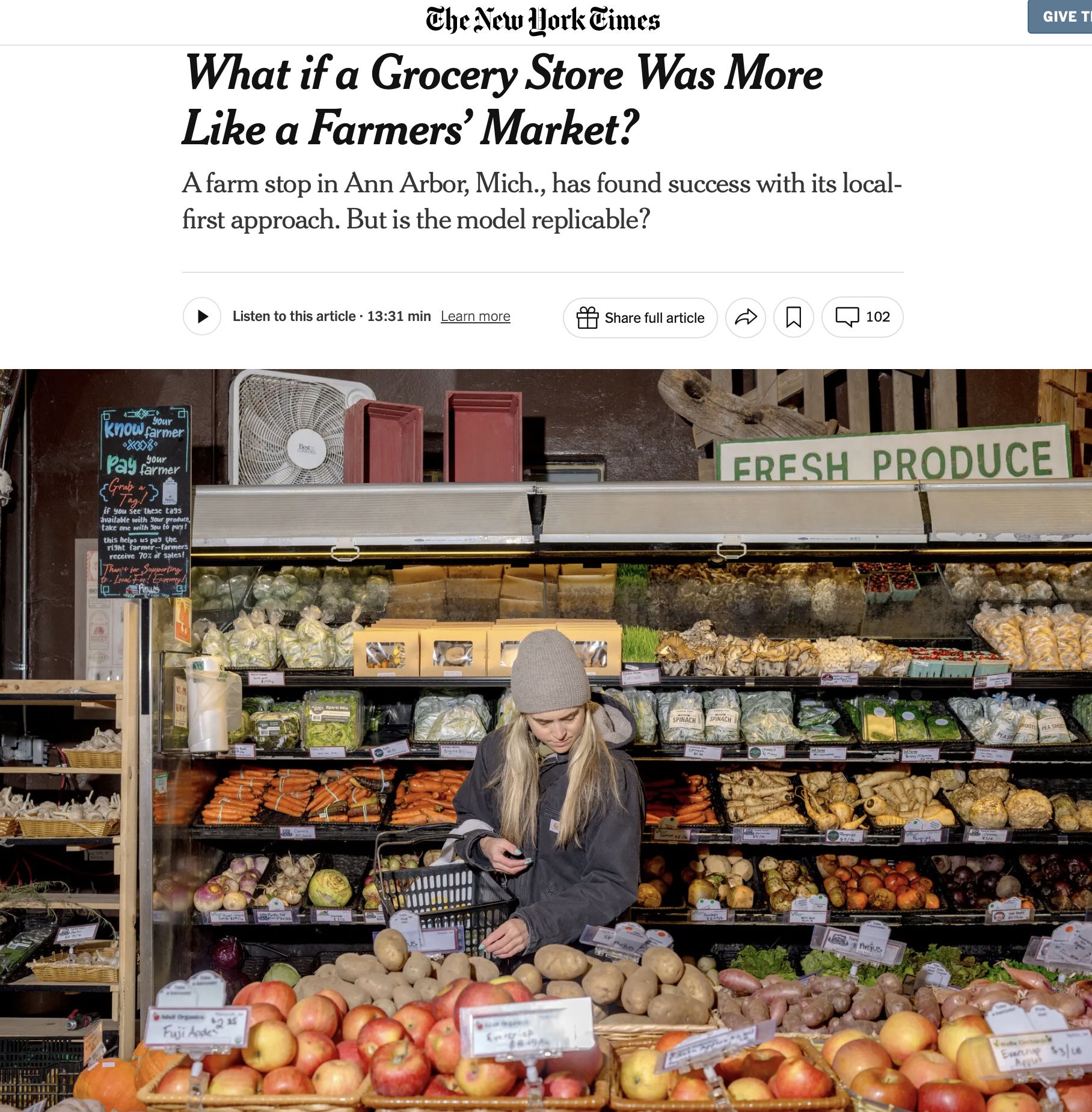
Half of American farms will change ownership in the next decade, and the industry’s net income was more than 22 percent lower in 2024 than it was in 2022. Food advocates in the United States worry that if small farms aren’t supported by better business models, the next generation might be less inclined to go into the family business….
[The NYT downplays the problem. The next generation is already seeking non-farm work, seeing that the business model for farming has failed.
Here is why the farm stand model works: farmers get about 70% of the retail price, instead of when their products go through middlemen, and they earn only about 15% of the grocery store price—Nass]
Argus’s profit margins are thin. Around 1.8 percent of its $6.9 million in sales was net income, which is similar to a typical supermarket’s profit. But food producers receive 70 percent of the final sale price, versus the grocery store average of 15 percent. (In 2024, Argus paid out $4.4 million to farms and food producers, with the top 75 farms receiving over $44,000, according to the company.)
Half of American farms will change ownership in the next decade, and the industry’s net income was more than 22 percent lower in 2024 than it was in 2022. Food advocates in the United States worry that if small farms aren’t supported by better business models, the next generation might be less inclined to go into the family business.
[This is the way to fresher and presumably healthier local food, with much better disclosure of where the food came from and what may or may not have been sprayed on it. Can we successfully move to this model of locally grown food?—Nass]
And it BEGINS… The old name “highly pathogenic avian flu” does not reflect the fact pathogenicity is low or nonexistent in humans and questionable in cattle.
Original URL: https://merylnass.substack.com/p/ The last time I checked: Meryl Nass Feb 28, 2026 https://x.com/rothbard1776/status/2027772518757478541?s=12&t=AuwkS69LUgCQwbNTQq8gww
Original URL: https://merylnass.substack.com/p/the-limited-hangout-senate-minority I came down with COVID on October 26, and it has been for me (both times) like a bad flu. I pounded HCQ, zinc, vitamin D (though was already on the supplements), fluids, slept most of 2 days and today was able to load the dishwasher and do a load of laundry…
Reposting my discussion of Comirnaty vs the EUA Pfizer-BioNTech vaccine, since several people have asked about the differences. I think what I wrote then seems to be operative today.