Are we, our animals and our soils mineral depleted? Might the addition of some physiologic minerals and a sprinkle of trace minerals help some of us achieve better health?
Are we, our animals and our soils mineral depleted? Might the addition of some physiologic minerals and a sprinkle of trace minerals help some of us achieve better health?
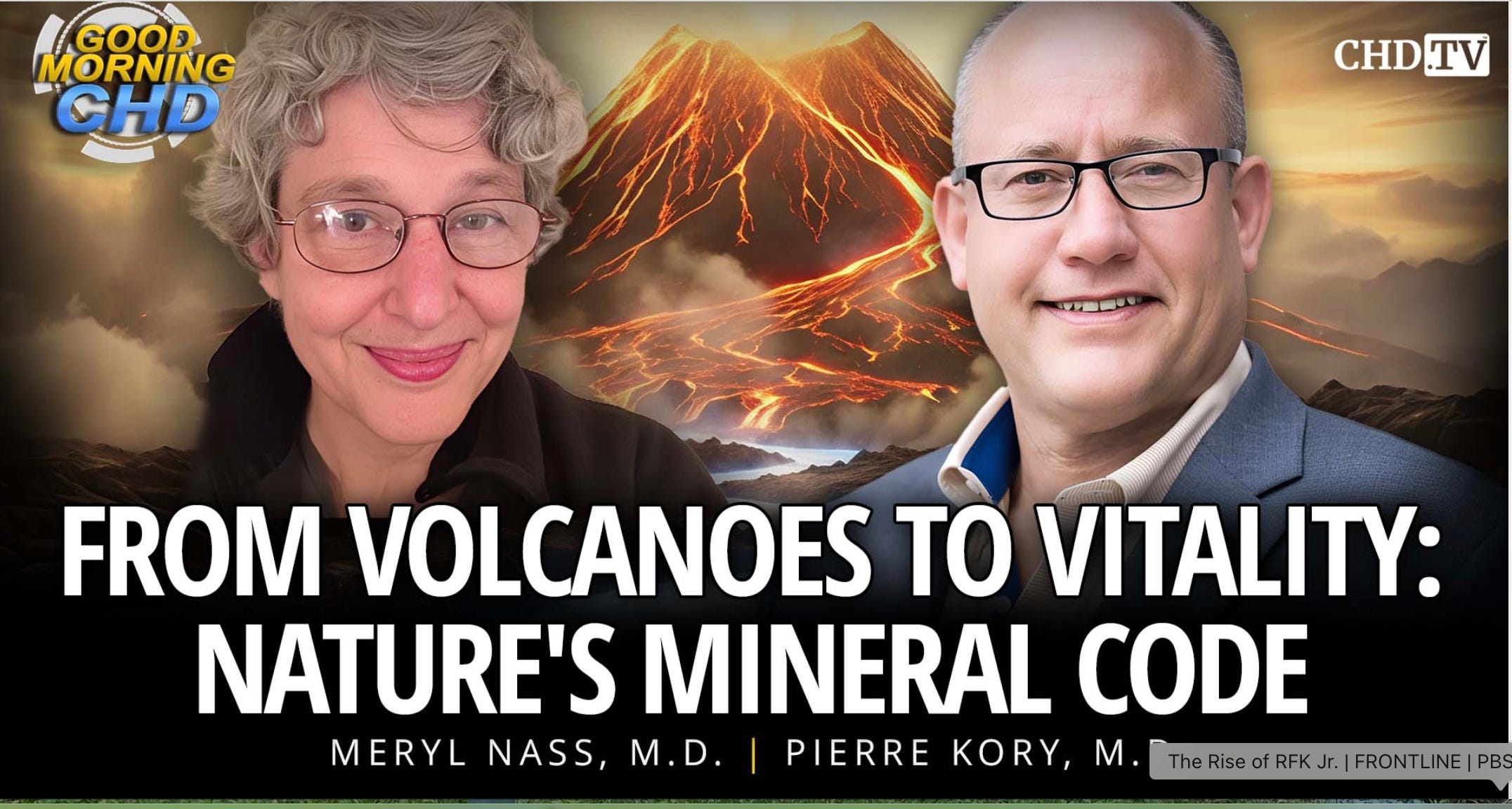
My CHD-TV interview with Pierre Kory on his new book

A reader sent the following article, which supports many of Pierre’s contentions. Because Substack has stopped allowing pdf’s, I am forced to present it in the following unsatisfactory format.
Or go here to download the full pdf.
https://link.springer.com/article/10.1007/s11104-021-05171-w
Vol.:(0123456789)
1 3
Plant Soil
https://doi.org/10.1007/s11104-021-05171-w
SPECIAL ISSUE S97 – 30 YEARS
What is a plant nutrient? Changing definitions to advance
science and innovation in plant nutrition
Patrick H. Brown . Fang‑Jie Zhao .
Achim Dobermann
Received: 9 July 2021 / Accepted: 27 September 2021
© The Author(s) 2021
tolerance or pest and disease resistance. We propose
an open scientific debate to refine and implement this
updated definition of plant nutrients. Other outcomes
of this debate could be a more precise definition of
the experimental evidence required to classify an element
as a plant nutrient, and an independent scientific
body to regularly review the list of essential and
beneficial nutrients. The debate could also attempt to
refine the definition of plant nutrients to better align
with nutrients deemed essential for animal and human
nutrition, thus following a more holistic ’one nutrition‘
concept.
Keywords Plant nutrients · Definition · Essential
elements · Beneficial elements
A new paradigm for plant nutrition
Plant scientists as well as regulatory bodies largely
adhere to a rigid definition of essential mineral elements
(or nutrients) for plants that was originally proposed
in 1939 (Arnon and Stout 1939), and has been
repeated in standard monographs on plant nutrition
ever since. This very narrow definition of essentiality
considers an element as a plant nutrient only in the
context of the completion of the lifecycle of the plant.
It excludes from consideration many plant nutrients
that ‘only’ enhance plant growth, improve the efficiency
of utilization of nutrients, water, and other
resources, enhance abiotic or biotic stress tolerance,
Abstract Current definitions of essential or beneficial
elements for plant growth rely on narrowly
defined criteria that do not fully represent a new
vision for plant nutrition and compromise fertilizer
regulation and practice. A new definition of what is
a plant nutrient that is founded in science and relevant
in practice has the potential to revitalize innovation
and discovery. A proposed new definition might
read: A mineral plant nutrient is an element which is
needed for plant growth and development or for the
quality attributes of the harvested product, of a given
plant species, grown in its natural or cultivated environment.
It includes elements currently identified as
essential, elements for which a clear plant metabolic
function has been identified, as well as elements that
have demonstrated clear benefits to plant productivity,
crop quality, resource use efficiency, stress
Responsible Editor: M. Iqbal R. Khan.
P. H. Brown
Department of Plant Science, University of California
Davis, One Shields Ave, 95616 Davis, CA, USA
F.-J. Zhao
College of Resources and Environmental Sciences,
Nanjing Agricultural University, 210095,China Nanjing,
China
A. Dobermann (*)
International Fertilizer Association (IFA), 49 avenue
d’Iena, 75116 Paris, France
e-mail: adobermann@fertilizer.org
Content courtesy of Springer Nature, terms of use apply. Rights reserved.
Plant Soil
1 3
or improve the quality or nutritional value of the harvested
product.
In the science, regulation, commercialization and
use of fertilizers and other sources of plant nutrients
the definition of an ‘essential element’ has considerable
importance. Although no universally accepted
body exists for regularly reviewing and updating
the ‘established list’, for practical purposes 17 elements
are commonly classified as ‘essential’ for plant
growth, namely carbon (C), hydrogen (H), oxygen
(O), nitrogen (N), phosphorus (P), potassium (K), sulfur
(S), calcium (Ca), magnesium (Mg), chlorine (Cl),
boron (B), zinc (Zn), manganese (Mn), iron (Fe), copper
(Cu), molybdenum (Mo), and nickel (Ni). Others,
such as sodium (Na), silicon (Si), selenium (Se),
aluminum (Al), cobalt (Co) or iodine (I), are known
to also beneficially impact plant growth, but they are
relegated to a legal and practical ‘no man’s land’.
In most countries they cannot be legally referred to,
marketed or sold as plant nutrients. Historically that
has not always been the case. In the 19th century, pioneers
of the mineral nutrition of higher plants (e.g. de
Saussure, Boussingault, Sprengel, Liebig, Lawes and
Gilbert) were primarily interested in improving agricultural
growth through mitigating nutrient deficiency
(Nortcliff and Gregory 2013). Some elements deemed
quite essential by them (e.g. Si, Na) are nowadays
mostly in the no-man’s land area because definitions
and methodologies changed over time. In contrast,
research on essentiality proceeded much faster in
animal nutrition. By 1981, 22 mineral elements were
classified as essential for animal life, which also led
to significant improvements in animal diets and supplements
(Suttle 2010).
Science and practice of plant nutrition must refocus
on optimizing the full scope of food, socioeconomic,
environmental and health objectives necessary
to sustain a healthy global population and environment
(Scientific Panel on Responsible Plant Nutrition
2020). Many in the global scientific community,
as well as agricultural producers, policy makers and
industry who are engaged in agriculture, nutrition and
environment, have embraced this new vision but may
find the science of plant nutrition and its practical
implementation constrained by a too narrow definition
of a ‘plant nutrient’.
This opinion article is a call for new thinking that
begins with updating our understanding of what is a
plant nutrient. We propose a new definition for plant
nutrients merely as a starting point for further discussion.
We focus on the known chemical elements of
the periodic table which can be provided to the benefit
of crops grown in an agricultural setting, but we
also elaborate on possible further expansions of such
a debate and definition. We hope that by rethinking
the definition of a plant nutrient in the context of the
holistic goals of plant nutrition we can encourage a
new generation of plant nutrition researchers, spur
innovation in public and private sector, and sustainably
improve food systems.
Plant nutrients: a historical perspective
The beneficial effect of adding ash or other forms of
minerals to soils to improve plant growth has been
known for more than 2000 years, but it was mainly
in the 19th century that a broader understanding of
the role of different elements arose (Kirkby 2012).
Nicolas Théodore de Saussure was perhaps the first to
show that developing plants require mineral nutrients,
often in very small amounts, insisting that some elements
absorbed by plants were indispensable, while
others might not be essential (Saussure 1804).
Carl Sprengel, in a series of papers published in
the 1820 and 1830s, listed 20 elements that he considered
to be plant nutrients (Van der Ploeg et al. 1999).
Building on Sprengel’s work, Justus von Liebig erroneously
believed that the elemental composition in
plants was constant and could thus serve as a measure
of nutrient need (Liebig 1840; Macy 1936). Lawes
and Gilbert, however, demonstrated that neither the
presence nor the concentration of an element in a
plant could serve as a reliable indicator for its nutrient
needs or as a guide for its fertilizer needs (Lawes and
Gilbert 1851; Macy 1936). Nevertheless, by the end
of the 19th century, the value of adding certain elements
to crop production had been demonstrated and
farmers, particularly in Europe, were applying new
types of ‘mineral’ fertilizers to their crops (Kirkby
2012). The new plant nutrition findings also spread
quickly beyond Europe. For example, from 1882 to
1910, superphosphate was also almost universally
adopted by wheat farmers in South Australia (Byerlee
2021).
It became clear that a more precise study of
the essentiality of specific elements required new
techniques. Nutrient solution culture, first tried by
Content courtesy of Springer Nature, terms of use apply. Rights reserved.
Plant Soil
1 3
Boussingault around 1840 and further improved
in the 1850 and 1860 s by Sachs and particularly
Knop (Knop 1860), allowed for a more precise control
of nutrients under experimental conditions, and
thus became the principle method of plant nutrition
research. Sachs, in his first major book, states that one
cannot call a substance a plant nutrient just because
it is present in the plant (Sachs 1865). On pages 114-
115 he goes on proposing and elaborating two criteria
for distinguishing essential (“unenthbehrlich”)
from non-essential (“enthbehrlich, unnöthig”) plant
nutrients:
(i) a structural criterion: the element is an integral
component of the chemical formula of plant
substances, without which a cell cannot exist
(e. g., C, O, H, N, S);
(ii) a physiological criterion: demonstration that
the plant under otherwise good growth conditions
cannot complete its vegetation cycle without
uptake of any form of the element in question.
He pointed out, however, that testing for the second
criterion is experimentally challenging because it
is difficult to completely exclude a nutrient from the
system (including the seed). Nevertheless, applying
the second criterion, he concluded that the elements
K, Ca, Mg, Fe and P were also essential, whereas Na
and Cl appear to be non-essential. That, we dare say,
probably marks the origin of the strict definition that
is still in use today.
For a long time, it seemed that the list of essential
elements would remain at the 10 already mentioned
by Sachs in 1865, but it grew quickly in the 1920
and 1930s, when Mn (1922), B (1923), Zn (1926),
Cu (1931) and Mo (1938) were added to it (Kirkby
2012; Hoagland and Arnon 1948). To a large extent
this expansion resulted from improvement of analytical
methods and refinement of culture techniques,
particularly purification of nutrient solutions, as well
as widening the research to different plant species
that had higher nutrient requirements than others
(Hoagland and Arnon 1948). Terms such as micronutrients
or trace elements were coined during that time
too, to depict nutrients that were required only in very
small amounts in the physiology of the plant. The
question arose, which of those were indispensable to
growth or not. Motivated by that purpose, Arnon and
Stout (1939) postulated that a plant nutrient can be
considered essential only if
(i) “a deficiency of it makes it impossible for the
plant to complete the vegetative or reproductive
stage of its life cycle;
(ii) such deficiency is specific to the element in
question, and can be prevented or corrected
only by supplying this element; and.
(iii) the element is directly involved in the nutrition
of the plant quite apart from its possible effects
in correcting some unfavorable microbiological
or chemical condition of the soil or other culture
medium.”
One practical implication of this is that, based on
these criteria, a favorable response from adding a
given element to the growth medium does not constitute
conclusive evidence of its indispensability in
plant nutrition (Arnon and Stout 1939). The authors
were also aware of some of the theoretical and experimental
limitations of their definition, which also led
them to state, that, in principle, every element in the
periodic table may at some point be shown as being
essential to plants (Arnon and Stout 1939). Arnon
was also quite aware that different crops, different
stages and climatic factors can have different requirement,
and that the ‘essentiality’ definition is one of
strict physiological function, i.e. it does not necessarily
equate with agricultural requirement (Arnon
1952).
In 1952, Arnon proposed that rather than measuring
the effect of removal of a nutrient from the
medium, an alternative approach to asserting essentiality
could be to identify an essential cellular constituent
or biochemical reaction in which the element
participates (Arnon 1952). A more integrated concept
of essentiality would rest on the combined contribution
of physiological studies of growth and biochemical
studies of functions. Hence, the last criterion was
later re-phrased as “….its function or at least its direct
effect on the metabolism of the plant must be identified”,
and on that basis it was concluded that Na
meets the essentiality criteria in the freshwater algae
Anabaena cylindrica (Allen and Arnon 1955).
Establishing a requirement for minor elements
in plant metabolism thus became a fashionable
approach. Influenced by this evolution, but also by
findings that the 2nd criterion of Arnon and Stout
Content courtesy of Springer Nature, terms of use apply. Rights reserved.
Plant Soil
1 3
(1939) may be too rigid, the term functional nutrient
(or metabolism nutrient) emerged in contrast to
essential nutrient, to include any mineral element that
functions in plants irrespective of whether its action is
specific or indispensable (Nicholas 1961; Bollard and
Butler 1966). Interestingly, Nicholas also described
five types of experiments needed to establish unequivocal
evidence for minor elements to be classed
as functional constituents of enzymes. He also predicted,
that the agronomic importance of trace metals
will increase as less developed areas of the world
are brought into crop cultivation. It had become evident
that, particularly in the tropics and subtropics,
“deficiencies of minor elements in certain areas may
account for the disappointing results given by fertilizers
and the defective functioning of legumes, thus
preventing the establishment of stable systems of
farming’ (Webb 1959). This is an important point to
keep in mind for the debate we are proposing.
Around the same time, Epstein went on to reduce
the essentiality criteria to just two: (i) failure to grow
normally and to complete the life cycle in a medium
purged of the element (as in Arnon and Stout 1939)
and (ii) the element is a constituent of a molecule
which is known to be an essential metabolite (Epstein
1965). The latter transfers the test of essentiality
from the element itself to the metabolite of which it
is a part, which of course also has its own difficulties
(Epstein 1965). Hence, he also pointed out that
any such criteria of essentiality are mental constructs,
which are not easy to apply unambiguously in all situations
that exist in nature.
Over time, following the ‘functional’ notion, many
others have regularly reviewed the evidence for those
elements which do not clearly fail or pass the Arnon
and Stout criteria of essentiality (Bollard and Butler
1966; Asher 1991; Pilon-Smits et al. 2009; Subbarao
et al. 2003). Yet, after Cl was admitted in 1954, only
one new element was added to the list of essential
elements, Ni in 1987 (Kirkby 2012).
More recently, perhaps around the early 1980 s, the
term beneficial elements became popular to include
elements that stimulate plant growth or health, but
have not been shown so far to meet the strict essentiality
criteria (Asher 1991; Marschner 1986). Compared
to ‘functional’, ‘beneficial’ is perhaps more
meaningful in that it implies usefulness or importance
of some kind, but not necessarily essentiality, whereas
all essential elements are of course also functional.
Arnon had already recognized the many instances
where addition of an element might improve agricultural
production but not prove essentiality (Arnon
1952).
The definition of ‘essential’ and ‘beneficial’ mineral
elements has hardly changed since then. The
most recent edition of a leading textbook on plant
nutrition, Marschner’s “Mineral nutrition of higher
plants”, specifies that, for an element to be considered
essential, three criteria must be met (Kirkby
2012):
1. A given plant must be unable to complete its lifecycle
in the absence of the element.
2. The function of the element must not be replaceable
by another element.
3. The element must be directly involved in plant
metabolism – for example, as a component of an
essential plant constituent such as an enzyme – or
it must be required for a distinct metabolic step
such as an enzyme reaction.
Only the third criterion differs somewhat from
Arnon and Stout (1939), i.e. it represents a necessary
evolution in terms of integrating the biochemical role
of an element, as discussed above. In contrast, beneficial
elements are defined as elements that stimulate
growth, but are not essential according to these three
criteria, or are essential only for certain plant species,
or under specific conditions (Broadley et al. 2012).
The latter point, essentiality only in certain species
or under certain conditions, leaves much room for
interpretation. It may simply not be known yet, and
perhaps also causes great confusion among scientists,
regulatory bodies, industry and other stakeholders.
The distinction between beneficial and essential is
especially difficult in the case of some trace elements
(Broadley et al. 2012).
The consequences of not being a recognized plant
nutrient
Our concern is that the current definition of a plant
nutrient constrains the study of plant nutrition as well
as the development of fertilization practices needed
to optimize the production of foods ideally suited
for animal and human diets. Optimization of plant
nutrition in the context of a new societal optimum
Content courtesy of Springer Nature, terms of use apply. Rights reserved.
Plant Soil
1 3
for nutrients (Scientific Panel on Responsible Plant
Nutrition 2020) involves much more than the mere
ability to complete a plant’s lifecycle.
An important negative consequence of the historically
narrow definition of a plant nutrient has been
its use as the founding principle underlying the legal
definition of fertilizers and plant nutrients, as applied
by many regulatory agencies worldwide. The classification
of a nutrient as essential, as opposed to beneficial
or non-nutrient, profoundly affects all manner of
labeling, registration and use guidelines of fertilizers
and other nutrient-containing products. Plant nutrients
that are agronomically and economically critical
for plant development and growth and the production
of quality harvested product, but that are not called
‘essential’, currently fall into a regulatory limbo that
constrains scientific inquiry, limits industrial and
technological innovations and ultimately reduces
plant productivity and quality.
Just to serve as an example, Table 1 illustrates
the confusing discrepancy between elements that
are termed essential or beneficial nutrients by plant
nutritionists (Marschner 2012) and their respective
treatment in the current EU fertilizer regulation (EU
2019). In this example, Cl is listed as ‘essential’ by
plant nutrition scientists, whereas it is not classified
as a plant nutrient by the EU. In contrast, Co and Na
are viewed as ‘beneficial’ elements in science textbooks,
but classified as nutrients by the EU (Table 1).
As another example, the ISO standard on the classification
of fertilizers, soil conditioners and beneficial
substances (revised version currently under
development) strictly refers to the established list of
essential elements by defining micronutrient fertilizers
as “Fertilizers, which contain one or more of
the elements, such as boron, manganese, iron, zinc,
nickel, copper, molybdenum, and/or chlorine, which
are essential, in relatively small quantities, for plant
growth” (ISO 2021a). Similarly, the new ISO standard
on vocabulary defines ‘fertilizer’ as a “Substance
containing one or more recognized plant nutrient(s),
which is used for the purpose of providing the plants
or mushrooms with nutrients and designed for use or
claimed to have value in promoting their growth”;
it defines ‘plant nutrient’ as a “Substance, which
is essential for plant growth” (ISO 2021b). While
the vocabulary standard includes a definition of
‘other nutrient elements’ as “Substances that are not
required by all plants but can promote plant development
and may be essential for particular taxa.” (ISO
2021b), they are not included in the classification
system for fertilizers, soil conditioners and beneficial
substances (ISO 2021a). The ISO standards leave one
big question wide open: who ‘recognizes’ plant nutrients
as essential for plant growth?
In the United States, state agencies – not the federal
government – determine what is classed as a
nutrient, relying on advice from the research community.
The Association of American Plant Food Control
Officials (AAPFCO) strives to gain at least some
uniformity and consensus amongst the various U.S.
and Canadian fertilizer regulatory programs. As of
today, AAPFCO still primarily adheres to the Arnon
and Stout definition for nutrient essentiality.
At times this has bizarre consequences. For example,
although numerous reviews and hundreds of scientific
articles have been published on silicon’s beneficial
effects on plant growth, development, abiotic
and biotic stress, it is still not recognized as being
necessary for plant development by any of these bodies,
and thus also not widely used by farmers (Zellener
et al. 2021). It appears everyone is waiting for
each other to determine what is a plant nutrient and
what is not. In contrast, in 2004, the Brazilian Ministry
of Agriculture, which regulates commercial
production of fertilizers, ruled that Si is an essential
micronutrient (Zellener et al. 2021).
More than half of the elements in the periodic table
are known to occur in plant tissues and it is likely
that with improved analytical techniques many of
the remaining ones may be found too (Asher 1991).
Who is or can become the trusted global scientific
voice that judges if an element is a plant nutrient or
not, based on an updated view of the original criteria
Table 1 Current definition of selected elements as plant nutrients
(Marschner 2012) and their respective classification in the
current EU Fertilising Products regulation 2019/1009
Elements Marschner (2012) EU (FPR 2019/1009)
Al Beneficial Not a nutrient
Cl Essential Not a nutrient
Co Beneficial Nutrient
Na Beneficial Nutrient
Ni Essential Contaminant
Se Beneficial Not a nutrient
Si Beneficial Not a nutrient
Content courtesy of Springer Nature, terms of use apply. Rights reserved.
Plant Soil
1 3
set by agricultural scientists many decades ago? By
what authority can the currently accepted criteria be
updated to achieve the optimization of the full scope
of food, socioeconomic, environmental and health
objectives of a growing global population (Scientific
Panel on Responsible Plant Nutrition 2020)?
This discussion matters because an outdated, too
strict interpretation of the definition of a plant nutrient
impacts the entire human society. At the time of
Arnon and Stout (1939), global human population
was 2.3 billion and agricultural land was abundantly
(made) available. The current world population is
7.9 billion and future food production must primarily
rely on sustainable intensification of the existing land
(Folberth et al. 2020). Global climatic changes are
likely to result in more stressful conditions for crop
production, and there are significant needs and opportunities
to produce more nutritious food. We believe
that a modern definition of what is a ‘plant nutrient’
– grounded in science and relevant in practice – is
the foundation for a holistic crop nutrition contribution
to food system transformation and sustainable
development.
Some specific inadequacies of the current
definition of a plant nutrient
Concerns over the interpretation and negative impacts
of the strict definition of essentiality were eloquently
summarized by Epstein (1999) and others. In his
review of silicon, Epstein found the near-universal
acceptance of this definition to be puzzling in view of
its flaws, suggesting that for criterion (i) many plants
may be quite severely deficient in a nutrient element
and yet complete their life cycle; (ii) is redundant,
and (iii) presumes that designation of an element as
essential has to entail knowledge of its direct involvement
in the nutrition of the plant (Epstein 1999). As
an example, he pointed out that at the time when the
essentiality of boron was established (Brenchley and
Warington 1927), nothing was known about its direct
involvement in plant nutrition. Indeed, it was not until
1996 that the first definitive role of B was defined in
plants (reviewed in Brown et al. 2002). Prior to this,
the unambiguous evidence of essentiality was simply
that the plants failed unless the element was supplied.
The first criterion in the strict definition of an
essential nutrient – ‘A given plant must be unable to
complete its lifecycle in the absence of the element’
– would suggest that the ability to remove a putative
plant nutrient from the experimental environment
to such an extent as to disrupt the plant life cycle,
is the pre-requisite for the establishment of biological
essentiality. It is also worthwhile to mention that
such a strict criterion was never applied to defining
essential nutrients for animals and humans. This first
criterion suggests that essentiality is a matter of technological
capabilities and not biological function.
By this standard, the most recently identified essential
elements (e.g. B, Mo, Cl, Ni), which had been
known to be biologically important to plants, were
classified as ‘non-essential’ prior to the development
of the techniques required to eliminate trace contaminants
of these elements from the growth environment.
For some elements, e.g. iodine, even air purification
would be required to exclude the possible presence
of volatile forms of the element, a technique that
has not been implemented yet in current plant nutrition
research. Both Arnon and Stout (1939) and the
authors of Marschner (2012) book recognized that
the list of essential elements and the definitions will
change over time. They emphasized that the original
list of the ‘plant nutrients’ would and should expand,
i.e. developments in analytical chemistry and in
methods to minimize contamination during growth
experiments may lead to a lengthening of the list of
essential micronutrient elements and a corresponding
shortening in the list of beneficial elements.
Nickel is the most recent example of such development,
i.e. an example of the reliance upon new
technologies for chemical purification and experimental
cleanliness for eliciting deficiency symptoms
and functions. Nickel is now considered an essential
micronutrient for higher plants although failure to
complete the life cycle in the absence of Ni has only
been demonstrated in a few plant species (Gerendás
et al. 1999). It was initially considered because of
its specific function in the enzyme urease, but was
added to the list of essential nutrients after report of
a reduced germination capacity of Ni-deficient seeds
harvested from the third generation of Ni-deprived
plants grown in an ultra-clean culture environment
with extensive purification of nutrient salts (Brown
et al. 1987). Though failure to complete the plant
life-cycle has not been demonstrated in the field, Ni
Content courtesy of Springer Nature, terms of use apply. Rights reserved.
Plant Soil
1 3
deficiency has been demonstrated to so severely limit
the productivity of tree species in several geographies
to become economically non-viable (Wood et al.
2004).
A second inadequacy of the strict Arnon and Stout
definition is that it ignores the realities of modern
agricultural and horticultural production. For some
uses, completion of the growth cycle may not be economically
meaningful at all (e.g., leafy vegetables,
ornamental plants, forest species, landscape plants
etc.). Instead, the speed of growth, developmental
progression, tolerance to stress conditions, ability
to grow under specific environmental conditions, or
the production of quality plant products are essential
for economic viability. To suggest a nutrient is not
a ‘plant nutrient’ from a regulatory and commercial
perspective unless the plant lifecycle is completed,
even in the presence of clear evidence of biological
function and economic importance, artificially constrains
productivity and innovation. We do note however,
that Arnon and Stout (1939) originally defined
their first criterion as “a deficiency of it makes it
impossible for the plant to complete the vegetative or
reproductive stage of its life cycle”, whereas later on
this was reduced to just ‘life cycle’ as a whole.
Silicon is a clear example of an element that is
essential for the economically viable production of
several plant species but that has not been shown to
meet criterion 1 of the classic essentiality criteria.
Silicon is present in plants in amounts equivalent
to those of many macronutrients and evidence suggests
that it should be included among the elements
having a major bearing on plant life (Epstein 1999).
Silicon plays an important role in enhancing plant’s
resistance to numerous biotic (e.g. microbial pathogens,
herbivores) and abiotic (e.g. salinity, drought,
heavy metals, nutrient deficiency, etc.) stresses (Ma
and Yamaji 2008; Coskun et al. 2019). The majority
of studies demonstrate significant effects of Si on
measures such as growth, photosynthesis, enzyme
activities, ion and water transport only under stress
conditions (Coskun et al. 2019; Zellener et al. 2021).
This is further supported by most transcriptomic studies
which show large effects of Si on gene expression
under stress conditions, but very few effects in
the absence of stress (Coskun et al. 2019). It can be
argued that non-stress conditions do not really exist
for field crops, which inevitably will experience
some sorts of stress during their life cycle. For Si
accumulator crops such as rice (Oryza sativa), yield
benefits from Si fertilizer applications have been well
documented (Epstein 1999; Ma and Yamaji 2008).
Silicon uptake mutants of rice grow poorly under
field conditions (Tamai and Ma 2008). In fact, depletion
of plant available Si in paddy soils due to continuous
removal of Si by rice crops has been suggested
as a cause for declining rice yields in certain situations
(Savant et al. 1997).
Based on the current definition, iodine is also not
considered an ‘essential element’, but, because of its
biological functions may now be considered a plant
nutrient too. It is required as an inorganic antioxidant
in some algae (Küpper et al. 2008) and at least
30 crops have been described to positively respond in
terms of an increase of plant biomass to the addition
of iodine at micronutrient levels in nutrient solution
(Medrano-Macías et al. 2016). Iodine has been shown
to influence N uptake and metabolism, photosynthesis
(chlorophyll production, efficiency and CO2-
fixation
as carbohydrates in the leaves and fruits) and anti-oxidant
production and oxidative stress-signaling pathways
(Kiferle et al. 2021; Gonzali et al. 2017). Phenotypic
studies showed the positive effect of iodine in
the nutrient solution at micronutrient levels on plant
biomass development, timely flowering and fruit formation,
and stress resilience, compared to a nutrient
solution with iodine concentration below detection
level (Kiferle et al. 2021).
Arnon and Stout (1939) also made no claim or
specification that an essential element must be essential
for all species under all conditions and yet the
term ‘essential plant nutrients’ has become accepted
as applying to all plant species. This assumption has
resulted in some unusual outcomes. For example,
while Si meets the Arnon and Stout requirement for
essentiality in rice, horsetail (Equisetum) and perhaps
cucurbits and other Si rich species, and has very clear
biological benefit to a broad array of species, it is not
included in the list of essential elements in most modern
textbooks. A wider point to make here is that different
evolutionary clades of plants can display quite
distinct mineral compositions (Neugebauer et al.
2018; Jansen et al. 2002). Composition does not, of
course, equate to essentiality, but there is surely still a
lot to be learned beyond the small number of species
that are typically studied.
The third criterion is also problematic as it fails
to recognize that the growing conditions for the
Content courtesy of Springer Nature, terms of use apply. Rights reserved.
Plant Soil
1 3
species in their native environment might impose
a unique constraint that is uniquely overcome by
the uptake of a particular nutrient. In the absence
of the constraints present in the natural environment,
that same element may show no benefit and
hence, by this definition, could not be considered
essential. The particular inadequacy of this has
recently been illustrated for tea (Camellia sinensis),
a species that is adapted to acid soils, and for
which Al3+
is essential for root growth and development
in all the tested varieties. In the absence of
Al3+,
tea plants failed to generate new roots which
is clearly a requirement for normal growth, development
and ultimately plant survival (Sun et al.
2020). To suggest that the essentiality of an element
can only be established in the artificial circumstance
of a highly purified culture media, but
not in the natural growing conditions is problematic
as it is well known that the prevalent growing
condition can dramatically affect the sensitivity of
a species to a nutrient deficiency. Thus, Co, Ni and
Mo are required in greater amounts in N fixing species;
Ni is required in greater amounts when urea
or ammonia are the dominant N source; Si is highly
beneficial when Mn is present at toxic levels, and
so on.
Epstein (1999) also argued that the three
requirements for essentiality were redundant and
not reflective of the biological importance of several
elements. Selenium, for example, fulfills criterion
3 as it is present at the catalytic center of
several antioxidant enzymes, such as glutathione
peroxidase (Martins Alves et al. 2020; Fajardo
et al. 2014) and may play a wide variety of other
biological roles, particularly in stress tolerance
(Fichman et al. 2018). Iodine also appears to satisfy
criterion 2 and 3. It was recently demonstrated
that I uniquely up- or down-regulated 579 genes
and that Arabidopsis (Arabidopsis thaliana) contains
82 iodinated proteins in root and shoot, many
of which are involved in several fundamental biochemical
processes, and that is not observed when
the closely related halogen bromine is included in
the nutrient solution (Kiferle et al. 2021). While Si
may not meet criterion 3 strictly, the deposition of
Si in the apoplast forming an obstruction barrier
for biotic and abiotic stressors underpins many of
the reported functions of Si in plants (Coskun et al.
2019), and this role is biologically important.
Expanding the scope
A question may be raised as to whether we should
think even more broadly beyond the direct beneficial
or essential roles of mineral elements in plants as discussed
above. This could include a consideration of
the role that nutrients in the environment can play in
enhancing plant productivity even when that element
is not-essential and has no specific role in a plant metabolic
process. The comments made below are meant
to be provocative, indicating potential additional considerations
for a new definition over the longer term.
The establishment of the current essential plant
nutrients has largely been achieved by growing plants
in highly refined culture media under controlled
experimental conditions. This approach is fundamentally
divorced from the reality of agricultural production
or natural environments in which environmental
stress, nutrient interactions and the microbiome all
affect plant performance. At the time of Arnon and
Stout, little was known about the fundamental role
that the plant microbiome plays in plant productivity
and adaptation to stress. We now know that plantassociated
microbiomes confer fitness advantages to
the plant host, including growth promotion, nutrient
uptake, stress tolerance and resistance to pathogens
(Trivedi et al. 2020). Given the critical role the plant
microbiome plays in all that, one might hypothesize
that a nutrient ‘essential for the microbiome’ would
in turn also be critical for optimal plant productivity,
particularly under stress. Nutrient elements that
are essential for microbiome function, for which the
role of Co for rhizobium is an example, may in turn
influence plant microbiome activity and hence crop
productivity (Okamoto and Eltis 2011). Such effects
would also not readily be observed in the artificial
culture conditions usually employed in studies of the
essential elements.
Elements of interest that are known to have biological
function in a range of organisms include:
Br, which naturally occurs in 3200+ organo halogens
(Gribble 1999) from a variety of species and
is known to be essential for tissue development and
membrane architecture in animals (McCall et al.
2014); Co which is known to have a broad array of
functions in microbial and animal systems (Kobayashi
and Shimizu 1999); Se which is essential for
bacteria, animals and at least in some plants is beneficial
for plant growth (Gupta and Gupta 2017); I
Content courtesy of Springer Nature, terms of use apply. Rights reserved.
Plant Soil
1 3
and Si as described above; V (vanadium) which has
function in several nitrogen fixing bacteria and peroxidases
from many taxonomic groups (Tanabe and
Nishibayashi 2019).
Another consideration in the discussion of what
is a plant nutrient could relate to the question of
whether we define a plant nutrient as solely an inorganic
element, or as a simple molecule? In animal
and human biology the definition of a ‘nutrient’ is
far more inclusive than it is in plant nutrition. The
Merriam Webster definition of a nutrient is “a substance
that is needed for healthy growth, development,
and functioning”. This definition uses the
terminology ‘substance’ since it includes organic
nutrient substances required by heterotrophic organisms
that the organism itself cannot synthesize (proteins,
amino acids, fats, vitamins, minerals, carbohydrates
etc.).
In classical plant nutrition the term ‘plant nutrients’
generally refers to the known essential mineral
elements, either in their elemental state or as the
molecular form as acquired by the plant (e.g. nitrate,
ammonium, phosphate, borate/boric acid, molybdate,
sulfate etc.). In common usage, though not legal
usage, the term ‘beneficial plant nutrient’ could also
be used to describe elements that have a positive
effect on the healthy growth, development, and functioning
of the plant (e.g. I, Si, Co, Na). Central to the
definition of what is a ‘plant’ nutrient is the specification
that an element be required for life cycle completion.
This differs fundamentally from the definition of
nutrient as used in animal or human nutrition, which
does not specify that the organism cannot survive in
the absence of the nutrient, only that it will not be
‘healthy’.
There is also no current consideration that organic
molecules synthesized outside the plant may function
as ‘plant nutrients’ in the fashion that vitamins and
other organic molecules are considered as nutrients to
heterotrophs. Evidence of the clear stimulatory effects
of plant growth promoting rhizobacteria and growing
evidence that some biostimulants can stimulate plant
growth by means other than their essential nutrient
content (Du Jardin 2015; Yakhin et al. 2017) may
suggest that molecules synthesized ex-planta might
also function as plant ‘nutrients’. The possibility that
discrete organic molecules, or complex inorganic
molecules may be critical for plant growth and development
has not been rigorously explored, but should
at least be considered in the future, in the broad redefining
of what is a plant nutrient.
Although these are all worthy topics for further
debate, we propose to first focus attention on elements
of the periodic table and their direct role as
plant nutrients. Future definitions could also consider
other (mineral or organic) substances that have clear
beneficial effects on plants and their uses, or microbial
functions affecting plants.
Moving forward
The purpose of the proposed debate is not to re-define
the term ‘essential element’ (or essential plant nutrient).
Instead, we propose, perhaps for the first time,
to properly define the term ‘plant nutrient’, through a
single definition that encapsulates both elements that
are essential and beneficial for plants, as well as those
that are important for other uses, such as animal and
human nutrition. A proposed new definition might
therefore read:
A mineral plant nutrient is an element which is
needed for plant growth and development or for
the quality attributes of the plant or harvested
product, of a given plant species, grown in its
natural or cultivated environment. A plant nutrient
may be considered essential if the life cycle
of a diversity of plant species cannot be completed
in the absence of the element. A plant
nutrient may be considered beneficial if it does
not meet the criteria of essentiality, but can be
shown to benefit plant growth and development
or the quality attributes of a plant or its harvested
product.
This definition should be viewed as a starting point
for further debate, but it has some interesting features.
It includes (i) elements currently identified as essential,
(ii) elements for which a clear plant metabolic function
has been identified (even if the first criteria of failure
to complete the lifecycle has not been demonstrated),
as well as (iii) elements that have demonstrated clear
benefits to plant productivity, crop quality, resource use
efficiency, or plant stress tolerance. Besides emphasis
on plant biomass (yield), it also covers benefits in
terms of plant health (e.g. tolerance to abiotic stresses
or resistance to pests and diseases) and the quality of
the harvested commercial products for their different
Content courtesy of Springer Nature, terms of use apply. Rights reserved.
Plant Soil
1 3
end uses. This also provides a much needed opportunity
to link plant nutrition more directly to animal and
human nutrition, a requirement that was stated a long
time ago (Hoagland and Arnon 1948).
Reframing the definition around the term ‘plant
nutrient’ and emphasizing that this explicitly includes
both the essential and the demonstrated beneficial
mineral elements provides greater clarity. It will
enable regulators to consider the beneficial elements
as legitimate fertilizer components, while encouraging
more scientific inquiry for optimizing yield and
quality oriented plant production strategies in different
species and environments. It would likely also
increase commercial activity. None of this would
diminish the Arnon and Stout principles, but rigor
must be applied to avoid a flurry of unproven claims,
or ‘snake oils’ being sold. Hence, it is important that
the beneficial nutrients would need to satisfy clear
criteria and demonstration (likely for a specific species,
environment or function).
The definition allows for future discoveries of elements
and it includes the possibility that a plant nutrient
may have environmental and/or plant specificity,
such as Al3+
for tea in acid soils, Co or V for associative
N fixation, or Si or Se under stress conditions.
We propose an open scientific debate on the refinement
and implementation of this updated definition of
plant nutrients. Another key outcome of this debate
could be a more precise definition of the modern experimental
evidence required to classify an element as a
plant nutrient. Particular emphasis must be placed on
the concrete tests to perform for beneficial elements, but
there is also need to refine those for essential elements.
It has long been considered, for example, that Na and
Si should also be classed as essential plant nutrients as
essentiality has already been established in some plant
species (Kirkby 2012; Bollard and Butler 1966; Epstein
1999; Subbarao et al. 2003).
While such tests should continue to place the
major emphasis on the functions of nutrients in the
plant, they must also recognize that we may not
know the precise functions yet, even if we observe
clear benefits to the plant. The scientific community
should draw up a robust protocol for the necessary
tests to perform in the laboratory, the field and
natural environments, based on the most advanced
scientific methodologies and techniques. The tests
could include – besides the phenotypical response of
the plant to the addition or removal of the candidate
nutrient from its environment – also regulation of
gene-expression and post-translational responses
in the proteome, or changes in enzyme activity to
explain the observed phenotypical response.
An independent global body of scientists
– for example through the International Plant Nutrition
Council – could be given the mandate to periodically
review such new evidence, update the list of essential
and beneficial plant nutrients, and thus also guide policy
makers and industry more directly in making the
right decisions for improving nutrition. As the leading
global association with more than 400 members
encompassing all actors in the fertilizer value chain,
the International Fertilizer Association (IFA) could act
as an important stakeholder and facilitator of a platform
to implement the outcomes of these discussions.
We believe that a rethinking of the definition
of plant nutrients would lead to several positive
outcomes:
• Scientists will be incentivized to further look for
new plant nutrients and study their functions and
interactions with plant productivity and efficiency.
• The fertilizer industry will have greater opportunities
for differentiation of products, collaborative
research and business innovation.
• Farmers will be freed to more fully explore the
holistic vision of ‘plant nutrition’ that includes
integrated roles of plant nutrients on stress tolerance,
efficiency of resource use, crop quality and
whole system sustainability.
• Consumers will benefit from enhanced productivity
and food that could be a lot more nutritious.
• Regulators and government agencies will achieve
a more nuanced, integrative, adaptable and modern
interpretation of what is a plant nutrient.
We wish to invite everyone to participate in an open
discussion and share their general views and specific
suggestions at https:// www. sprpn. org/ debate, through
e-mails to the corresponding author, or through commentaries
in the journal. A wonderful example for
such a debate can be found in recent issues of the New
Phytologist. Lewis argued that an alternative interpretation
of published evidence suggests that B – listed as
an essential plant nutrient for nearly 100 years –would
not be in compliance with one of the criteria for essentiality,
but should instead be viewed as potentially
toxic (Lewis 2020b). Spirited, thoughtful responses
Content courtesy of Springer Nature, terms of use apply. Rights reserved.
Plant Soil
1 3
(González-Fontes 2020; Wimmer et al. 2020; Lewis
2020a; McGrath 2020) made it clear that there is still a
lot to be learned about this particular nutrient. However,
despite the excellent scientific discourse, the discussion
on B did not resolve the fundamental definition problem
we are hoping to tackle here.
Dedication
This paper is dedicated to Professor Emanuel Epstein,
a close colleague and mentor to one of the authors
(PHB) and a leading light in plant nutrition for more
than 80 years. Emanuel Epstein commenced his study
of plant nutrition in the illustrious laboratory of Dennis
Hoagland at University of California, Berkeley
in 1942 under the direction of Perry Stout, who with
Daniel Arnon had developed the 1939 definition of
nutrient essentiality that is the focus of this paper.
Professor Epstein joined the Department of Soils and
Plant Nutrition at the University of California at Davis
in 1958 where he continues to be actively engaged,
including reviewing and commenting on this manuscript.
Professor Epstein is nearing his 105th birthday.
He has made many seminal contributions to plant
nutrition, e.g., being the first to demonstrate that nutrient
ions are absorbed by plant roots in a fashion akin
to enzymatic catalysis, thereby initiating the study of
ion transporters in plants. Prof. Epstein has also made
many seminal contributions in the field of salinity
and was a leading force in the recognition of the critical
role of silicon as a plant nutrient. The lead author
(PHB) has had the pleasure of many spirited discussions
with Emanuel on how an adherence to the Arnon
and Stout principle of essentiality constrains the field
of plant nutrition.
It is an honor to offer this opinion paper as a tribute
to Professors Epstein’s many contributions the
field of plant nutrition.
Open Access This article is licensed under a Creative Commons
Attribution 4.0 International License, which permits
use, sharing, adaptation, distribution and reproduction in any
medium or format, as long as you give appropriate credit to the
original author(s) and the source, provide a link to the Creative
Commons licence, and indicate if changes were made. The
images or other third party material in this article are included
in the article’s Creative Commons licence, unless indicated
otherwise in a credit line to the material. If material is not
included in the article’s Creative Commons licence and your
intended use is not permitted by statutory regulation or exceeds
the permitted use, you will need to obtain permission directly
from the copyright holder. To view a copy of this licence, visit
http:// creat iveco mmons. org/ licen ses/ by/4. 0/.
References
Allen MB, Arnon DI (1955) Studies on nitrogen-fixing bluegreen
algae. II. The sodium requirement of Anabaena
cylindrica. Physiol Plant 8:653–660. https:// doi. org/ 10.
1111/j. 1399- 3054. 1955. tb077 58.x
Arnon DI (1952) Growth and function as criteria in determining
the essential nature of inorganic nutrients. In: Truog E
(ed) Mineral nutrition of plants. University of Wisconsin
Press, Madison, pp 313–341
Arnon DI, Stout PR (1939) The essentiality of certain elements
in minute quantity for plants with special reference to copper.
Plant Physiol 14:371–375. https:// doi. org/ 10. 1104/ pp.
14.2. 371
Asher CJ (1991) Beneficial elements, functional nutrients, and
possible new essential elements, Micronutrients in agriculture.
Soil Science Society of America, Madison, pp
703–730
Bollard EG, Butler GW (1966) Mineral nutrition of plants.
Annu Rev Plant Physiol 17:77–112. https:// doi. org/ 10.
1146/ annur ev. pp. 17. 060166. 000453
Brenchley WE, Warington K (1927) The role of boron in the
growth of plants. Ann Bot 41:167–187
Broadley MR, Brown PH, Cakmak I, Ma JF, Rengel Z, Zhao
FJ (2012) Chapter 8 – Beneficial elements. In: Marschner
P (ed) Marschner’s mineral nutrition of higher plants, 3rd
edn. Academic, Amsterdam, pp 249–269
Brown PH, Bellaloui N, Wimmer MA, Bassil ES, Ruiz J, Hu
H, Pfeffer H, Dannel F, Römheld V (2002) Plant Biol
4(2):205–223
Brown PH, Welch RM, Cary EE (1987) Nickel: a micronutrient
essential for higher plants. Plant Physiol 85:801–803.
https:// doi. org/ 10. 1104/ pp. 85.3. 801
Byerlee D (2021) The super state: the political economy of
phosphate fertilizer use in South Australia, 1880–1940.
Jahrb Wirtsch / Economic History Yearbook 62:99–128.
https:// doi. org/ 10. 1515/ jbwg- 2021- 0005
Coskun D, Deshmukh R, Sonah H, Menzies JG, Reynolds
O, Ma JF, Kronzucker HJ, Bélanger RR (2019) The
Content courtesy of Springer Nature, terms of use apply. Rights reserved.
Plant Soil
1 3
controversies of silicon’s role in plant biology. New Phytol
221:67–85. https:// doi. org/ 10. 1111/ nph. 15343
de Saussure T (1804) Recherches chimiques sur la végétation.
Nyon, Paris
Du Jardin P (2015) Plant biostimulants: definition, concept,
main categories and regulation. Sci Hortic 196:3–14.
https:// doi. org/ 10. 1016/j. scien ta. 2015. 09. 021
Epstein E (1965) Mineral metabolism. Plant Biochemistry.
Elsevier, Amsterdam, pp 438–466
Epstein E (1999) Annual review of plant physiology and plant
molecular biology. Silicon 50:641–664. https:// doi. org/ 10.
1146/ annur ev. arpla nt. 50.1. 641
EU (2019) Regulation (EU) 2019/1009 of the European Parliament
and of the Council of 5 June 2019 laying down
rules on the making available on the market of EU fertilising
products. https:// eur- lex. europa. eu/ legal- conte nt/ EN/
ALL/? uri= CELEX% 3A320 19R10 09. Accessed 14 Oct
2021
Fajardo D, Schlautman B, Steffan S, Polashock J, Vorsa N,
Zalapa J (2014) The American cranberry mitochondrial
genome reveals the presence of selenocysteine (tRNASec
and SECIS) insertion machinery in land plants. Gene
536:336–343. https:// doi. org/ 10. 1016/j. gene. 2013. 11. 104
Fichman Y, Koncz Z, Reznik N, Miller G, Szabados L, Kramer
K, Nakagami H, Fromm H, Koncz C, Zilberstein A (2018)
SELENOPROTEIN O is a chloroplast protein involved
in ROS scavenging and its absence increases dehydration
tolerance in Arabidopsis thaliana. Plant Sci 270:278–291.
https:// doi. org/ 10. 1016/j. plant sci. 2018. 02. 023
Folberth C, Khabarov N, Balkovič J, Skalský R, Visconti P,
Ciais P, Janssens IA, Peñuelas J, Obersteiner M (2020)
The global cropland-sparing potential of high-yield farming.
Nat Sustain 3:281–289. https:// doi. org/ 10. 1038/
s41893- 020- 0505-x
Gerendás J, Polacco JC, Freyermuth SK, Sattelmacher B
(1999) Significance of nickel for plant growth and metabolism.
J Plant Nutr Soil Sci 162:241–256. https:// doi. org/
10. 1002/ (SICI) 1522- 2624(199906) 162: 3< 241:: AIDJPLN2
41>3. 0. CO;2-Q
González-Fontes A (2020) Why boron is an essential element
for vascular plants: A comment on Lewis (2019) ‘Boron:
the essential element for vascular plants that never was’.
New Phytol 226:1228–1230. https:// doi. org/ 10. 1111/ nph.
16033
Gonzali S, Kiferle C, Perata P (2017) Iodine biofortification of
crops: agronomic biofortification, metabolic engineering
and iodine bioavailability. Curr Opin Biotechnol 44:16–
26. https:// doi. org/ 10. 1016/j. copbio. 2016. 10. 004
Gribble GW (1999) The diversity of naturally occurring
organobromine compounds. Chem Soc Rev 28:335–346.
https:// doi. org/ 10. 1039/ A9002 01D
Gupta M, Gupta S (2017) An overview of selenium uptake,
metabolism, and toxicity in plants. Front Plant Sci 7:2074.
https:// doi. org/ 10. 3389/ fpls. 2016. 02074
Hoagland DR, Arnon DI (1948) Some problems of plant nutrition.
Sci Monthly 67:201–209
ISO (2021a) International Standard ISO/DIS 7851 Fertilizers,
soil conditioners and beneficial substances —Classification.
ISO. https:// www. iso. org/ stand ard/ 77570.
html. Accessed 14 Oct 2021
ISO (2021b) International Standard ISO/DIS 8157 Fertilizers,
soil conditioners and beneficial substances – Vocabulary.
ISO. https:// www. iso. org/ stand ard/ 80949. html. Accessed
14 Oct 2021
Jansen S, Broadley MR, Robbrecht E, Smets E (2002) Aluminum
hyperaccumulation in angiosperms: a review
of its phylogenetic significance. Bot Rev 68:235–269.
https:// doi. org/ 10. 1663/ 0006- 8101(2002) 068[0235:
AHIAAR] 2.0. CO;2
Küpper FC, Carpenter LJ, McFiggans GB, Palmer CJ, Waite
TJ, Boneberg E-M, Woitsch S, Weiller M, Abela R,
Grolimund D, Potin P, Butler A, Luther GW, Kroneck
PMH, Meyer-Klaucke W, Feiters MC (2008) Iodide
accumulation provides kelp with an inorganic antioxidant
impacting atmospheric chemistry. Proc Natl Acad
Sci 105:6954–6958. https:// doi. org/ 10. 1073/ pnas. 07099
59105
Kiferle C, Martinelli M, Salzano AM, Gonzali S, Beltrami
S, Salvadori PA, Hora K, Holwerda HT, Scaloni A, Perata
P (2021) Evidences for a nutritional role of iodine
in plants. Front Plant Sci 12:616868. https:// doi. org/ 10.
3389/ fpls. 2021. 616868
Kirkby EA (2012) Chapter 1: Introduction, definition and
classification of nutrients. In: Marschner P (ed) Marschner’s
mineral nutrition of higher plants, 3rd edn. Academic,
Amsterdam, pp 3–5
Knop W (1860) Über die Ernährung der Pflanzen durch wässerige
Lösungen bei Ausschluss des Bodens. Landw
Versuchsst 2:65–99
Kobayashi M, Shimizu S (1999) Cobalt proteins. Eur J Biochem
261:1–9. https:// doi. org/ 10. 1046/j. 1432- 1327.
1999. 00186.x
Lawes JB, Gilbert JH (1851) On agricultural chemistry, especially
in relation to the mineral theory of Baron Liebig.
J R Agric Soc 12:1–40
Lewis DH (2020) The status of boron as an essential element
for vascular plants: I. A response to González-Fontes
(2020) ‘Why boron is an essential element for vascular
plants’. New Phytol 226:1231. https:// doi. org/ 10. 1111/
nph. 16030
Lewis DH (2020) The status of boron in relation to vascular
plants. New Phytol 226:1238–1239. https:// doi. org/ 10.
1111/ nph. 16128
Ma JF, Yamaji N (2008) Functions and transport of silicon in
plants. Cell Mol Life Sci 65:3049–3057. https:// doi. org/
10. 1007/ s00018- 008- 7580-x
Macy P (1936) The quantitative mineral nutrient requirements
of plants. Plant Physiol 11:749–764. https:// doi.
org/ 10. 1104/ pp. 11.4. 749
Marschner H (1986) Mineral nutrition of higher plants. Academic,
London
Marschner P (ed) (2012) Marschner’s mineral nutrition of
higher plants, 3rd edn. Academic, Amsterdam
Martins Alves AM, Pereira Menezes Reis S, Peres Gramacho
K, Micheli F (2020) The glutathione peroxidase family
of Theobroma cacao: Involvement in the oxidative
stress during witches’ broom disease. Int J Biol Macromol
164:3698–3708. https:// doi. org/ 10. 1016/j. ijbio mac.
2020. 08. 222
McCall AS, Cummings CF, Bhave G, Vanacore R, Page-
McCaw A, Hudson BG (2014) Bromine is an essential
Content courtesy of Springer Nature, terms of use apply. Rights reserved.
Plant Soil
1 3
trace element for assembly of collagen IV scaffolds in
tissue development and architecture. Cell 157:1380–
1392. https:// doi. org/ 10. 1016/j. cell. 2014. 05. 009
McGrath SP (2020) Arguments surrounding the essentiality
of boron to vascular plants. New Phytol 226:1225–1227.
https:// doi. org/ 10. 1111/ nph. 16575
Medrano-Macías J, Leija-Martínez P, González-Morales S,
Juárez-Maldonado A, Benavides-Mendoza A (2016) Use
of iodine to biofortify and promote growth and stress tolerance
in crops. Front Plant Sci 7:1146. https:// doi. org/ 10.
3389/ fpls. 2016. 01146
Neugebauer K, Broadley MR, El-Serehy HA, George TS,
McNicol JW, Moraes MF, White PJ (2018) Variation in
the angiosperm ionome. Physiol Plant 163:306–322.
https:// doi. org/ 10. 1111/ ppl. 12700
Nicholas DJD (1961) Minor mineral nutrients. Annu Rev Plant
Physiol 12:63–90. https:// doi. org/ 10. 1146/ annur ev. pp. 12.
060161. 000431
Nortcliff S, Gregory PJ (2013) The historical development of
studies on soil-plant interactions. In: Gregory PJ, Nortcliff
S (eds) Soil conditions and plant growth. Wiley-Blackwell,
Chicester, pp 1–21
Okamoto S, Eltis LD (2011) The biological occurrence and
trafficking of cobalt. Metallomics 3:963–970. https:// doi.
org/ 10. 1039/ c1mt0 0056j
Pilon-Smits EAH, Quinn CF, Tapken W, Malagoli M, Schiavon
M (2009) Physiological functions of beneficial elements.
Curr Opin Plant Biol 12:267–274. https:// doi. org/ 10.
1016/j. pbi. 2009. 04. 009
Sachs J (1865) Handbuch der Experimental-Physiologie der
Pflanzen: Untersuchungen über die allgemeinen Lebensbedingungen
der Pflanzen und die Functionen ihrer
Organe. W. Engelmann, Leipzig
Savant NK, Datnoff LE, Snyder GH (1997) Depletion of plantavailable
silicon in soils: a possible cause of declining
yields. Commun Soil Sci Plant Anal 28:1245–1252
Scientific Panel on Responsible Plant Nutrition (2020) A new
paradigm for plant nutrition. Issue Brief 01. https:// www.
sprpn. org/ issue- briefs. Accessed 14 Oct 2021
Subbarao GV, Ito O, Berry WL, Wheeler RM (2003) Sodium—
a functional plant nutrient. Crit Rev Plant Sci 22:391–416.
https:// doi. org/ 10. 1080/ 07352 68039 02434 95
Sun L, Zhang M, Liu X, Mao Q, Shi C, Kochian LV, Liao H
(2020) Aluminium is essential for root growth and development
of tea plants (Camellia sinensis). J Integr Plant
Biol 62:984–997. https:// doi. org/ 10. 1111/ jipb. 12942
Suttle NF (2010) Mineral nutrition of livestock, 4th edn. CABI,
Wallingford
Tamai K, Ma JF (2008) Reexamination of silicon effects on
rice growth and production under field conditions using a
low silicon mutant. Plant Soil 307:21–27. https:// doi. org/
10. 1007/ s11104- 008- 9571-y
Tanabe Y, Nishibayashi Y (2019) Recent advances in nitrogen
fixation upon vanadium complexes. Coord Chem Rev
381:135–150. https:// doi. org/ 10. 1016/j. ccr. 2018. 11. 005
Trivedi P, Leach JE, Tringe SG, Sa T, Singh BK (2020) Plantmicrobiome
interactions: from community assembly to
plant health. Nat Rev Microbiol 18:607–621. https:// doi.
org/ 10. 1038/ s41579- 020- 0412-1
Van der Ploeg RR, Böhm W, Kirkham MB (1999) On the origin
of the theory of mineral nutrition of plants and the law
of the minimum. Soil Sci Soc Am J 63:1055–1062
von Liebig J (1840) Die Chemie in ihrer Anwendung auf Agricultur
und Physiologie. Verlag Vieweg, Braunschweig
Webb RA (1959) Problems of fertilizer use in tropical agriculture.
Outlook Agric 2:103–113. https:// doi. org/ 10. 1177/
00307 27059 00200 302
Wimmer MA, Abreu I, Bell RW, Bienert MD, Brown PH, Dell
B, Fujiwara T, Goldbach HE, Lehto T, Mock H-P, von
Wirén N, Bassil E, Bienert GP (2020) Boron: an essential
element for vascular plants: A comment on Lewis (2019)
‘Boron: the essential element for vascular plants that
never was’. New Phytol 226:1232–1237. https:// doi. org/
10. 1111/ nph. 16127
Wood BW, Reilly CC, Nyczepir AP (2004) Mouse-ear of
pecan: a nickel deficiency. HortSci 39:1238–1242. https://
doi. org/ 10. 21273/ HORTS CI. 39.6. 1238
Yakhin OI, Lubyanov AA, Yakhin IA, Brown PH (2017)
Biostimulants in plant science: a global perspective. Front
Plant Sci 7:2049. https:// doi. org/ 10. 3389/ fpls. 2016. 02049
Zellener W, Tubana B, Rodrigues FA, Datnoff LE (2021) Silicon’s
role in plant stress reduction and why this element
is not used routinely for managing plant health. Plant Dis.
https:// doi. org/ 10. 1094/ PDIS- 08- 20- 1797- FE
Publisher’s Note Springer Nature remains neutral with regard
to jurisdictional claims in published maps and institutional
affiliations.
Content courtesy of Springer Nature, terms of use apply. Rights reserved.
1.
2.
3.
4.
5.
6.
Terms and Conditions
Springer Nature journal content, brought to you courtesy of Springer Nature Customer Service Center GmbH (“Springer Nature”).
Springer Nature supports a reasonable amount of sharing of research papers by authors, subscribers and authorised users (“Users”),
for small-scale personal, non-commercial use provided that all copyright, trade and service marks and other proprietary notices are
maintained. By accessing, sharing, receiving or otherwise using the Springer Nature journal content you agree to these terms of use
(“Terms”). For these purposes, Springer Nature considers academic use (by researchers and students) to be non-commercial.
These Terms are supplementary and will apply in addition to any applicable website terms and conditions, a relevant site licence or
a personal subscription. These Terms will prevail over any conflict or ambiguity with regards to the relevant terms, a site licence or
a personal subscription (to the extent of the conflict or ambiguity only). For Creative Commons-licensed articles, the terms of the
Creative Commons license used will apply.
We collect and use personal data to provide access to the Springer Nature journal content. We may also use these personal data
internally within ResearchGate and Springer Nature and as agreed share it, in an anonymised way, for purposes of tracking,
analysis and reporting. We will not otherwise disclose your personal data outside the ResearchGate or the Springer Nature group of
companies unless we have your permission as detailed in the Privacy Policy.
While Users may use the Springer Nature journal content for small scale, personal non-commercial use, it is important to note that
Users may not:
use such content for the purpose of providing other users with access on a regular or large scale basis or as a means to
circumvent access control;
use such content where to do so would be considered a criminal or statutory offence in any jurisdiction, or gives rise to civil
liability, or is otherwise unlawful;
falsely or misleadingly imply or suggest endorsement, approval , sponsorship, or association unless explicitly agreed to by
Springer Nature in writing;
use bots or other automated methods to access the content or redirect messages
override any security feature or exclusionary protocol; or
share the content in order to create substitute for Springer Nature products or services or a systematic database of Springer
Nature journal content.
In line with the restriction against commercial use, Springer Nature does not permit the creation of a product or service that creates
revenue, royalties, rent or income from our content or its inclusion as part of a paid for service or for other commercial gain.
Springer Nature journal content cannot be used for inter-library loans and librarians may not upload Springer Nature journal
content on a large scale into their, or any other, institutional repository.
These terms of use are reviewed regularly and may be amended at any time. Springer Nature is not obligated to publish any
information or content on this website and may remove it or features or functionality at our sole discretion, at any time with or
without notice. Springer Nature may revoke this licence to you at any time and remove access to any copies of the Springer Nature
journal content which have been saved.
To the fullest extent permitted by law, Springer Nature makes no warranties, representations or guarantees to Users, either express
or implied with respect to the Springer nature journal content and all parties disclaim and waive any implied warranties or
warranties imposed by law, including merchantability or fitness for any particular purpose.
Please note that these rights do not automatically extend to content, data or other material published by Springer Nature that may be
licensed from third parties.
If you would like to use or distribute our Springer Nature journal content to a wider audience or on a regular basis or in any other
manner not expressly permitted by these Terms, please contact Springer Nature at
onlineservice@springernature.com