NYT editorialist took the very sensible piece by Bhattacharya and Memoli I featured 2 days ago, and created a straw man to beat them up and denigrate healthy lifestyles and safer scientific pursuits
NYT editorialist took the very sensible piece by Bhattacharya and Memoli I featured 2 days ago, and created a straw man to beat them up and denigrate healthy lifestyles and safer scientific pursuits
But the article led me to a poll with extremely interesting results regarding how the public REALLY feels post-COVID

Some people wonder why I look at The NY Times. It’s because I want to see what narratives the “newspaper of record” is pushing. I read an article about ten years ago by an ex-NYT editor, who said that at the beginning of the year the editors were given a list of the themes to be followed that year. I think he was making clear that they were told which narratives they were intended to push.
Below I critique an “Opinion Piece” by a journalist who knows nothing about the subject of pandemic countermeasures, except that it is his job to pan whatever the current administration is doing, especially if it will save taxpayers money and reduce the risks of Gain of Function research.
Let’s look at the NYT author first, best known for exaggerating the effects of global warming. No science background. But he did beat up RFK in an August 13 opinion piece—well, that probably trumps a PhD in the subject matter at the NYT.
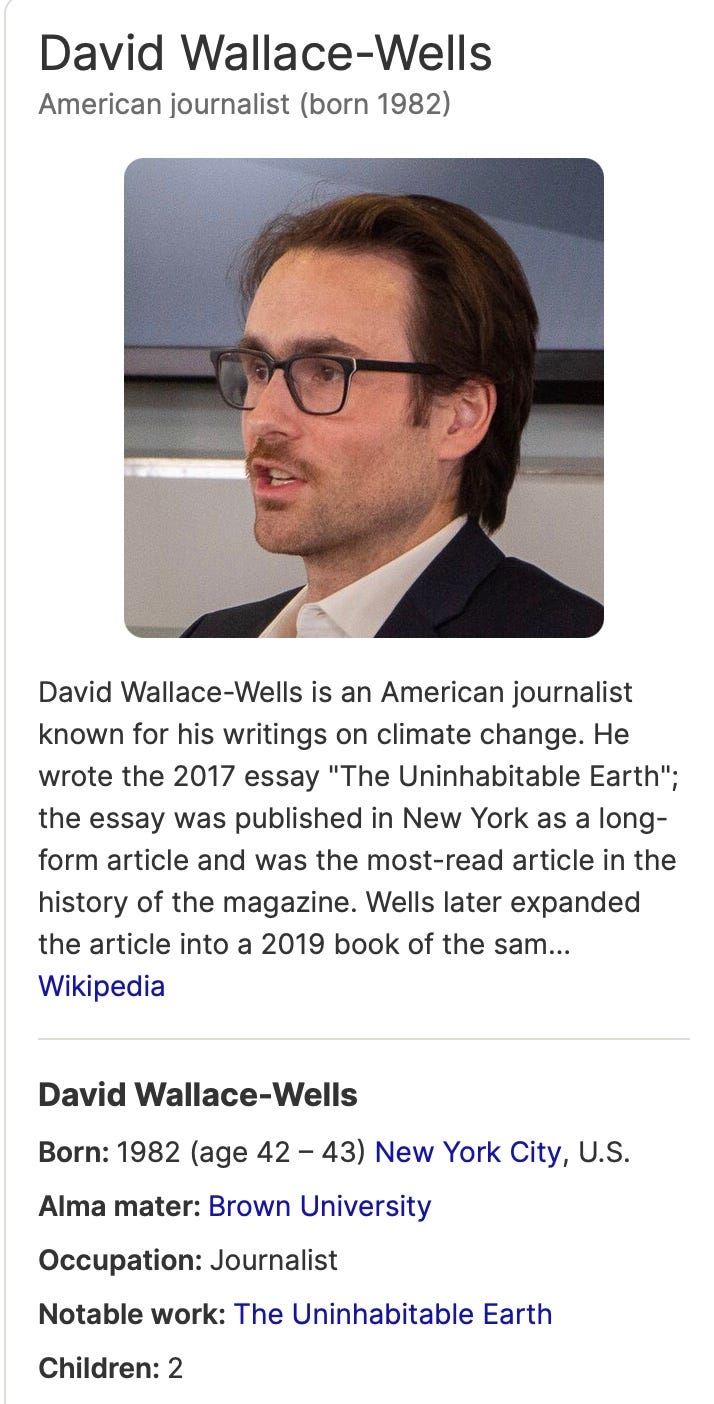
His book and article on climate change are described as terrifying. And he attempts to terrify us with his straw man argument today. (FYI, a straw man argument misrepresents what the opposer actually said, and argues against the misrepresentation.)

And then:
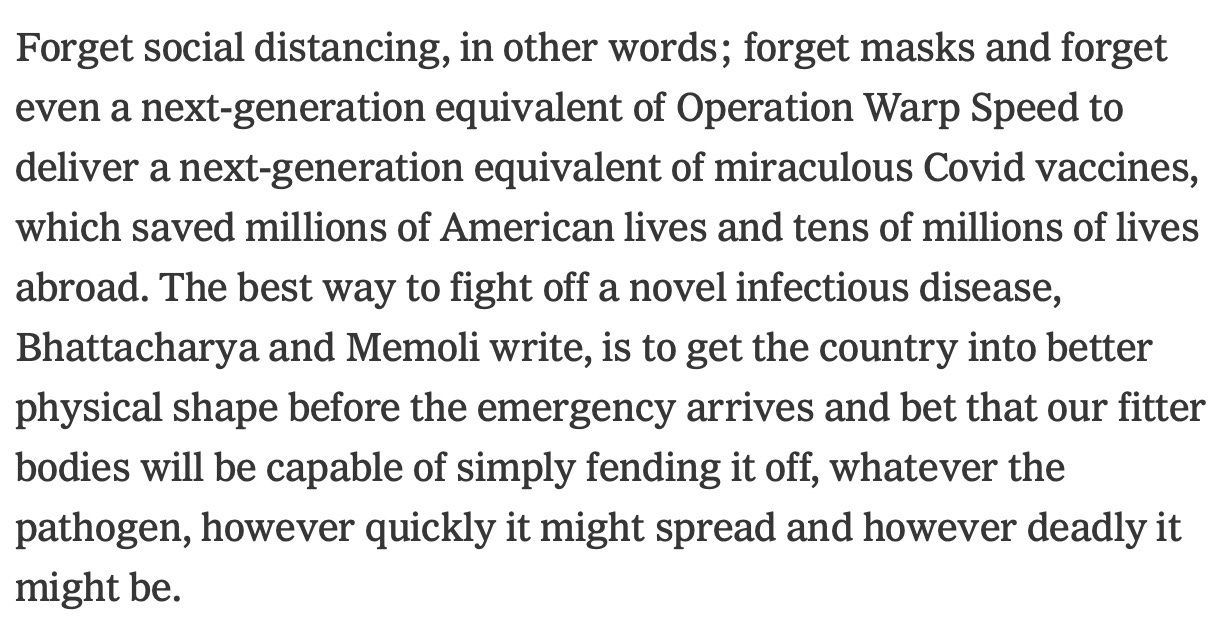
You and I read the article. Is that what it actually said? Let me remind you what it really said:
We must stop wasting money on the traditional playbook. We do not need to find and create new pathogens that could cause future outbreaks. Rather, we must improve our understanding of the pathogens that we know cause disease in humans now, without speculating about hypothetical risks. We should develop better prevention and treatment strategies for these existing pathogens.
We should learn from recent example: a metabolically healthy population, physically active and eating nutritious food, will cope far better in the face of a novel pathogen than a population facing a severe chronic-disease crisis.
Sweden, without lockdown or school closures, was the best in the world at protecting human life during the Covid pandemic. It had the lowest level of age-adjusted, all-cause excess deaths in the world between March 2020 and December 2024. Sweden succeeded in part because its people are relatively metabolically healthy. By contrast, the U.S. chronic-disease crisis all but guaranteed that Americans would have one of the highest mortality rates in the world.
Ultimately, public health agencies encouraging people to take whatever steps they can to improve their health will have a dramatic effect during the next pandemic. Whether simply by stopping smoking, controlling hypertension or diabetes, or getting up and walking more, anything that makes the population healthier will prepare us better for the next pandemic.
Then he emotes that promoting healthy behaviors is magical thinking:
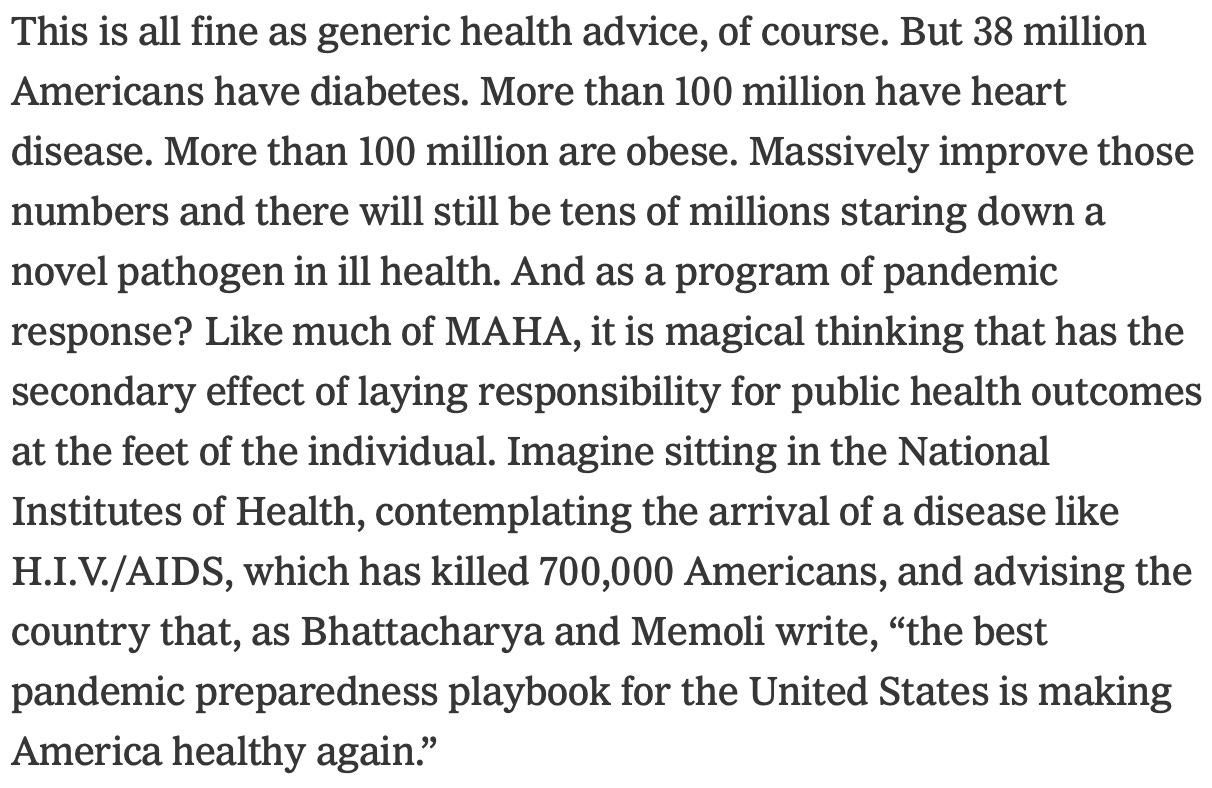
This narrative constructor is now making war on healthier lifestyles. Imagine how many of those who died from HIV/AIDS might have been spared if they used condoms, or possibly avoided poppers and other drugs (which is what Professor Peter Duesberg postulated as the contributing cause).
Next, after admitting that lifestyle diseases like obesity and diabetes did in fact increase mortality from COVID significantly, Wallace-Wells somehow twists that into an attack on good health. The guy is phenomenal at being illogical.
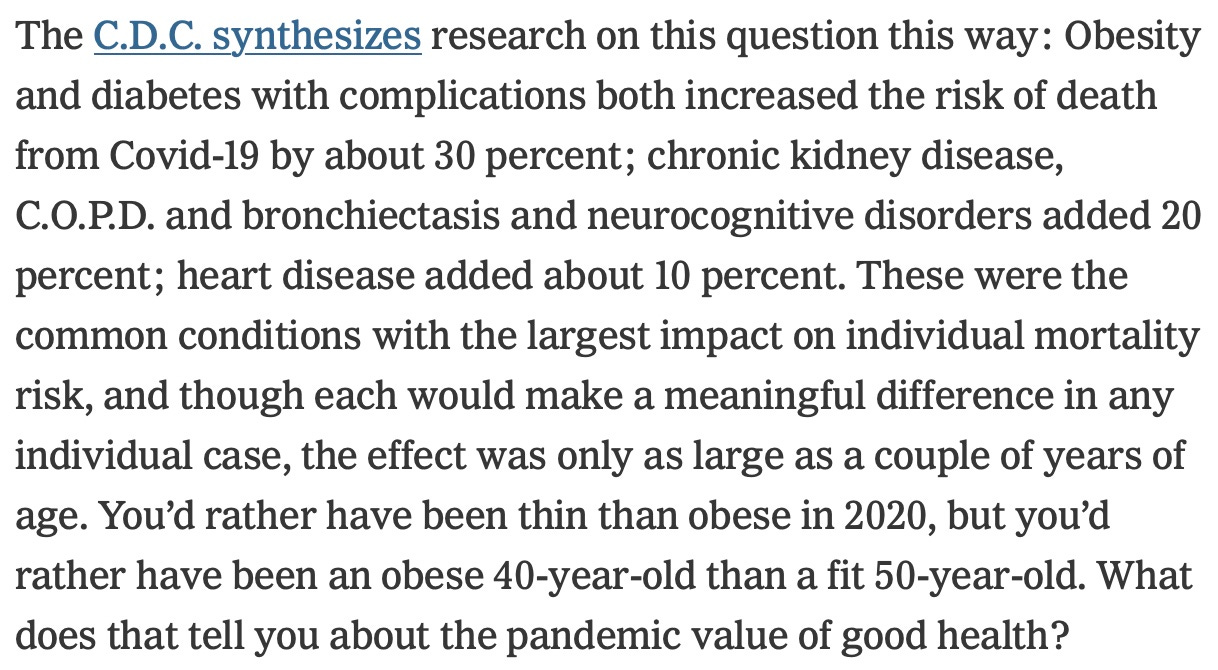
It just gets wilder. Either he is a dummkopf, or he was told the story he had to write, and he just had to produce the verbiage to go along with the theme:
Are we really prepared to embrace a D.I.Y. public health libertarianism in the wake of a respiratory pandemic that taught us — or should have — that whenever we share air, we share disease?
[Even outdoors? Then why aren’t we all diseased, all the time?—Nass]
To a distressing degree, the answer appears to be yes — not just in the fiercest MAHA circles but among the population at large, as a poll shows.
in the next sentence, poor Wallace-Wells stops making any sense at all. Where was his editor?
But however much sympathy Americans may have for the panic of 2020, they don’t seem exactly eager to go through it all again…
This is, for me, the signal finding of the poll. Only 54 percent of respondents said they would like to see the government invest in the development of vaccines. Only half said they’d support restrictions on large indoor gatherings in the event of a similar pandemic, and even fewer said they’d support mask mandates, restrictions on indoor dining, vaccine mandates or school closures.
Mr. Wallace-Wells, after alluding to what the poll really shows—that the public is fed up with all the restrictions, and is particularly fed up with vaccines—performs a dance about how the public has a short memory and therefore it won’t plan for “the next one,” implying our betters will just have to do it for us. He finally concludes his editorial with this note of brilliance:
As time wore on, the main lesson the country as a whole seems to have drawn from our experience with Covid is simply that we hated it.
But he led me to that poll, and I think it has some very interesting information for us. Let me reproduce some of it below. No wonder Wallace-Wells did not talk about the rest of the poll.
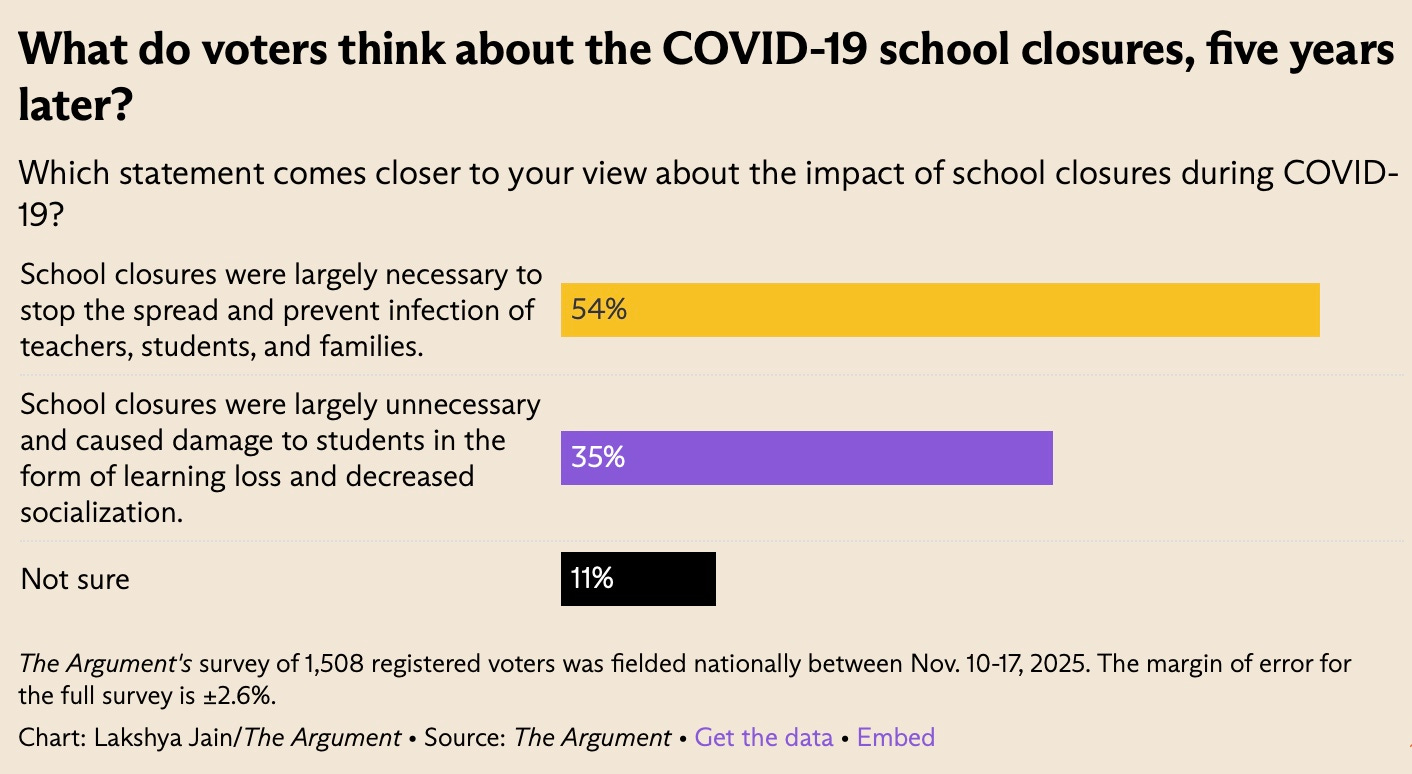
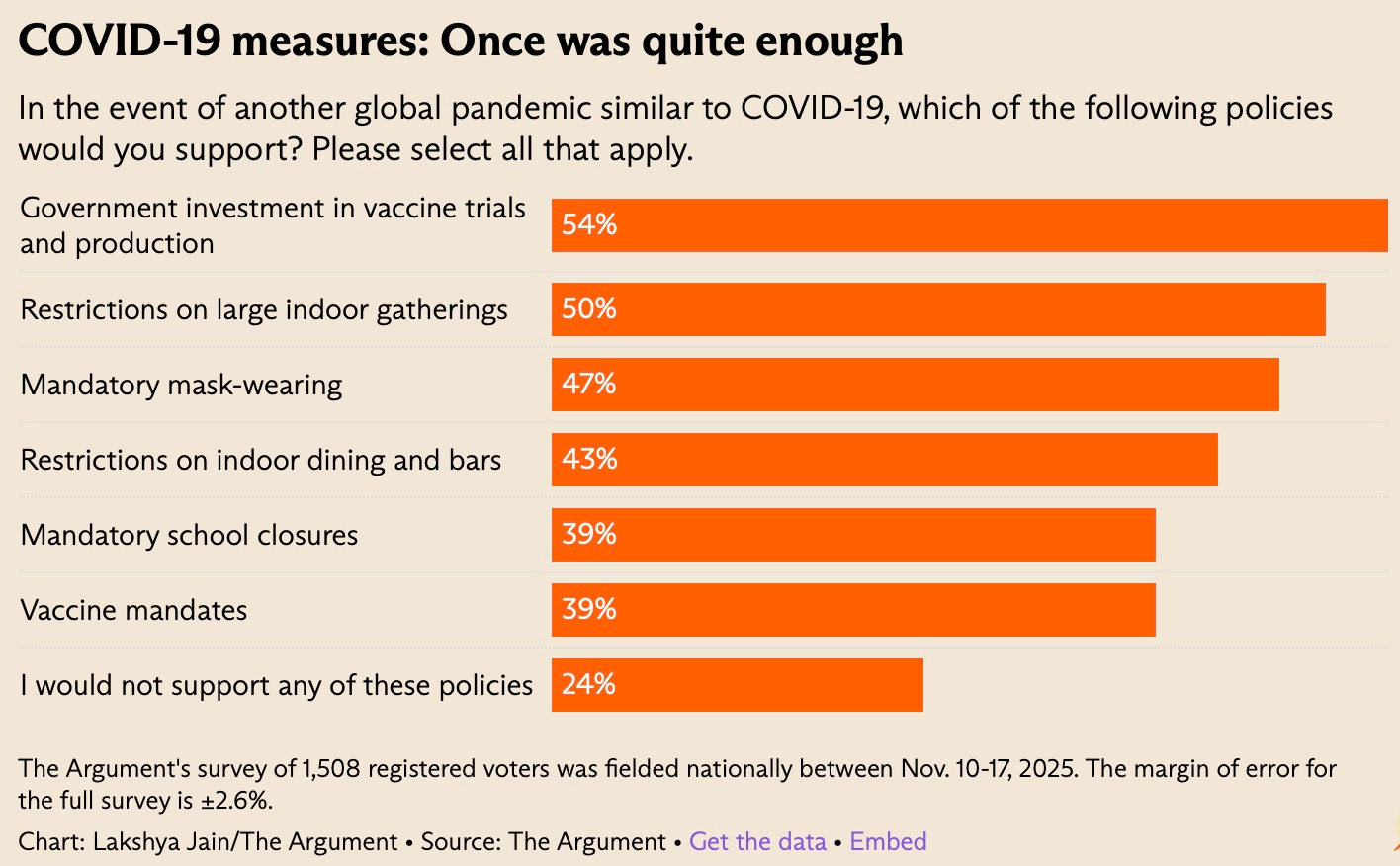
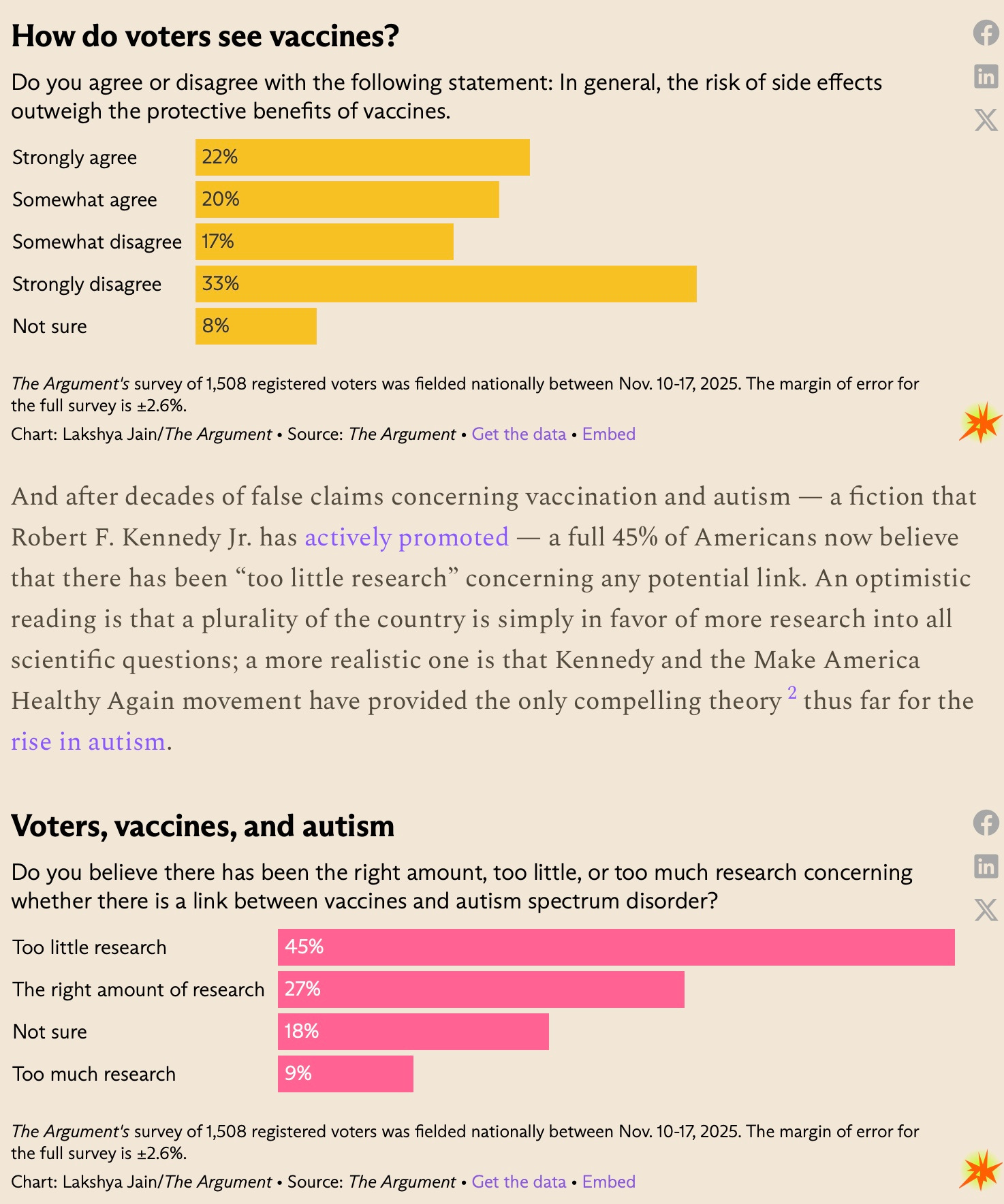
-
If there were another pandemic, only 54% want the government investing in vaccine development!!!! Even if there was another pandemic!!!
I think we have helped to successfully educate the public that if there is another pandemic, we will have to rely on already developed drugs, vitamins and supplements. We don’t want experimental vaccines, thank you very much. There will not be enough time (years) to develop safe and effective vaccines. We won’t again consent to prolonged lockdowns, while waiting for the magical jabs. While government officials play games with the truth. This is a real triumph over the Bill Gates-WEF-WHO-UN-CEPI strategy to vaccinate the heck out of us with unknown potions, using pandemics as their excuse.
-
Only 50% of respondents felt the benefits of vaccines outweighed the risks. It seems 42% felts the risks outweighed the benefits, and 8% were not sure. This is a massive change in public opinion. Why aren’t we hearing about it?
-
45% of the public responded that there has been too little research on the potential link between vaccines and autism, and 18% were unsure. Despite many hundreds of millions poured into the narrative that we know vaccines do not cause autism, 63% of the public remains unconvinced.
It looks like the pandemic, while it may have served those who want to conquer the world as a useful dress rehearsal, also woke up a considerable chunk of the US population, and presumably the world population as well. Just let those $%^&*(@’s try it again. We won’t be marching in lockstep next time, it seems.