PFAS contamination of our food, water, soil and bodies–an update, and what we at Door to Freedom doing about it
PFAS contamination of our food, water, soil and bodies–an update, and what we at Door to Freedom doing about it
And some good news at last!

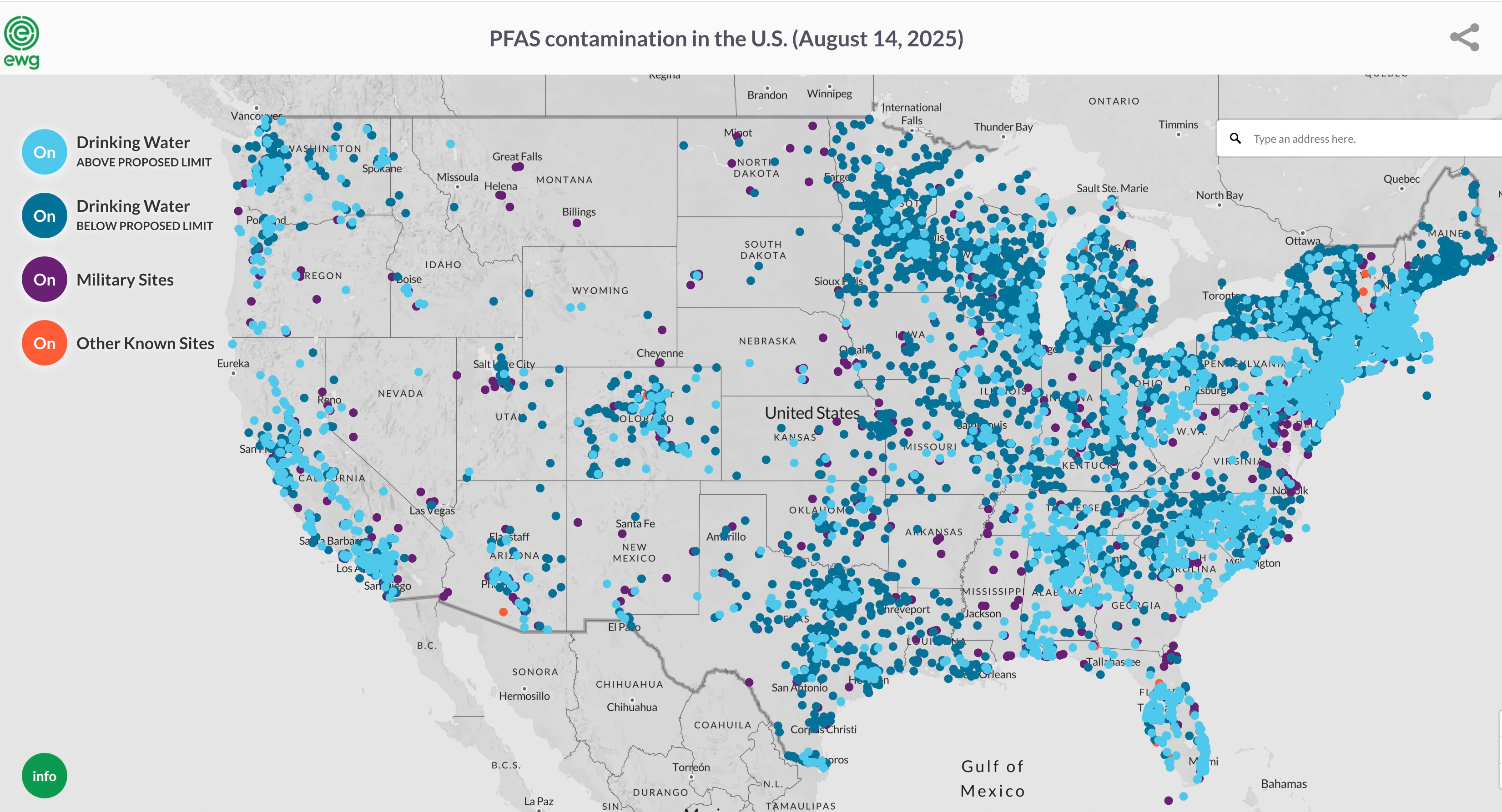
The Environmental Working Group has produced the following graphic to reveal widespread PFAS contamnation of our water supplies.
The Waterkeeper Alliance (RFK, Jr’s old organization) found PFAS in 98% of waterways tested.
Readers hopefully recall that there was an effort to prevent regulation of PFAS-containing sludge (renamed as “Biosolids” since “sewer solids” didn’t sound so good) in a rider tucked into the Interior, Environment Appropriations Bills in the House and Senate.
Congress had directed the EPA, years ago, to study PFAS in sewer sludge. EPA’s draft report was released on January 15, 2025, just before Biden left office. It acknowledged the health problems of PFAS in sludge. So the industry came up with a clever rider that said that no money could be spent to finalize or otherwise use the report to advance regulation.
In an 11th hour maneuver, the rider got removed from the two bills in January, despite having been approved in committee. This is huge!
Now efforts need to made to be sure that the report gets applied and PFAS (which till now has been unregulated in sludge) will be measured and limits applied. It would be great if it was prohibited, but that simply won’t happen.
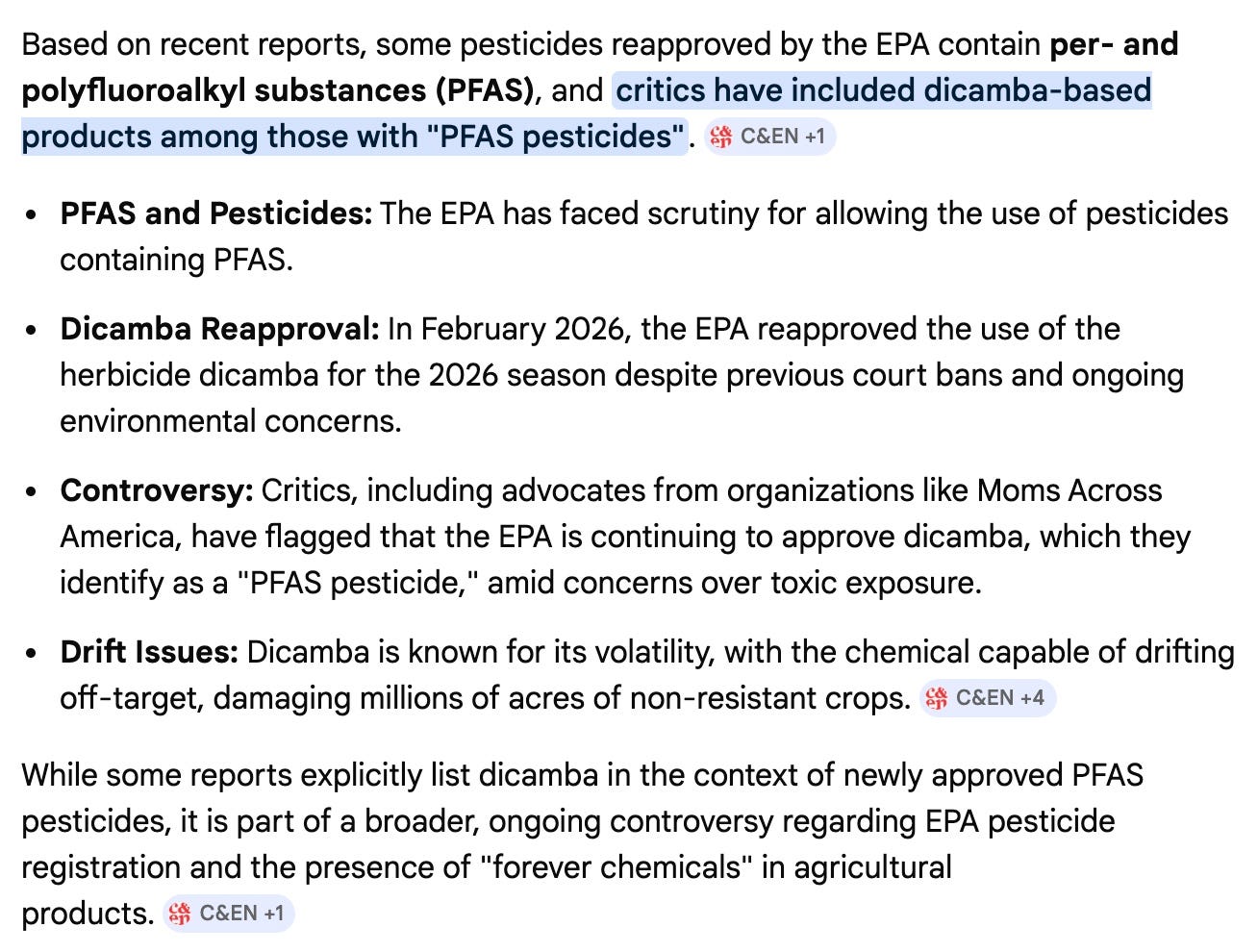
EPA just reapproved the herbicide (weed-killer) Dicamba, after 2 courts stopped its use, since after application it drifts onto neighboring properties—which can kill the neighbors’ crops as well as contaminate their land. It also contains PFAS.
“This time around, activists also criticize the fact that Kyle Kunkler, current deputy assistant administrator for pesticides at the EPA’s Office of Chemical Safety and Pollution Prevention, lobbied for approval of the dicamba products in question in his previous job at the American Soybean Association (ASA). The EPA did not immediately reply to a request for comment.”
Given that EPA has been unhelpful, to say the least, in reducing the toxic substances we face, especially the 15,000 plus PFAS substances, I thought of a new strategy whereby FDA might regulate PFAS residues in our food. I discussed this with the FDA yesterday, and there is interest in exploring this possibility. Stay tuned for more information as things progress.