Odd n Ends, Opinions, Bad News on several fronts. I lacked the time or inclination to go into detail on these issues
Odd n Ends, Opinions, Bad News on several fronts. I lacked the time or inclination to go into detail on these issues
But you should be aware of them.

-
The symposium in Congress I was organizing on the farm crisis, timed to occur as the Farm Bill was debated, will not be happening. Despite strong initial interest from a Member, the office never did organize the sponsorship as needed. A Senator decided not to sponsor. Why? I am guessing it had to do with my attempt to get two sponsors from opposite parties. Or else it may have been a response to my efforts to demand a recorded vote on the farm bill’s pesticide shield. Or maybe it was simply too controversial—MAHA, after all, is no longer an election-winning phenomenon. It is simply something to be kicked to the curb as legislation designed to protect us from toxins is being gutted. But there may be another event coming soon…
-
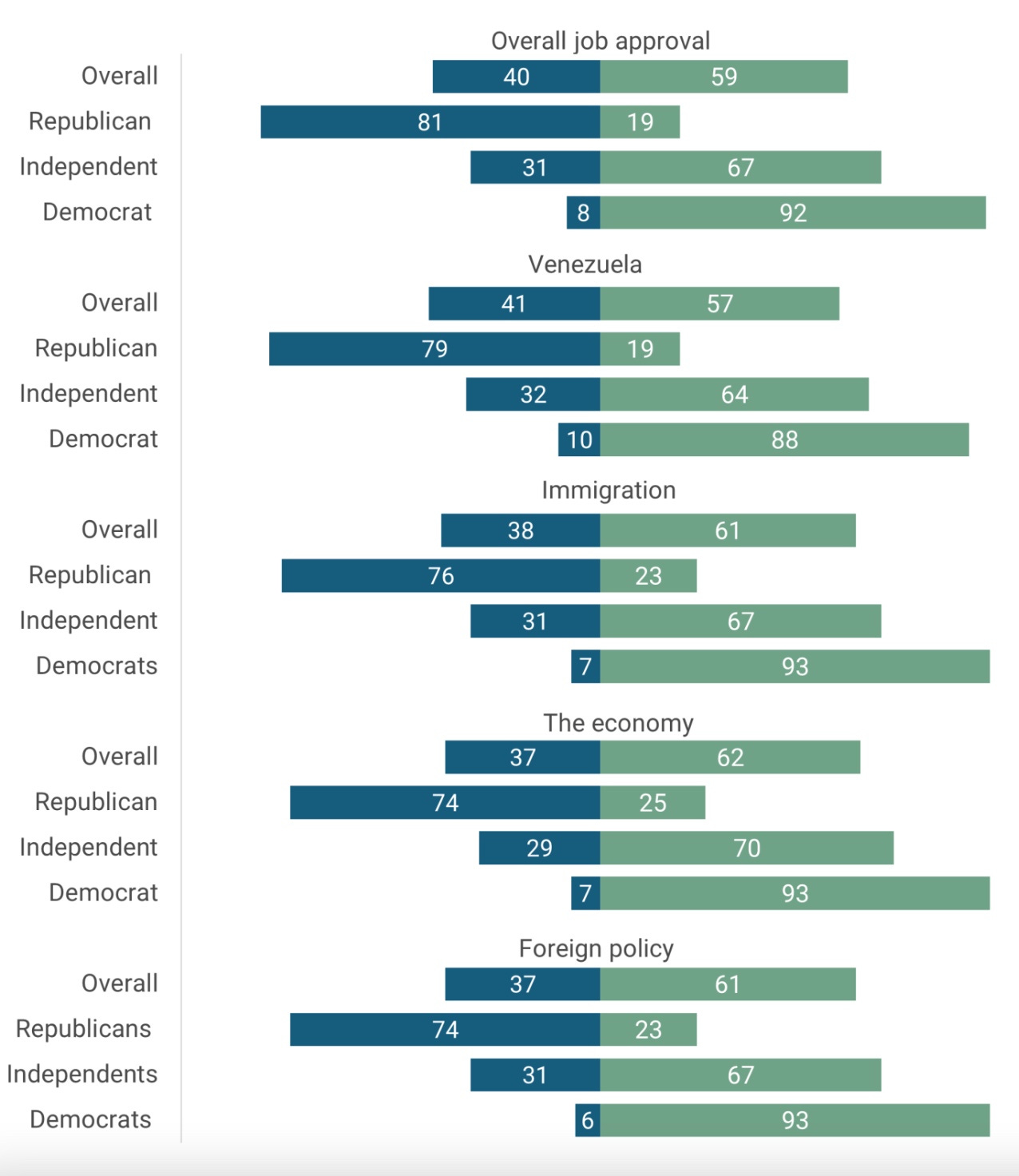
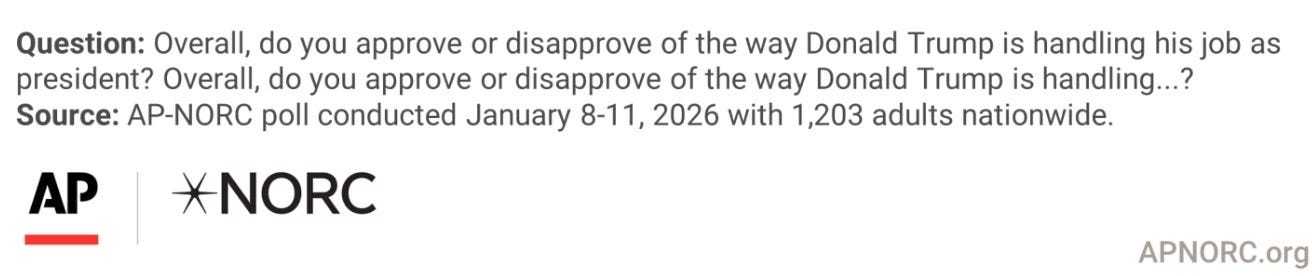
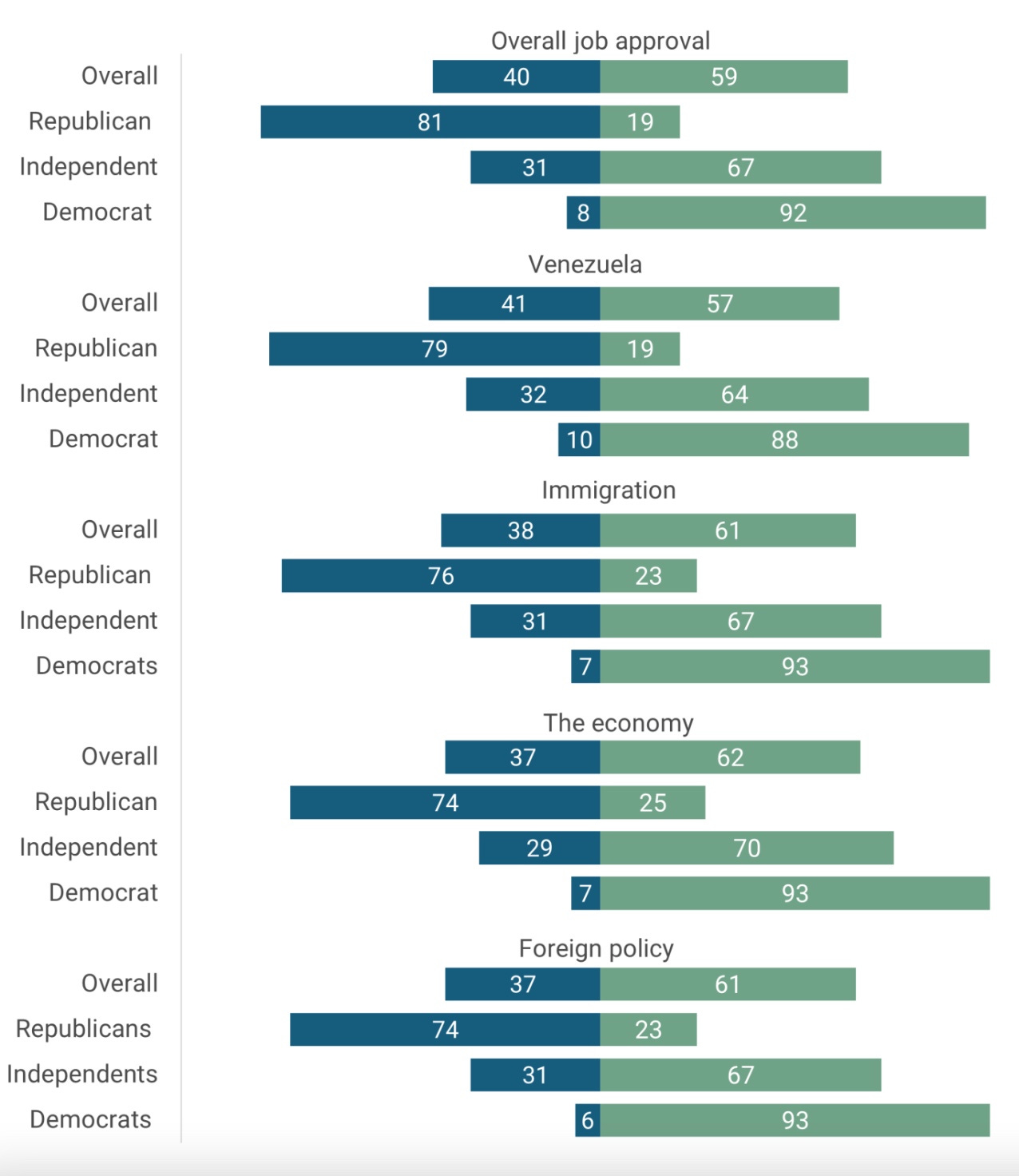
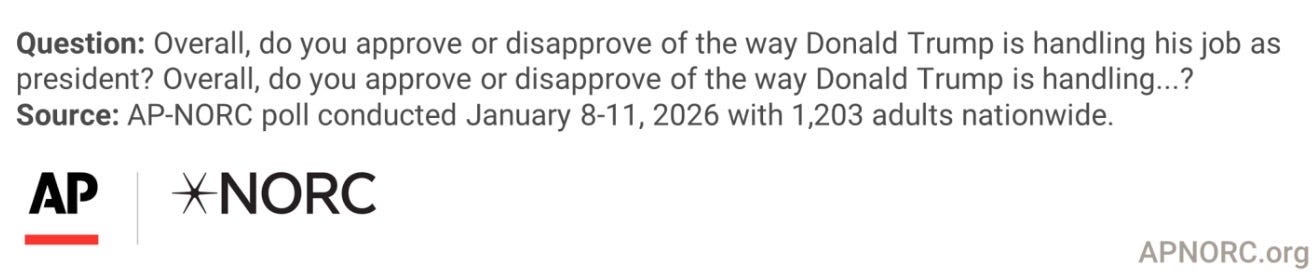
This poll is from January, but I doubt it has changed much since then. It is striking to me in several ways:
https://apnorc.org/projects/fewer-want-the-u-s-to-take-an-active-role-in-global-affairs/


-
No matter what the question was regarding Trump, the percentages in favor and against remained almost identical. In other words, basically by party, Americans are frozen into a belief system that does not change its opinion about Trump’s policy when the subject and policy changes.
-
It was also sad for me to see that half Americans thought Venezuela was a country that significantly trafficked drugs to the US, when that was such a patent lie. (You have to read the rest of the article to learn this.)
-
Trump’s support among independents is at best 33%—they disapprove of his policies by at least 2 to 1. They are the people who determine who wins a vote.
-
The State of the Union was an expected disappointment. It did not enlighten us as to where the administration wants to take us, nor did it accurately represent what the last year accomplished. It was all spectacle. MHO.
-
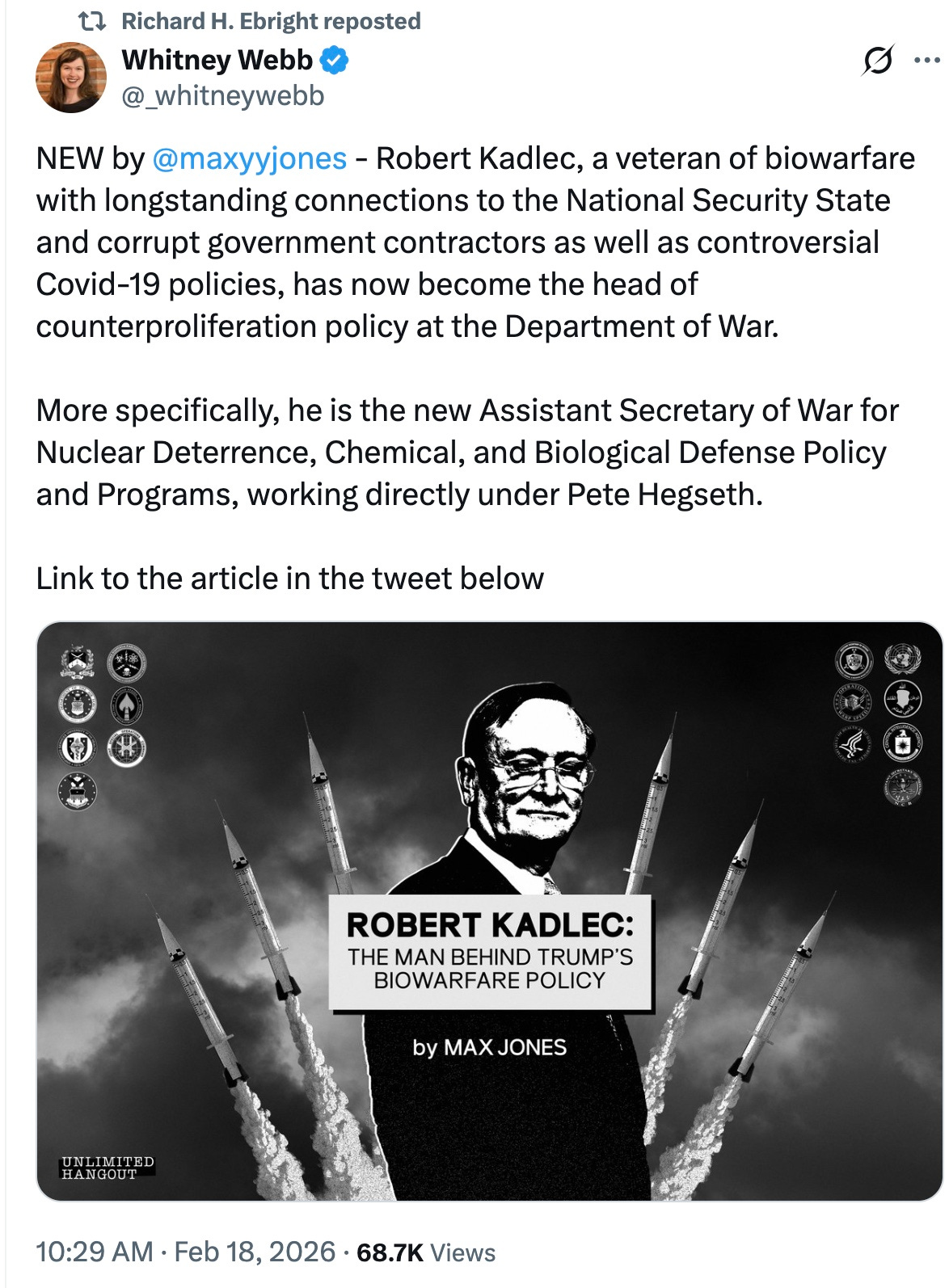
Very bad news for controlling pandemic planning expenditures and Gain of Function research. The disgraced Robert Kadlec, MD (His degree obtained from the US military’s medical school) has been given a plum position as an Assistant Secretary of War. We can expect he will support GOF and buy whatever the Beltway Bandits have to sell to save us from pandemics and biowarfare, especially when the Bandits are his friends.
-
Link to the Unlimited Hangout article here: https://unlimitedhangout.com/2026/02/investigative-reports/robert-kadlec-the-man-behind-trumps-biowarfare-policy/
-
Former Senator Richard Burr, (who was investigated for insider trader on COVID info, and was sponsored by the Pharma and Biotech industries) employed Robert Kadlec as his staffer to design the national strategic stockpile (NSS) decades ago, and to design the position of Assistant Secretary for Preparedness and Emergency Response (ASPR in beltway lingo) — and Kadlec was later appointed by President Trump in 2017 to the Assistant HHS Secretary position he had himself created. Kadlec then moved the NSS to his own agency and controlled its purchases, leaving the country bereft of PPE, masks, drugs etc. when COVID hit. See this, this and this.
-
But we had plenty of unneeded anthrax and smallpox vaccines, purchased from Kadlec’s former business partner, Fuad el-Hibrid, main founder of Emergent BioSolutions. Then Kadlec was back working for Senator Burr to help with the minority Repub report on COVID origins on 2022, so you can be assured that this minority report has been sanitized by Kadlec and Kadlec’s other presumed boss, the CIA.
-
Amazing isn’t it that he gets a plum federal position in 2026 after being personally responsible for the lack of masks, gowns and gloves for healthcare workers and citizens early in the pandemic, many of whom died. Very little seems to have happened in his bio during most of the 27 years during which he was purportedly a flight surgeon for the Air Force. He was presumably an intelligence asset then.
Americans in need of N95 masks go without so money could be spent on $2.8 billion sweetheart deal for anthrax vaccine manufacturer/ WaPo
-
May 8, 2020. A spectacular Washington Post article of May 4 connected the lack of protective respirators (aka N95 masks) with Emergent BioSolutions (the anthrax vaccine manufacturer). Emergent received incredible insider contracts from the current Assistant DHHS Secretary of Preparedness and Response (ASPR), Robert Kadlec, who early in life attended the Air Force Academy and DOD medical school. Read:
-
The awful EPA is up to its usual tricks of misrepresenting what it is doing. The pesticide (herbicide) Dicamba (owned by Bayer) has twice been de-registered by courts, because it drifts and kills crops, etc. on properties near where it has been sprayed. But EPA wants it back, and is attempting to get rid of the law that was used by the courts to deregister it. EPA in parallel is claiming it is imposing limits on how dicamba can be used so there is less drift. But no one has managed so far to end the drift. So it misrepresents the bandaid it is applying to dicamba:
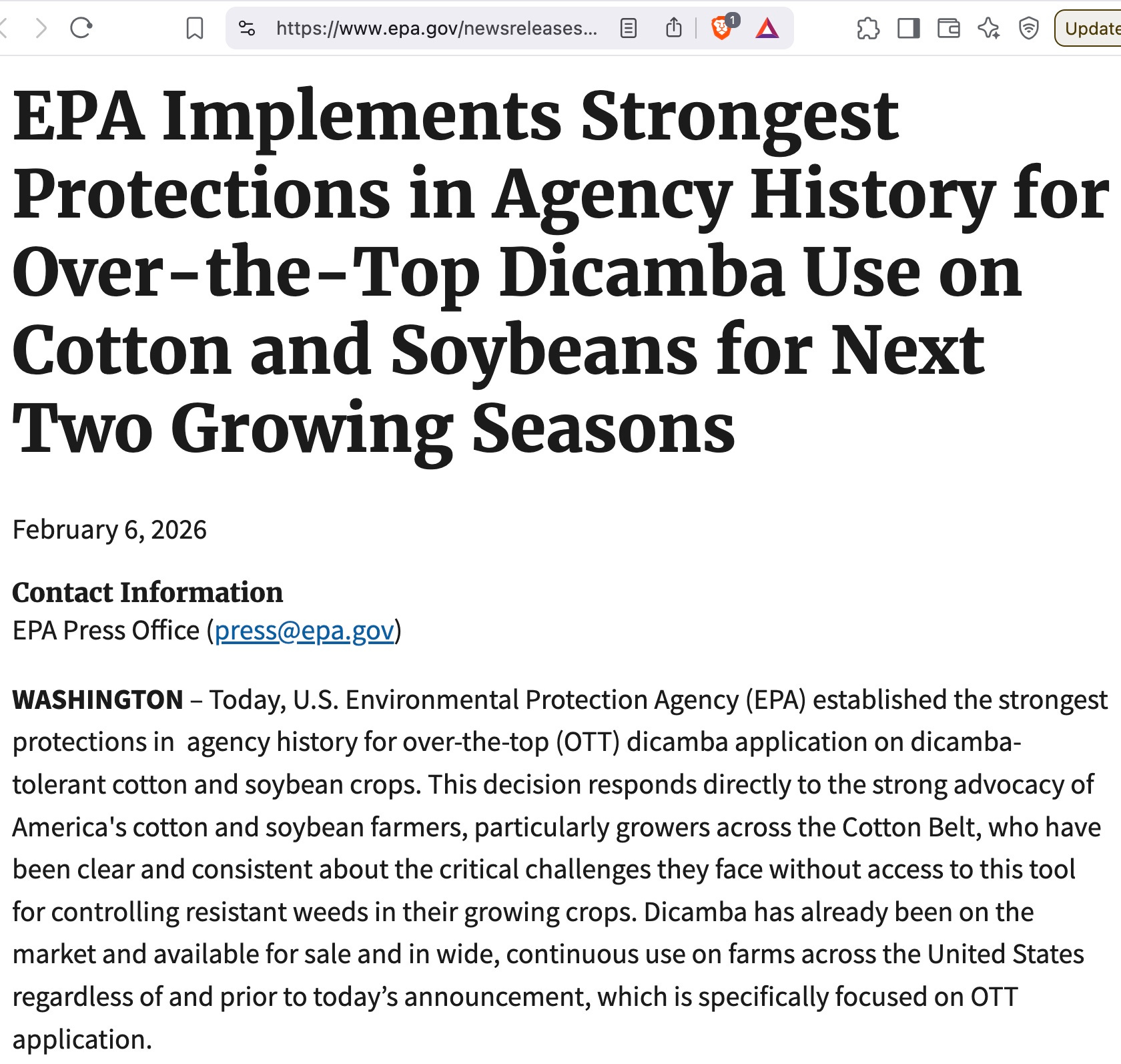
Here is a detailed discussion of the tricks EPA pulled, and how the Center for Food Safety and Center for Biological Diversity explain the lawsuit to stop this charade of regulation.
WASHINGTON— Farmers and conservation groups filed a lawsuit today challenging the Environmental Protection Agency’s reapproval of the dangerous, drift-prone pesticide dicamba sprayed on genetically engineered cotton and soybeans.
Federal court decisions in 2020 and in 2024 struck down the agency’s previous approvals of the weedkiller as unlawful.
But despite assurances from EPA Administrator Lee Zeldin that new restrictions would prevent the pesticide’s damaging drift, the new approval is in many ways more permissive than past approvals. It eliminates the June cutoff date of prior approvals, meaning it can be sprayed in July and August. And it drops a previously required 100-foot buffer to protect endangered species and their habitat.
“EPA’s re-registration of dicamba flies in the face of a decade of damning evidence, real world farming know-how and sound science, and, oh-by-the-way, the law,” said George Kimbrell, legal director of Center for Food Safety and counsel in the case. “In reality the Trump administration has once again betrayed farmers and poisoned the environment to pad corporate pesticide profits. We will see them in court.”
“Lee Zeldin’s hollow promises that new restrictions on dicamba will prevent damaging drift to nearby farms and backyard gardens are totally unsupported by the facts or common sense,” said Nathan Donley, environmental health science director at the Center for Biological Diversity. “Zeldin insists he’s working closely with the Make American Healthy Again movement to make pesticides safer. But his reckless reapproval of this dangerous, highly toxic pesticide shows his words to be nothing more than an attempt to ‘MAHA-wash’ the facts. No one in the healthy foods movement has been fooled by Zeldin’s pro-industry spin game.”
Since its first approval in 2016, dicamba’s drift has damaged millions of acres of farmland and caused devastating damage to orchards, vegetable farms, home gardens, native plants, trees, and wildlife refuges across the country. Experts have found dicamba drift damage to be the worst of any pesticide in the history of U.S. agriculture. The current approval provides even fewer protections from dicamba drift and damage than past approvals.
The approval comes months after Kyle Kunkler, a former lobbyist for the American Soybean Association, was installed as the deputy assistant administrator for pesticides in the EPA’s Office of Chemical Safety and Pollution Prevention. Kunkler has been a vocal cheerleader for dicamba, and this administration has not recused him from working on dicamba at the EPA despite his work lobbying for it during his previous employment.
A 2021 Inspector General’s investigation found that dicamba’s original approval excluded important scientific evidence during the first Trump administration’s rush to approve it.
“This is déjà vu all over again,” said Jim Goodman, president of the National Family Farm Coalition. “Despite an extensive history of failed weed management in genetically engineered crops, thousands of complaints by farmers about crop damage caused by drift, and two prior court bans, EPA is once again re-registering dicamba. There is no rationale for reapproving this incredibly harmful herbicide other than to line the pockets of the agrichemical industry. National Family Farm Coalition is standing up for family farmers and rural communities everywhere in urging our courts to block this egregious, irresponsible, and unjust reapproval.”
“Dicamba’s tendency to volatilize and drift is well-documented and when dicamba was registered for over-the-top spraying our vegetable farm, like so many farms, saw a significant decline in marketable produce from damage,” said Rob Faux, an Iowa farmer and communications manager at Petitioner Pesticide Action & Agroecology Network. “Successful legal challenges removed dicamba’s prior registrations, and because of that we have had successful seasons without dicamba drift. A new dicamba registration will, once again, pit farmer against farmer, and some of us will be forced to exit food production.”
The lawsuit was filed by the National Family Farm Coalition, Center for Biological Diversity, Pesticide Action & Agroecology Network, and Center for Food Safety, represented by legal counsel from the Center for Food Safety and the Center for Biological Diversity.
Background
In 2016 Monsanto, which has since been acquired by Bayer, opened the floodgates to massive spraying of dicamba by genetically engineering soybeans and cotton to withstand “over-the-top” spraying of the pesticide. The results have been devastating, with drift damage to millions of acres of non-genetically engineered soybeans as well as to orchards, gardens, trees, and other plants on a scale unprecedented in the history of U.S. agriculture. Dozens of imperiled species, including pollinators like monarch butterflies and rusty patched bumblebees, are also threatened by the pesticide.
The U.S. Department of Agriculture estimates that up to 15 million acres of soybeans were damaged by dicamba drift in 2018 alone. Beekeepers in multiple states have reported sharp drops in honey production due to dicamba drift suppressing the flowering plants their bees need for sustenance. Dicamba’s damage to flowering plants was so severe that it forced Arkansas’ largest beekeeper to move his operation out of state.
In 2020 a federal court revoked the EPA’s dicamba registration. In its decision the court explained that in approving dicamba, the EPA had failed to examine how “dicamba use would tear the social fabric of farming communities.” Four months later the agency nonetheless reapproved the pesticide, claiming new measures would cut down damage.
A 2021 EPA report found that restrictions to limit herbicide drift had failed and the pesticide was continuing to cause massive drift damage to crops and natural areas. In February 2024 a federal court banned the spraying of dicamba on Bayer’s dicamba- resistant crops a second time and outlined the EPA’s failure to consult victims of dicamba drift or any other stakeholder before the reapproval.
Today’s decision substantially loosens previously weak restrictions the pesticide companies proposed when they applied for dicamba reapprovals in 2024. It allows year-round use and eliminates the proposed cutoff date of June 12 for dicamba application to soybeans. Restrictions on when spraying can occur during the day to reduce volatility have also been dropped. The EPA will no longer require review of mixes of pesticides with dicamba, even though dicamba pesticide mixtures often enhance its volatility and drift damage.
Instead of setting calendar cutoff dates to prohibit applications in the heat of summer when drift and volatility is worse, the EPA has set temperature-based restrictions that require so-called “volatility reducing agents” on hotter days. Volatility reducing agents have failed to reduce dicamba volatility in the past. Applications would be prohibited at temperatures exceeding 95 degrees Fahrenheit, but it is unclear how this could be enforced.
Today’s approval maintains the same limited spray drift buffers that were ineffective in previous registrations of the pesticide. But a volatility buffer intended to protect endangered species has been eliminated.