Many are afraid to take hydroxychloroquine (HCQ) for COVID as they have been told it could kill them because of its effect on the heart. Are you worried about this?
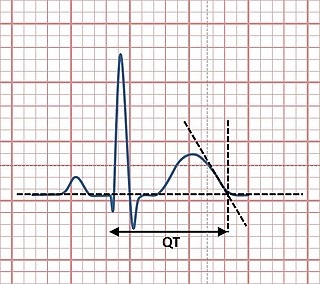
It is a fact that HCQ, azithromycin (Z-Pak™), and other drugs can prolong the QT interval on the electrocardiogram (ECG)—see image below. This could make patients vulnerable to fatal changes in the heart’s rhythm (such as torsades de pointes or TdP). People with a rare condition called “congenital prolonged QT syndrome” are especially at risk.
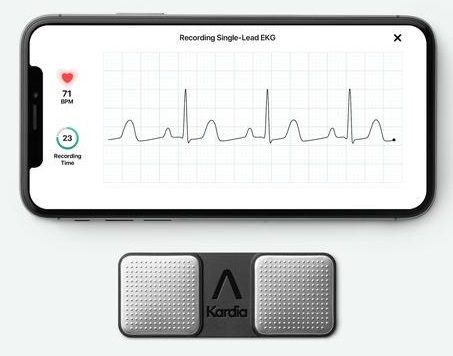
You do not have to have an expensive ECG to check for this. It takes about 5 minutes with inexpensive new technology that fits in your pocket and can be used in your home (see below).
Hundreds of millions of people have taken HCQ without ever worrying about this issue. Have we overlooked a serious problem for more than 50 years? A just-published article that reviews the medical literature concludes that, on the contrary, HCQ protects the heart.
In one case series of 251 COVID-19 patients treated with HCQ and azithromycin, extreme QT prolongation occurred in 23 percent. The HCQ was stopped; no deaths occurred. No reports of cardiac deaths were found in the review. Rather, “HCQ/azithromycin were uniformly found to substantially reduce cardiac mortality and also to decrease thrombosis, arrhythmia and cholesterol in treated patients.”
Warnings issued by FDA, CDC, the American Heart Association, and others have suppressed the use of potentially life-saving HCQ treatment. However, author Chadwick Prodromos, M.D., notes that warnings cite no specific study, and do not comment on whether actual deaths have occurred.He concludes that: “HCQ decreases cardiac events. HCQ should not be restricted in use for COVID 19 patients because of fear of cardiac mortality.”
It is important to remember that COVID-19 itself can damage the heart, increasing the importance of early treatment.
Cardiologist Peter McCullough, M.D., M.P.H., of the Baylor Heart and Vascular Institute in Dallas, recommends HCQ and other measures for early treatment in a recent article in the American Journal of Medicine.
WHO noted that narcolepsy has never before been associated with vaccines. When there is no prior association, odd diseases occuring in temporal relationship to vaccination are generally felt to be coincidental. Therefore, they are not generally reported to voluntary reporting systems, like the US’ VAERS. No data get collected, and it remains unknown whether vaccination…
https://www.washingtonpost.com/health/2021/03/02/merck-johnson-and-johnson-covid-vaccine-partnership/ “Most of Johnson & Johnson’s partners disclosed to date are contract manufacturing companies, but now it is moving to team with larger drug companies that have seen their own vaccine projects delayed or fizzled. The manufacturing process is time-consuming: Johnson and Johnson ferments large batches of its vaccine in vats at a contract manufacturing facility in…
https://www.fwc.gov.au/documents/decisionssigned/html/2021fwcfb6015.htm. dated 9/27/21 Here is a description of the Fair Work Commission: https://www.fwc.gov.au/about-us I misunderstood this document, which it seems is properly explained by Australia’s Channel 7 News. The document is a MINORITY decision, by the Deputy President of the Commisssion, regarding a decision made by the other two commissioners. The Deputy President took a…
You can watch any CHD-TV show at any time, by the way. Here is the page for the Friday Roundtable shows, and here is a list of all the CHD programs. I will rotate through as a host on the “Good morning CHD” program at 10 am Eastern time, and I will produce one show…
https://academic.oup.com/cid/advance-article/doi/10.1093/cid/ciab465/6279075# Circulating SARS-CoV-2 Vaccine Antigen Detected in the Plasma of mRNA-1273 Vaccine Recipients Alana F Ogata, Chi-An Cheng, Michaël Desjardins, Yasmeen Senussi, Amy C Sherman, Megan Powell, Lewis Novack, Salena Von, Xiaofang Li, Lindsey R Baden … Show more Author Notes Clinical Infectious Diseases, ciab465, https://doi.org/10.1093/cid/ciab465 SARS-CoV-2 proteins were measured in longitudinal plasma samples collected from 13 participants who received two doses of mRNA-1273 vaccine. 11 of…
From the Irish Herald: We need a jab inquiry The link between the Pandemrix swine flu vaccination and narcolepsy in at least 16 children has to be scrutinised. Manufacturers GlaxoSmithKline were indemnified by the State from any liability for side effects as the vaccine was rushed through. We need a full explanation from the Irish…