Rural Democratic Congresswoman from Oregon actually wants Congress to see how angry Americans are, and to provide fairly simple fixes-like the “Right to Repair.” Very interesting though overly long
Rural Democratic Congresswoman from Oregon actually wants Congress to see how angry Americans are, and to provide fairly simple fixes-like the “Right to Repair.” Very interesting though overly long
This could be the banner of a third party: the realism party, the “let’s truly fix what is wrong” party. Why don’t the D’s and R’s get this?

https://www.nytimes.com/2026/01/12/opinion/marie-gluesenkamp-perez.html
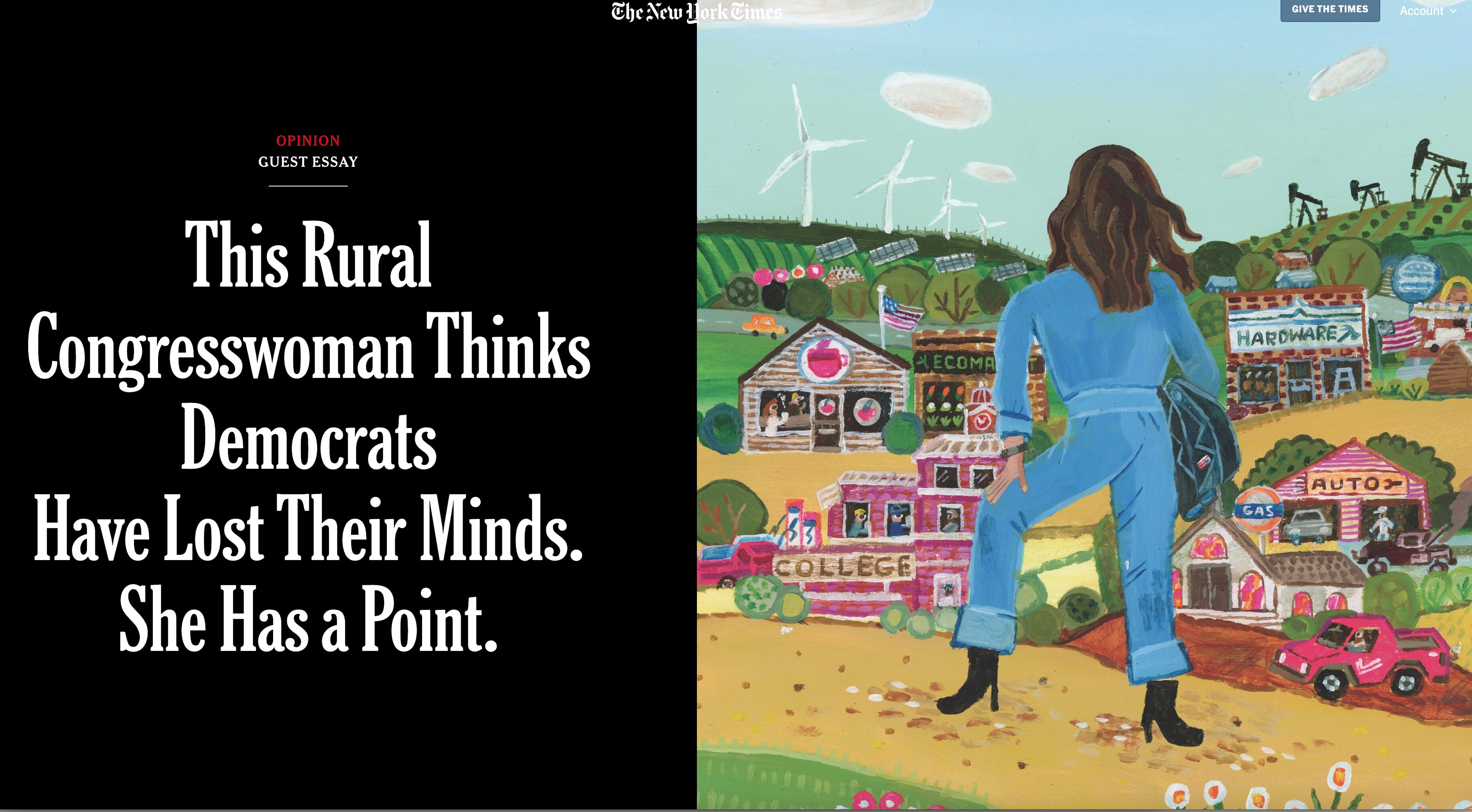
… Her worldview is widely held in rural America but almost completely unrepresented in national politics — neither reactionary nor exactly liberal; skeptical of big business and big government alike. She believes our society ought to be oriented toward working with your hands, living in nature and fostering deep and considered connection to a community. Her two biggest influences, her former senior adviser guessed, are the Bible and the ruralist Kentucky farmer-author Wendell Berry….
Ms. Gluesenkamp Perez’s signature cause is known as “right to repair.” In its simplest form, it is a call for manufacturers to make smartphones and farm equipment and headlights that can be fixed and tinkered with at home — so it’s possible to truly own them, unlike the disposable products or subscription services that surround us today.
To make this possible at any real scale, you’d have to change the whole value system shaping our increasingly financialized society, which incentivizes the rapid consumption of cheap imported goods and businesses built on the collection of what policy types describe as rents, rather than producing material things of lasting value. That’s what Ms. Gluesenkamp Perez has set out to do.
“We don’t want to be perpetual renters of disposable crap,” she told an interviewer for the website Front Porch Republic. “We want things that last.”
For the past half-century, the promise of affordable mass consumption has been the central justification for a host of changes that reshaped America as we know it, driving inequality, disrupting life in whole regions and contributing to a pervasive feeling that we’ve been reduced to “hapless consumers,” as Ms. Gluesenkamp Perez put it to me, describing what she calls the “high cost of cheap goods.”
To question the value of those goods, though, is to question the judgment of the leaders who sold them to us….