Many are afraid to take hydroxychloroquine (HCQ) for COVID as they have been told it could kill them because of its effect on the heart. Are you worried about this?
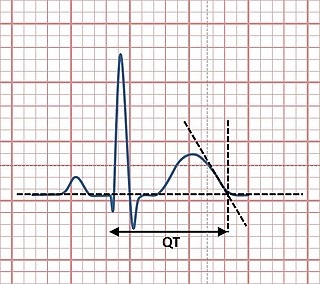
It is a fact that HCQ, azithromycin (Z-Pak™), and other drugs can prolong the QT interval on the electrocardiogram (ECG)—see image below. This could make patients vulnerable to fatal changes in the heart’s rhythm (such as torsades de pointes or TdP). People with a rare condition called “congenital prolonged QT syndrome” are especially at risk.
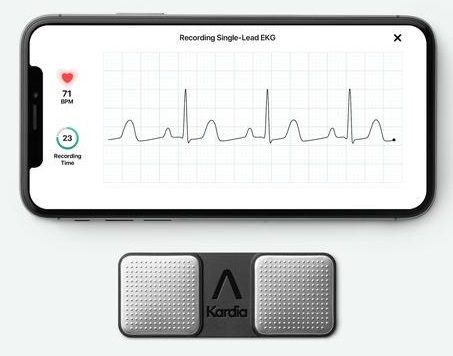
You do not have to have an expensive ECG to check for this. It takes about 5 minutes with inexpensive new technology that fits in your pocket and can be used in your home (see below).
Hundreds of millions of people have taken HCQ without ever worrying about this issue. Have we overlooked a serious problem for more than 50 years? A just-published article that reviews the medical literature concludes that, on the contrary, HCQ protects the heart.
In one case series of 251 COVID-19 patients treated with HCQ and azithromycin, extreme QT prolongation occurred in 23 percent. The HCQ was stopped; no deaths occurred. No reports of cardiac deaths were found in the review. Rather, “HCQ/azithromycin were uniformly found to substantially reduce cardiac mortality and also to decrease thrombosis, arrhythmia and cholesterol in treated patients.”
Warnings issued by FDA, CDC, the American Heart Association, and others have suppressed the use of potentially life-saving HCQ treatment. However, author Chadwick Prodromos, M.D., notes that warnings cite no specific study, and do not comment on whether actual deaths have occurred.He concludes that: “HCQ decreases cardiac events. HCQ should not be restricted in use for COVID 19 patients because of fear of cardiac mortality.”
It is important to remember that COVID-19 itself can damage the heart, increasing the importance of early treatment.
Cardiologist Peter McCullough, M.D., M.P.H., of the Baylor Heart and Vascular Institute in Dallas, recommends HCQ and other measures for early treatment in a recent article in the American Journal of Medicine.
From SwissInfo: … Western European countries, including Switzerland, are queuing up to shift surplus stocks of the H1N1 flu vaccine after low public demand. … Sales of H1N1 vaccines have been a windfall for pharmaceutical companies. GSK is expected to be the single biggest beneficiary with anticipated sales of SFr3.7 billion by the end of…
I used the word “simple” in a peculiar way. What I was getting at was the simplicity (in my mind) with which one could predict whether someone would want a COVID vaccine based on which party they belonged to or who they voted for to be President. Was it really that simple for pollsters and…
October 2008 Dear Representative ——–, I am writing with concerns about a liability shield just issued for anthrax vaccine, a huge new waste of government funds in anthrax vaccine purchases by DHHS, and expansion of anthrax vaccinations to civilian first responders, which is poised to begin after a CDC Advisory Committee on Immunization Practices (ACIP)…
Here is what the government experts in the UK had to say last week about the delta variant. Below is my summary: 1. We think it is more transmissible that the initial Covid variant. However, since the original Covid variant was extremely transmissible, it is unclear how much difference this will make, especially in the…
From Bloomberg’s article, “Hospitals Tell Doctors They’ll Be Fired If They Go To The Press,” NYU Langone Health employees received a notice Friday from Kathy Lewis, executive vice president of communications, saying that anyone who talked to the media without authorization would be “subject to disciplinary action, including termination.” Jim Mandler, a spokesman for NYU…
by: Paul Sullivan and Anthony Hardie, t r u t h o u t | Op-Ed. Excerpts follow: Last week, the US Department of Veterans Affairs (VA) officially recognized several diseases as linked with deployment to the 1991 Gulf War… As Gulf War veterans, we applaud the VA’s proposed new regulations that streamline access to…