FDA is now warning about misinformation spreaders
The federal government continues to try and fool
the public into thinking misinformation is a dire problem and a crime.
Misinformation is whatever the government does not want you to know.
Here the FDA has a new one minute video about misinformation and
rumor control. Clearly, the feds are getting nervous that their cons on
the people are being recognized.
https://www.fda.gov/news-events/rumor-control
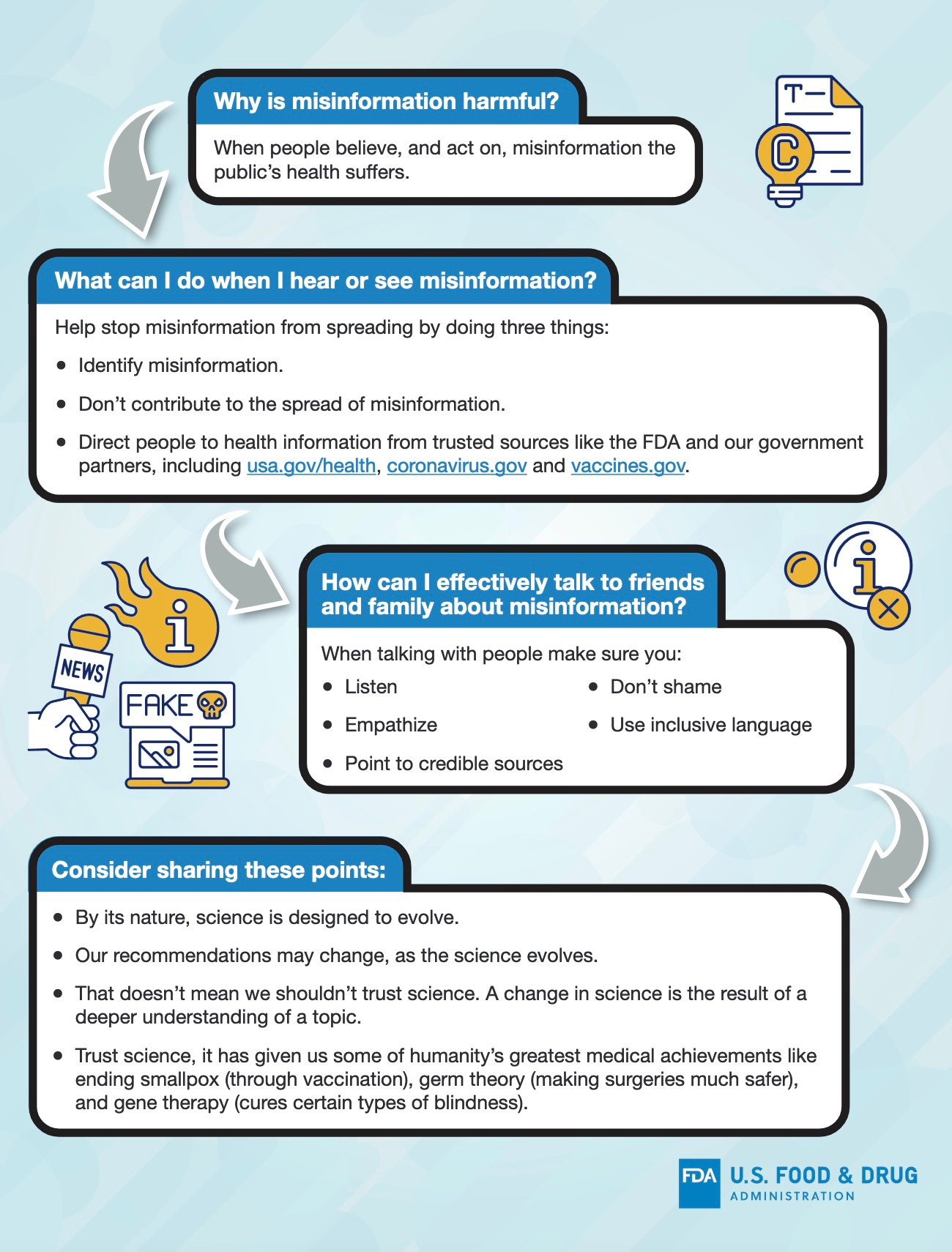
They also have created posters to explain the following in language even a 3d grader can understand:
-
The science changes.
-
It evolves.
-
But that doesn’t mean you shouldn’t trust the science.
-
Your “trusted sources” are government agencies.
As Jacinda Ardern told New Zealand when she was its Prime Minister: “We will continue to be your single source of truth”
in a chilling 55 second clip on misinformation. For her services to
the WEF (of course, she was a Young Global Leader) Jacinda was made a
Dame yesterday. Yes, quite a dame, who single-handedly destroyed a
great country and handed it over to her globalist masters. For that she gets 2 fellowships at Harvard. One of her predecessor NZ PMs, Helen Clark, continues to deliver as an apologist for the globalists.
https://en.wikipedia.org/wiki/Helen_Clark
On 9 July 2020 the World Health Organization (WHO) appointed Clark as co-chair of a panel reviewing the WHO’s handling of the COVID-19 pandemic and the response of governments to the outbreak. The Independent Panel for Pandemic Preparedness and Response (IPPR) examined how the outbreak occurred and how future pandemics can be prevented.
Below is the 1984 version of the FDA’s new misinformation policy poster.

So
now I will give you some important truth from a trusted source, the
British Medical Journal aka BMJ, which I discussed on Friday during my
talk to the Better Way conference.
In 1992 the Prescription Drug
User Fee Act (PDUFA) was passed by Congress, allowing FDA to charge
manufacturers to regulate their products, and it has been all downhill
from there, in terms of the respect FDA has had on the world stage.
From being considered the world’s pre-eminent drugs regulator, as it was
before 1992, it is now considered a shell of its former self: a rogue
agency for hire.
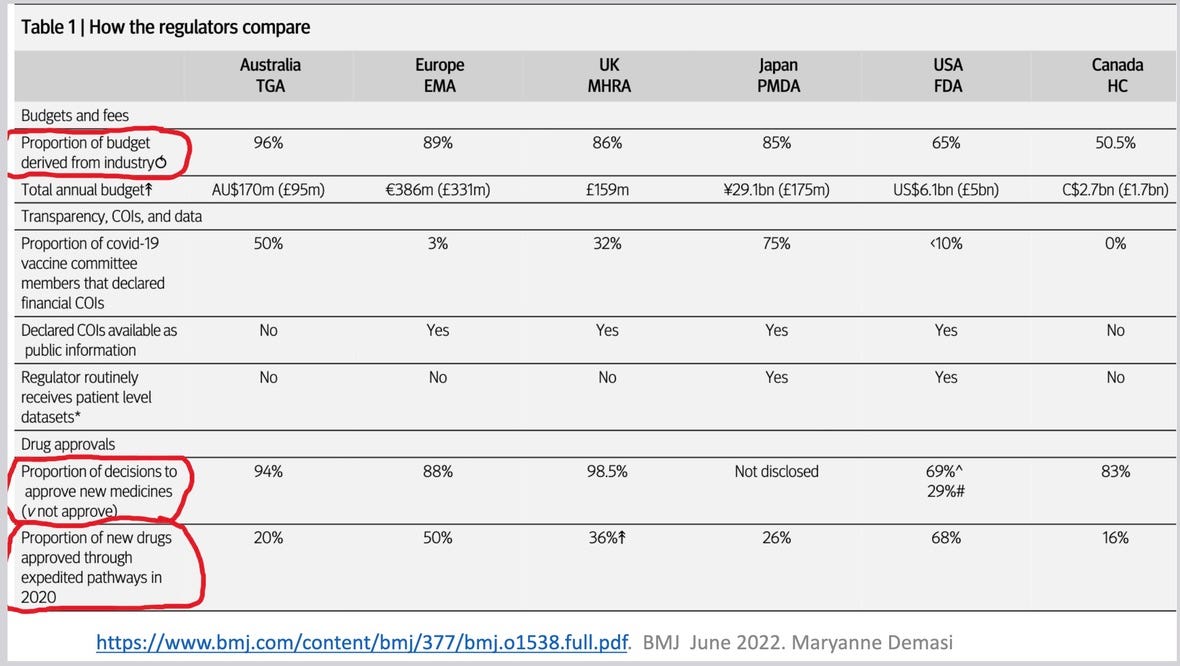
65%
of the funds used by FDA to evaluate whether a new chemical entity can
be licensed as a safe and effective drug come from industry fees. (42%
of the funds used by FDA to approve biologics, which include vaccines,
come from industry.) In the UK, Europe, Australia and Japan even a
higher percentage of the money used to approve drugs comes from
industry.
Furthermore, in the USA, 4 pathways have been developed
to ‘expedite’ the approval of new drugs and vaccines. Most drugs given
the right to use these pathways (68% of all drugs seeking US approval
manage to squeak through as providing some type of unmet need). The
vast majority of these drug reviews are conducted as a 6 month review.
At the end of 6 months, FDA must give the manufacturer a yes or no
answer as to whether it will issue a license. Whether or not it has
managed to review all the submission, or even half of the submission by
the manufacturer, it must give the manufacturer a yes or no answer re
licensure. Usually that answer is yes, as the pressure from above to do
so is enormous. Of course, a higher percentage of drugs approved
through an accelerated pathway are later taken off the market, compared
to drugs approved the regular way.
The FDA has a scheme that
allows it to license almost anything, and that scheme is simply creative
writing of the label. The label is a legal document that explains what
is known about the drug, its risks, its benefits, and how it should be
used. FDA is very crafty as it works with the manufacturer to withhold
information and provide skewed information on its labels. It can also
include dire warnings on the label, which through broad disclosure
absolve the manufacturer and the FDA from liability regarding dreaded
adverse effects. FDA officials have been open about the fact that they
can license anything as long as the label is written properly.
Manufacturers
are well aware they can get virtually anything through the FDA—and have
known so practically forever. In the book Hooked: Ethics, the medical profession and the pharmaceutical industry by Howard Brody, MD (2007), Harry Loynd, the president of pharma firm Parke Davis from 1951-1967 is quoted as saying, “If we put horse manure in a capsule, we could sell it to 95% of these doctors.”
So
if you are looking to avoid misinformation, the FDA is the last place
you might go to for truth, honesty, ethics and consideration of the
public’s welfare.
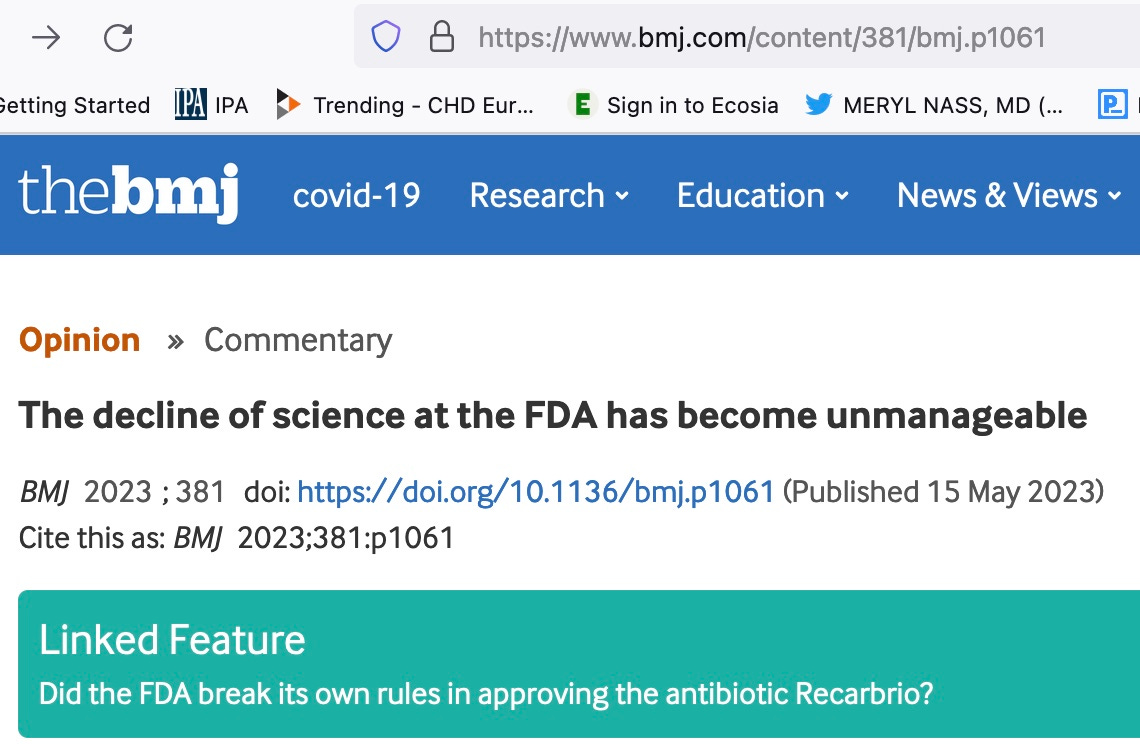
And here is an Op-Ed that ran in the BMJ 3 weeks ago saying the same thing:
In
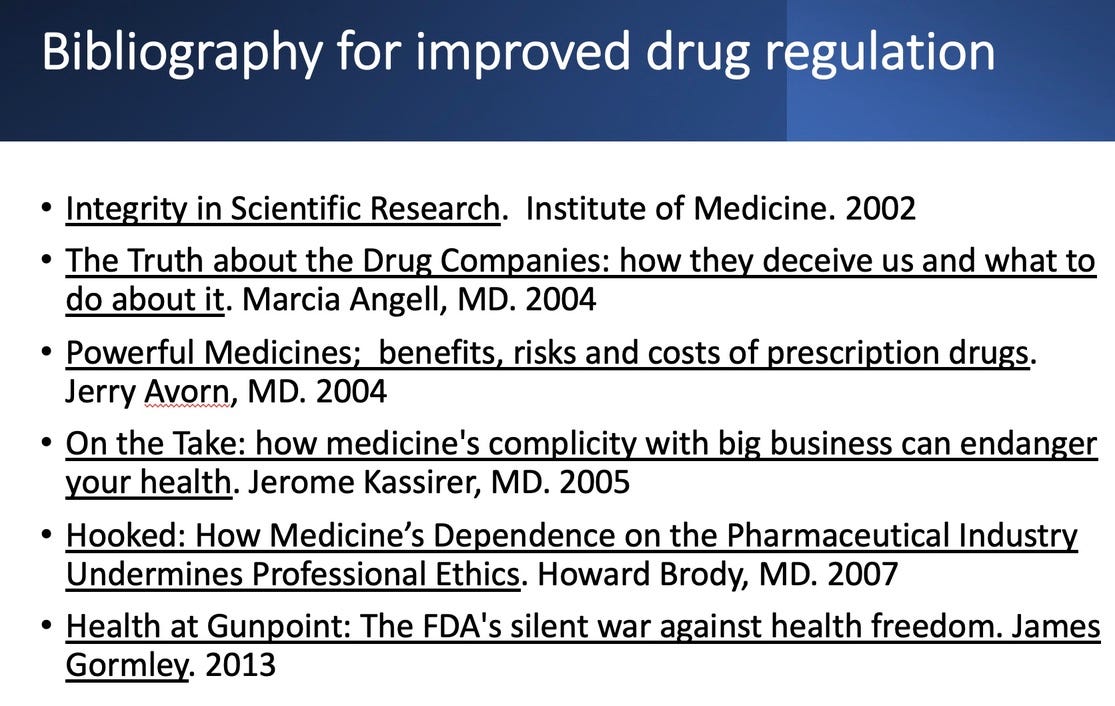
fact, knowledgeable professionals were so appalled by what they learned
about the FDA (especially after PDUFA) a huge body of literature sprang
up about the unethical process of drug regulation, some of which I
provided at my talk to the Better Way Conference last Friday. Below are
some of the best books on the subject.
So,
if you want to avoid believing misinformation about drug, vaccine and
device regulation, I suggest you take a look at these books, or the many
other reports and reviews of the subject. Perhaps Congress needs to
stop authorizing funds for the PR departments of our federal ‘public
health’ agencies?